'I'm only here as a family supported organ donation'

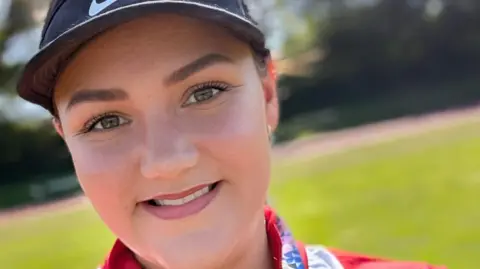 Louise Prashad
With only a small chance of survival, Louise Prashad says another family's decision to go through with organ donation meant the 22-year-old gained a second chance at life while she was 37 weeks pregnant with twins. After new research finds organ donation consent rates are dropping, Louise is backing a new drive asking people to leave a "lasting legacy".
After her liver went into failure, Louise received another from 52-year-old Sarah, who saved a total of nine people through successful organ transplants.
"I'm only here today because 10 years ago, one family supported organ donation during the worst moment of their lives and their decision gave me the greatest gift imaginable," Louise, now 33, says.
According to NHS Blood and Transplant (NHSBT), 1,132 patients are waiting for a transplant in Yorkshire and the North East, with national family consent rates for organ donation dropping.
New NHSBT figures found 57% of families agreed to their loved ones donating their organs this year, compared to 69% five years ago.
"Families are approached for this decision at the most devastating moment of their lives and uncertainty can make an already impossible situation harder," Louise, from Easingwold, North Yorkshire, explains.
"These are really difficult conversations, and I think if we break the very British taboo around talking about death we can make organ donation a normal family conversation rather than something people only face in a crisis."
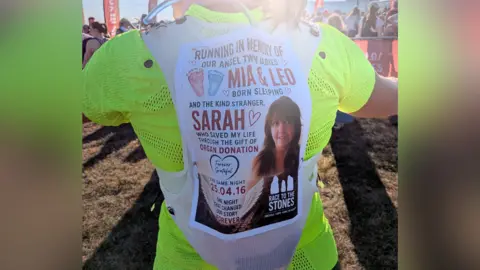 Louise Prashad
NHSBT is launching an appeal for one million further people to register their decision to be an organ donor by the end of the year, aiming for a total of 30 million registered donors.
Louise says the campaign is "fantastic" to renew discussions around organ donation and stresses that families still have the final say despite a registered decision.
After connecting with Sarah's family and talking to them about their choice, Louise describes it as "the hardest decision" of their lives.
"My donor's family knew that Sarah wanted to donate her organs, because they'd already had that chat and that did make it a little bit easier," she adds.
"Some people go on to regret the decision that they've made, so it's so important that families are having those conversations while they can."
When Louise woke up from her induced coma in 2016, she was given the news her twin son and daughter, Mia and Leo, had passed away.
She says her transplant spurred her on through her grief and she went on to have two further children.
"I'm just so incredibly proud that my donor and her family had that conversation, because it's helped me to become a mum," she says.
"It's helped me finish my degree. It's helped me marry the love of my life.
"And now I get to spread the word about organ donation and try and save more lives."
Anthony Clarkson, director of organ and tissue donation and transplantation at NHSBT, says family support for organ donation has seen a steady decline over the last few years.
"For many families, even when their loved one has expressed a wish to donate, they still override that decision for whatever reason, meaning hundreds of potential organ transplant opportunities being lost each year," he says.
"I would urge people who haven't already done so to express your decision to donate via the organ donor register and for families to remember that decision and honour it should the time come.
"It's the final act you can do for them to honour their memory and leave a lasting legacy to be proud of."
Listen to highlights from North Yorkshire on BBC Sounds, catch up with the latest episode of Look North.