BBC reports from family court case in NI media first

 Getty Images
The BBC has been granted permission to report on a case in the family court in a media first for Northern Ireland.
A public law case, which was deciding on whether parental responsibility should be removed from two parents, was heard in Belfast High Court.
The case is part of a new media pilot scheme, introduced by the Lady Chief Justice to help reform the courts.
The family courts are closed to the public and media to protect the privacy of children at the centre of cases and make decision that can have profound effects on family lives.
'Incredibly significant for the child'
The case I have covered has not been chosen because of its legal significance but as an example of the kind of case that moves through the family High Court in Northern Ireland every year.
For the young parents and child at the centre of this case though it was incredibly significant.
This case is essentially about the safety and wellbeing of a very young child, and what is in the best interests of the child and their future.
What the Western Trust asked for was referred to by the mother's barrister as the most draconian thing a court can do in the life of a child: to sever all parental ties between parents and child permanently.
This is called a freeing order and allows a child to be subsequently placed for adoption.
The child at the centre of this case, who cannot be identified, was taken into care by the trust soon after birth.
The parents have two older children together, and the mother has other children, all of whom are also in care.
The judge, Mr Justice Patrick Kinney, first established if this child is suffering or is likely to suffer harm in the parents care and he said that threshold had been met.
 Getty Images
He went on to set out some of the issues at play in whether these parents can care for their child, including domestic violence, with pending criminal proceedings against the father in relation to the mother, the judge described their relationship as dysfunctional and violent.
Justice Kinney also pointed to a lack of honesty and openness by both parents in dealing with social services; a failure to engage with medical assessments and behavioural concerns.
The Western Trust talked about an assessment that the mother has a significant cognitive impairment.
While the Trust argued that both parents love their child, it was put to the court that both are of limited ability when it comes to caring for them and neither would be able to keep this child safe.
The two parents came to court this week agreeing to stay away from one another, to allow the child's mother a chance to prove she can be a parent to her child, something she wanted desperately.
Ultimately the Western Trust told the court there was no prospect of rehabilitation by the parents now or at any reasonable time in the future and adoption therefore was proportionate and necessary for this child.
The judge agreed and told the court that all reasonable steps to try to rehabilitate this young child to their parents have been tried and have not been successful.
The freeing order was granted and the child will now be placed for adoption.
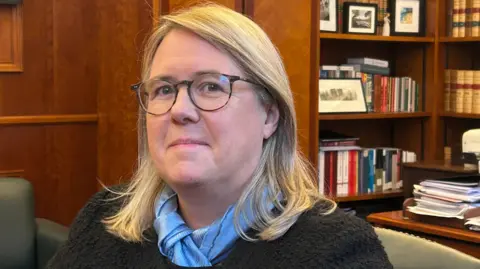
Dame Siobhan Keegan said this pilot scheme would help the public understand what happens in these courts.
"Sadly, you're going to see some cases which are really representing a very sad side of life," she said.
"That I think that is educative, but I do expect you will see success stories as well. And the drive of the courts to try and reach solutions.
"Seeing the full picture is good, I never liked this idea of closed family courts, understanding privacy issues I always thought to myself, that can perpetuate some myth that family judges hear things behind closed doors, and there's no comeback or no scrutiny."
The pilot in Northern Ireland follows a similar one in England and Wales which has resulted in journalists being permitted to report from courts since January 2025.
In the past five years the high courts in Northern Ireland have dealt with, on average, just over 100 public law cases a year under the Children Order legislation.
In 2025 there were 4,188 children and young people in care in Northern Ireland.
That's the highest number recorded since the introduction of the Children Order 1995 and in the last year 96 children were adopted here.