Report warns of 'slowdown' in Scotland's rural land market

 Getty Images
There has been a slowdown in Scotland's rural land market with buyers becoming "increasingly cautious", according to a new report.
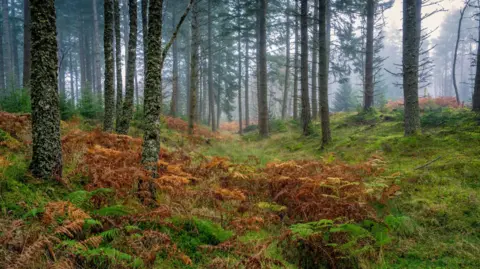
The beginning of the decade saw a surge in prices as investors sought to purchase land to use for environmental and forestry schemes.
But the study by the Scottish Land Commission found that demand had dropped due to a "significant downturn" in the forestry sector amid lower timber prices.
It also said there had been a sharp decline in speculative investors purchasing land for carbon credit environmental schemes following lower than expected returns.
The report was produced in partnership with Scotland's Rural College (SRUC), which interviewed land agents.
Agents described the rural land market as "subdued, static and frozen", with one saying it was "probably the slowest" they could remember since the 2008 financial crash.
However, the report suggested the slowdown was due to a shift in investor behaviour rather than a collapse in demand.
It said speculative investment had reduced, compared to the peak years of 2020–2022, and purchasers were seeking clearer evidence of long-term returns before committing to deals.
'Next big thing'
Environmental schemes can earn landowners carbon credits which they use to offset their carbon emissions, or can be sold to other firms seeking to do so.
James MacKessack-Leitch, policy and practice lead at the Scottish Land Commission, said there had been "a real shift in sentiment" about carbon credits.
He said: "We saw a lot of activity immediately post pandemic in 2020/21/22 of people, investors, companies, institutions buying land for natural capital purposes."
MacKessack-Leitch said investors had been willing to "take a punt" on carbon credits being "the next big thing".
He said: "In the last couple of years that kind of activity had really died away.
"There's been a bit of a reality check. The maths doesn't quite add up.
"When the global economy changes, when there are new hot things to invest in, like AI or tech, perhaps that is where the money goes instead."
MacKessack-Leitch added: "It's important that we continue building a clear picture of what's happening across the market, because these trends have real implications for rural communities, land use and the wider rural economy."
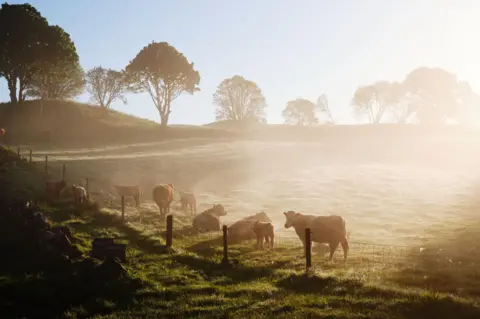
In contrast the market for farmland was found to be "relatively resilient".
Demand for arable land remained particularly robust according to the report
However, it said that ownership of quality agricultural land was becoming increasingly concentrated with fewer opportunities for new entrants or smaller farmers to acquire land.
 Getty Images
Rural business organisation Scottish Land and Estates (SLE) said the commission's report provided a "useful snapshot" of activity in the rural land market.
Director of policy, Stephen Young, said: "What is increasingly clear is that the very high land values seen between 2020 and 2022 were an outlier.
"That period was heavily influenced by a surge in natural capital interest, alongside the impact of the Covid pandemic, which made land an attractive purchase for a wider range of buyers."
He said SLE urged caution at the time about drawing "sweeping conclusions from a limited and unusual period in the market".
Young added: "However, the Scottish Land Commission used those findings to argue for further legislative intervention, and we have since seen the passage of a new Land Reform Act alongside a series of wider government interventions.
"As highlighted in the report, the effects of these major interventions have yet to be felt."