Why do wealthy Luton men live 10 years longer?

 Sandy Cricket Club
New research shows men in wealthier parts of Luton live, on average, 10 years longer than those from the most deprived areas.
The data also suggests life expectancy for both men and women in the borough is "significantly" lower than the national average.
Luton Borough Council is developing a strategy to help people stay healthier for longer.
But how did the figures get so bad?
What do the figures tell us about life expectancy?
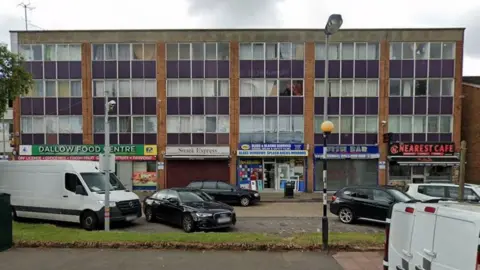 Google
The figures were compiled by the council's public health team, which reviewed a comprehensive set of data on older people, alongside their experiences and views.
Average life expectancy in Luton is 78.6 years for men and 82.6 for women — both lower than the national average.
There is also a substantial gap between the most and least affluent areas.
Men in poorer neighbourhoods are likely to die 10 years earlier than those in wealthier districts, while the gap for women is seven years.
What is causing the big gap in life expectancy?
 Martin Heath/BBC
David Hewson, professor of health and ageing at the University of Bedfordshire, said poverty was the underlying issue.
"The people who have the least money, the most deprivation, are always going to have problems related to health," he said.
"So you've got inadequate housing, you're going to have potentially lower levels of education, your diet won't be as good, you're less likely to do physical activity, whereas the people who are better off are going to have the opposite."
However, he added that people in deprived areas can still do well if they become more active and improve the quality of their diet.
What else did the figures show?
 Getty Images
Researchers also examined healthy life expectancy (HLE) — the number of years people can expect to live in good health.
The figures use mortality data and people's own assessments of their health.
According to the research, HLE for men in Luton is 56.9 years, while the age for women is 55.8 years.
The report says both figures are "significantly lower than the national average", which is 60 years for men and 60.7 years for women.
The figures have fallen in recent years and, unlike the national trend, women in Luton have a lower HLE than men.
People in the borough also report losing good health up to five years earlier than the England average.
What's the solution?
 Luton Borough Council
The council is developing a healthy ageing strategy focused on the over-50s.
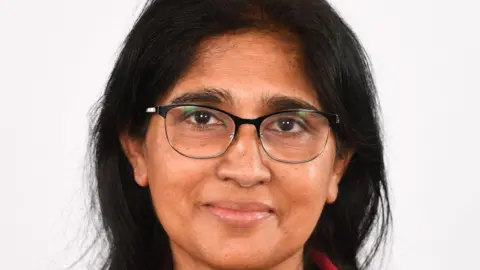
Rumi Choudhury, who holds the public health portfolio, said it would bring together existing support while increasing focus on prevention.
"It will also address poverty, deprivation, loneliness and social isolation," she said.
The strategy aims to boost participation in physical activity among older people.
What sort of activities help people stay healthier for longer?
 Sandy Cricket Club
Prof Hewson said GPs and social prescribing schemes can connect people with community activities, such as a wellbeing garden on the edge of Luton.
But he added that outreach beyond healthcare settings was essential, for example engaging with people at regular community events such as a church, mosque or temple.
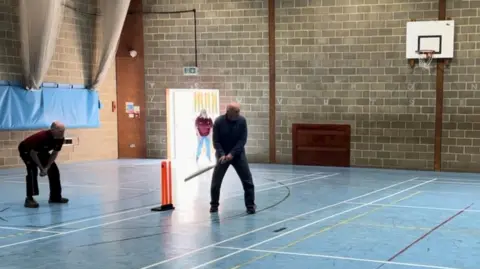
He is involved in a walking cricket project for over-50s.
Alan Field, the chairman of Sandy Cricket Club in Bedfordshire, plays the walking version and said: "I'm keeping active without really knowing it.
"[We find] we've actually walked over a mile in a session.
"You do it without realising it and you're bending for the ball, you're stretching, you're throwing. It's coordination.
"We're also engaging with each other socially."
Do you have a story suggestion for Beds, Herts or Bucks? Contact us below.
Follow Beds, Herts and Bucks news on BBC Sounds, Facebook, Instagram and X.