'Why I'm encouraging others to donate blood'
 BBC
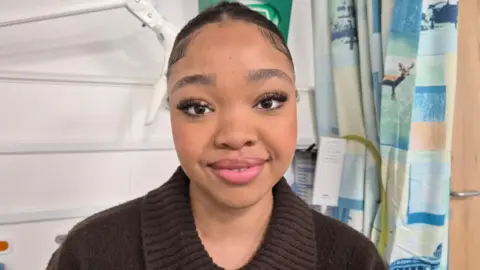
BBC"It's hard for people to understand that actually I live with this, I'm not dying from it, but I can't do the same things as you can."
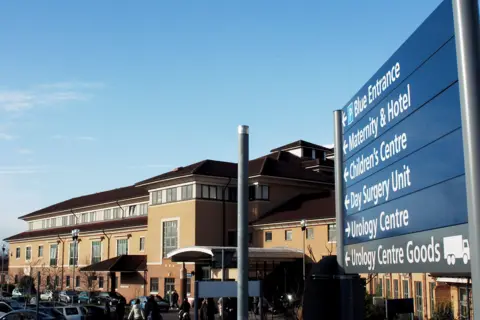
Rita Ramos has blood transfusion treatment every six weeks at Nottingham City Hospital, meets with haematology teams for blood tests and takes multiple different medications.
The 18-year-old, from Ilkeston in Derbyshire, was born with sickle cell disease, a condition that means she relies on regular blood transfusions to live.
As part of World Blood Donor Day, she has shared her experience and is encouraging others to donate blood.
 PA
PASickle cell disease is the name for a group of inherited health conditions that affect the haemoglobin molecules in red blood cells, causing red cells to become stiff and stuck in the smallest blood vessels.
It can bring severe pain and other complications to its patients. These include shortness of breath, strokes and vision problems.
"At the worst of sickle cell, I can get really tired, and the pain feels like someone is stabbing me non-stop," Rita said. "It affects my breathing, I hold it in to just try get the pain away."
It can also stop her from being able to move her body - and her last crisis left her unable to walk.
"I had to get physiotherapy to learn to walk again," she said.
People's sympathy and misconceptions of her condition get in the way of daily life, such as friendships, sports and her hobby, dance.
Rita said: "They pity me, it's stopped me from having some friendships. I think it's important to know that we're not like glass, we're not fragile, we're really strong people."
She encouraged people to donate blood, saying: "You can help one or two people who really need it".
 NUH
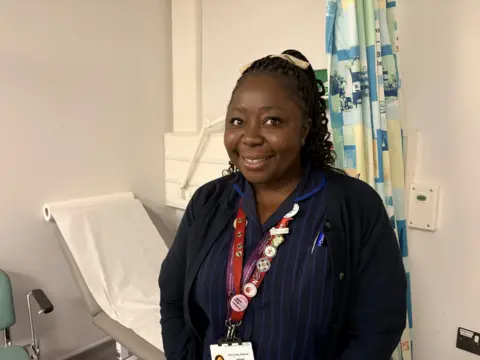
NUHHannah Kadiki, haemoglobinopathy lead specialist nurse at Nottingham University Hospitals NHS Trust, has been supporting the Ramos family for four years.
She sees multiple sickle cell patients a day.
Kadiki said not a lot of people knew about sickle cell and she often had to do outreach to provide training to GPs and supported living homes.
"I believe knowledge is power, the only way they can help our patient is by knowing what I'm talking about.
"I have the passion to get the patient looked after but I also need to inbreathe this passion to other people", she added.
Listen to BBC Radio Nottingham on Sounds and follow BBC Nottingham on Facebook, on X, or on Instagram. Send your story ideas to eastmidsnews@bbc.co.uk or via WhatsApp on 0808 100 2210.