What is the Greater Manchester mayor and what do they do?
 Getty Images
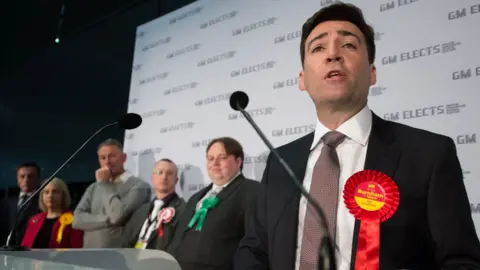
Andy Burnham's victory in the Makerfield by-election means he has to step down as Greater Manchester mayor.
Burnham has been mayor since the role was first created in 2017 and the race to become his successor will be fiercely contested by all involved.
But what is the role they will be fighting for?
Why is there a mayor?
The role of mayor was created as part of a law passed in 2016, one of a number of big pieces of devolution legislation brought in by the Conservatives after taking power in 2010.
In a 2012 referendum, Manchester rejected having a directly-elected city mayor, along with eight other major cities, but the decision to have a regional or metropolitan mayor was directly negotiated between the government and the 10 Greater Manchester councils.
Andy Burnham, who left Parliament to stand for the role, was chosen as Labour's candidate for the first mayoral election in 2017 and won, taking 63.4% of the vote.
He went on to fight and win two more mayoral election contests - in 2021 and 2024. He increased his vote to 67.3% in 2021, and polled 63.4% in 2024.
What powers does the mayor hold?
The 14 directly-elected regional mayors do not all have the same level of devolved powers, with the Greater London and Greater Manchester mayors having the broadest remit.
The Greater Manchester role saw its powers strengthened significantly through what was billed by the last Conservative government as a "trailblazer devolution deal" negotiated with the Greater Manchester Combined Authority (GMCA), a body run by the mayor and the leaders of the 10 Greater Manchester boroughs.
They hold the post of the police and crime commissioner (PCC) for the region.
In some other areas, like Merseyside, the role has been a distinct office, although all PCCs are now set to be abolished.
Any mayor who holds the PCC powers cannot legally be an MP at the same time, as setting national laws on policing and being responsible for local policing would present a conflict of interest.
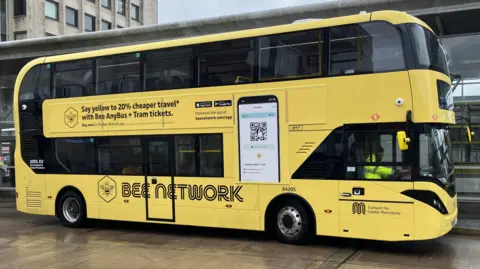
Other powers held by the mayor include responsibility for the fire and rescue service, oversight of the Local Transport Plan, a range of powers relating to land including the ability to buy land to enable development, responsibility for some skills and adult education and governance of a number of local health commissioning budgets.
According to the GMCA, the mayor also "helps lead the city region and works with local councils, businesses and public services to improve life for people across Greater Manchester".
"They represent Greater Manchester at a national and international level, speaking for the city region, helping build relationships with government and attracting trade and investment."
How is the mayor elected?
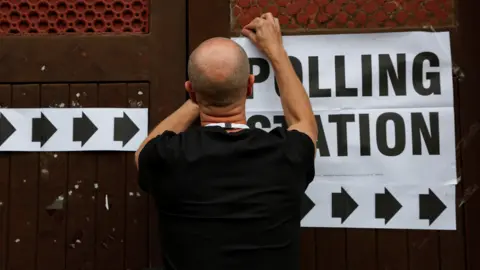
The mayoral term of office is usually four years, although there have been three Greater Manchester mayoral elections in the past nine years.
The first was held in 2017, with the second, which was supposed to happen in 2020, being delayed by the COVID-19 pandemic until 2021.
The third election took place in 2024, following what would have been the original timetable had the pandemic not happened.
 Reuters
The way metropolitan mayors are elected has been subject to change twice in the time the roles have existed.
The 2017 vote used the traditional first-past-the-post system used for parliamentary elections, while the 2021 election used the supplementary vote (SV) system.
The SV system means that all voters are given the chance to pick a first and second choice candidate.
If no candidate wins over 50% of the initial vote, all but the two highest-polling candidates are knocked out of the race and all the second choices of the people who voted for the other candidates are then allocated.
Whichever of the top two candidates ends up with the most votes after this "run-off" round is then declared the winner.
That second round was not needed in 2021, as Burnham took more than 50% of the first vote.
After the 2021 elections, the Conservative government decided to abandon the SV system, arguing it had led to "hundreds of thousands void, wasted or blank votes" being cast, which reflected "voter confusion and the complex system".
However, on Wednesday, the Labour government brought back SV when the Combined Authorities (Mayoral Elections) (Amendment) Order 2026 came into force.
That means SV will be used for the next Greater Manchester mayoral election on 30 July.
What are they paid?
The mayor is currently paid an annual salary of £118,267.
That is higher than other comparable mayors as it takes into account the role's police and crime commissioner element.
It is also significantly higher than an MP's salary, which currently stands at £98,599.
Listen to the best of BBC Radio Manchester on Sounds and follow BBC Manchester on Facebook, X, and Instagram. You can also send story ideas via Whatsapp to 0808 100 2230.