Preservation order protects 300-year-old oak

 BBC
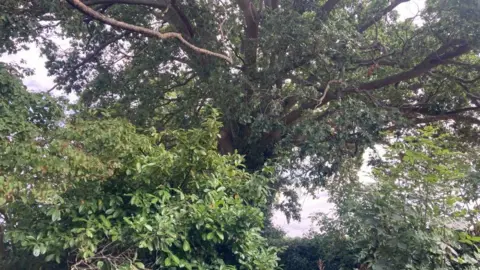
BBCA more than 300-year-old oak was among six sites given new preservation orders in Devon.
West Devon Borough Council said the orders would help safeguard the trees for future generations and protect their benefits.
On the list was The Honour Oak on Whitchurch Road in Tavistock, which has previously been described as one of the town's most historically significant trees.
Leader of West Devon Borough Council, Councillor Mandy Ewings, said the trees helped "provide homes for wildlife, support biodiversity, improve air quality and help create the green landscapes that define our borough."
 Tavistock Town Council
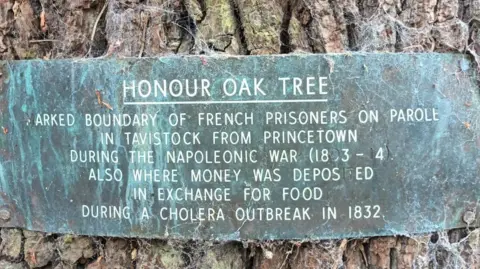
During the Napoleonic Wars, the Honour Oak marked the boundary beyond which French prisoners of war living in Tavistock on parole were not allowed to travel.
The tree was also linked to the 1832 cholera outbreak, with historical records indicating money was deposited there in exchange for food to reduce contact between people.
The six sites are:
- Green Hill, Tavistock
- Land to the West of Butcher Park Hill, Tavistock
- Land to the West, South and North of Broadleigh Park, Tavistock
- Land at Callington Road, Tavistock
- The Honour Oak tree, Whitchurch Road, Tavistock
- The Veteran Common Lime tree on Crowndale Road
Follow BBC Devon on X, Facebook and Instagram. Send your story ideas to spotlight@bbc.co.uk.