Ban call on flying rings blamed for seal deaths

 Friends of Horsey Seals
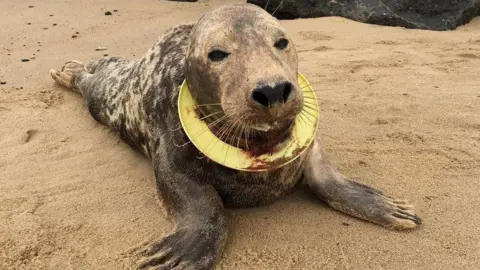
Seal campaigners say a cheap beach toy is leaving animals to suffer slow and painful deaths as they step up calls for a UK-wide ban.
Sue Sayer, founder of the Seal Research Trust and chair of the Seal Alliance, is taking the Save Our Seals from Flying Rings campaign to Westminster, urging MPs to act.
She said the plastic rings, often sold for £1 to £2, were being bought in their thousands and regularly lost on beaches before drifting into the sea.
Sayer said: "We all know that curiosity can kill, and it kills seals of all ages, but mostly youngsters." She added: "It leads to a slow, long-suffering death."
 Sharon Trew
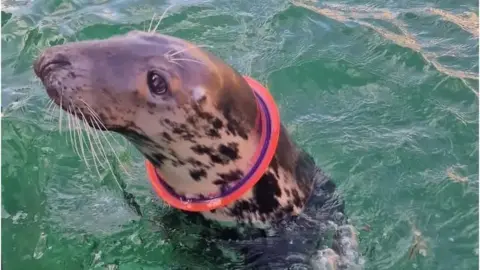
Campaigners said seals often investigated the floating toys as playthings, but once a ring slips over their head it becomes impossible to remove.
As the animal grows, the plastic cuts deeper into the skin, causing severe pain and infection. Sayer warned: "One ring can kill more than one marine creature, so the creature dies, the ring floats again, and goes on having another life."
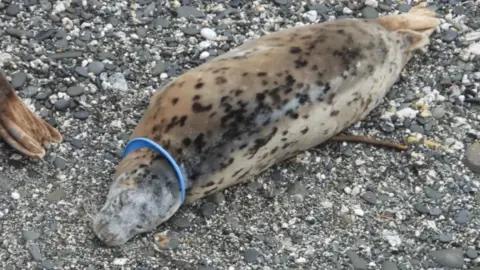
A seal called Wings who was found in St Ives in 2023, was an example of the damage that rings can do, said the Cornish Seal Sanctuary which cares for seals snagged by flying rings.
A ring had caught tightly around Wings' neck, but it was removed after the female seal was successfully rescued.
Campaigners said it had been around her neck for two weeks and begun to strangle her.
They said many seals injured by the rings were never found or could not be saved.
 CORNWALL SEAL GROUP RESEARCH TRUST
Cornwall Council backed a motion in 2025 to discourage the sale of the rings, in what conservationists called a major step forward.
Sayer said most beachgoers did not realise the harm and insisted "no-one intends harm".
Public awareness was key, adding that tackling the issue was "a no-brainer for everyone".
"If we support this, it's not going to spoil the income of retailers. It's not going to spoil the fun of people on the beaches, because there's an alternative."
Follow BBC Cornwall on X, Facebook and Instagram. Send your story ideas to spotlight@bbc.co.uk.