Mindful activity demand helps drive jigsaw sales

 BBC
BBCDemand for mindful activities like completing puzzles has led to a spike in jigsaw sales, one firm says.
The trend has prompted Great British Jigsaws, founded online in 2020 by a husband and wife team, to open a physical store.
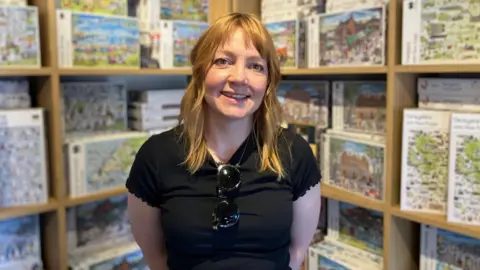
The Stafford-based firm's operations director said: "There's been a massive movement, I feel, with people wanting to turn away from digital, people wanting to escape their screens."
Commenting on the trend, games expert Christopher Headleand said: "People aren't necessarily rejecting screens, but they are proactively searching for balance."
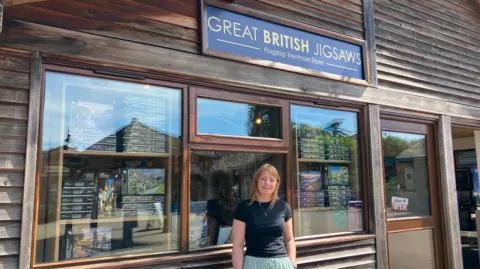
Despite opening in the worst month for global sales of jigsaws, Cornish said the shop was already hitting its targets.
An example of what is driving sales, she said, came from an older customer who explained she and her friends were completing jigsaw puzzles as their "dementia prevention".
Prof Headleand, head of the games institute at the University of Staffordshire, continued: "As more and more of our lives is screen-dominated, then the ability to escape from that and do something different is becoming more important."
Part of the joy of a jigsaw was the tactile nature of it, something that is not replicated in the same way in a digital game, he added.
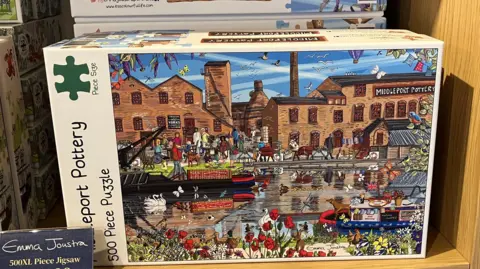
And although it might seem a "bit bizarre" for an online business to open physically, there was an appetite for British-made goods, and an opportunity to give it a go, Cornish said.
While retail overheads at the store in Trentham Shopping Village, Stoke-on-Trent, were "vastly more" than dispatching goods from their warehouse, it offers customers a more pleasant experience, she explained.
The firm, one of four jigsaw makers in the UK, already produces bespoke puzzles for clients like the National Trust and Blenheim Palace.
"[But] we're making them in Staffordshire from start to finish, the jigsaw, the box, everything, [so] why not sell them in Staffordshire as well?," Cornish added.
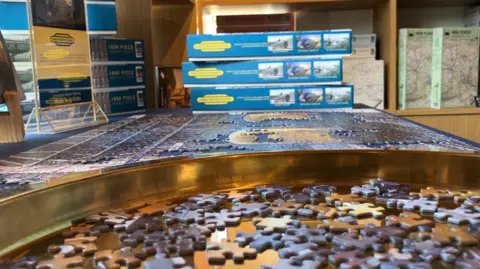
The process of producing a jigsaw can take around a month, added Cornish.
It begins with finding the right image, and involves printing, mounting, drying and cutting the puzzle.
Map-based puzzles are popular, as are identifiable landmarks: "we try to avoid a lot of sea and sky, because not many people enjoy things like that!"
Follow BBC Stoke & Staffordshire on BBC Sounds, Facebook, X and Instagram.