Records detail lives of people who fought for land rights

 NRS
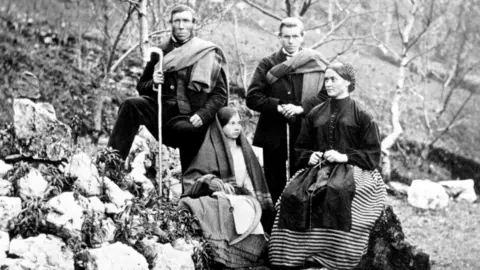
NRSRecords of the lives of people who fought for rights to land more than 140 years ago have been made available online for the first time.
About 16,000 entries from 1883's Napier Commission have been published by National Records of Scotland (NRS).
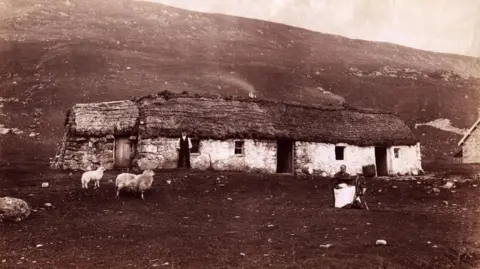
The commission investigated the grievances of tenant farmers called crofters and also of cottars - farm labourers - against landowners in the Highlands, islands and Argyll.
The records include people's names along with details of what land they held, their rental payments and what livestock they kept.
The documents also show how crofters took on seasonal work like knitting stockings, gathering shellfish and boat building.
The public inquiry was held in response to the Crofters' War.
Waged throughout much of the 1800s, it was a dispute between landowners and communities of tenant farmers distressed by high rents, their lack of rights to land, and eviction threats to make way for large-scale farming operations.
The process of moving families out of inland areas where they had raised cattle for generations to coastal fringes of large estates, or abroad to territories in Canada, had started with the Highland Clearances in the 18th and early 19th Centuries.
Both the clearances and the Crofters' War were marked by violent clashes between people facing eviction and landowners and the authorities.
 NRS
NRSFollowing the commission, the UK government passed the Crofters Holdings (Scotland) Act in 1886.
This granted crofters more security through improved land rights and rents.
It also established the Crofters Commission to rule on disputes between landlords and crofters.
NRS archivist Veronica Schreuder said: "The commission captured ordinary people's voices and ensured they were heard within the corridors of power.
"These records are an unparalleled record of lived experiences in the Highlands and Islands."
She added: "The details captured show how communities survived.
"They reveal multi-generational family arrangements, support systems and women's economic roles.
"They will help family historians, academics and social researchers alike. It's exciting to see them released online and available for people around to world to search."