Why will Merseyside Police and fire crews not take part in Pride?

 David Wesley Yates
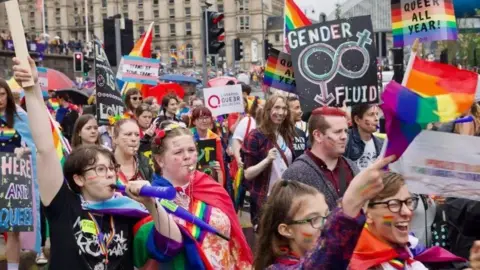
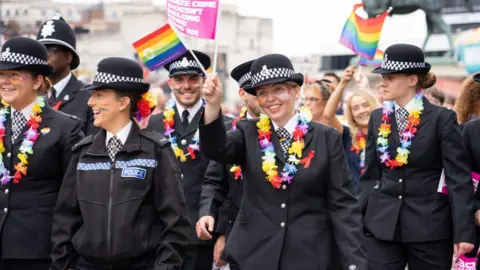
Fire crews and police officers will not take part in Pride marches on Merseyside this summer.
Merseyside Fire and Rescue Service (MFRS) said it was taking "a pragmatic approach" to the event in light of a High Court ruling that found police officers in the north-east of England had been unlawfully allowed to take part.
Last year, Merseyside Police officers did not join the march in Liverpool for the same reason.
A spokesman for MFRS said that while it was "firmly committed to supporting all communities" it would be staying away while waiting for legal advice.
In a statement, MRFS said it valued "the importance of inclusive engagement" and was currently reviewing its approach to ensure any future participation in external events was "fully compliant with its statutory obligations".
"While this review is ongoing, the service has taken a pragmatic approach in relation to attendance at Pride-related events," the representative said.
"The service remains firmly committed to supporting all communities in a manner consistent with its duties as a public authority."
 Merseyside Police
Merseyside Police will also not be participating in this year's march.
"Following the decision by organisers last year to categorise Pride as a protest, we took the decision not to participate directly in the march in an official capacity in 2025," said Assistant Chief Constable Matt Smith.
"Our stance remains the same this year because once more our participation could reasonably be perceived by the public as the police taking a side in ongoing societal and political debates.
"We understand this may be disappointing to many, but this decision has been made to ensure we remain compliant with legal expectations and maintain public confidence in our impartiality.
"The fact we do not participate in the Pride march this year does not change the fact that we are an inclusive organisation.
"We are very fortunate to have staff from many different backgrounds, including the LGBTQ+ community, work for us and we remain fully supportive of them."
What is Pride?
Pride events initially took place annually in June, the month in which the unrest that came to be known as the Stonewall riots took place in 1969.
The riots took their name from a gay club in New York that had been raided by police - the Stonewall - and the Pride marches that were held in the years immediately afterwards were in part protests against homophobia and police brutality.
Over the years, Pride marches have become celebrations of diversity, with some drawing corporate sponsorship and financial support from local authorities. But they continue to face claims that they are too political.
In recent weeks, Reform UK-controlled St Helens Council announced it would no longer be supporting Pride-related events, with council officers instructed to cease engagement with all aspects of Pride, including removing displays in libraries.
Its leader George Woodward said the council did not "consider celebrations of sexuality, especially those with left-wing political leanings such as Pride, to be appropriate for St Helens Borough Council to dedicate valuable officer resources".
In some parts of England, Pride organisers have banned the participation of representatives of some political parties over their views on transgender rights.
Liverpool Pride march takes place in the city centre on 25 July.
Listen to the best of BBC Radio Merseyside on Sounds and follow BBC Merseyside on Facebook, X, and Instagram. You can also send story ideas via Whatsapp to 0808 100 2230.