How a Led Zeppelin hunt helped launch an Oasis promoter

 Conal Dodds
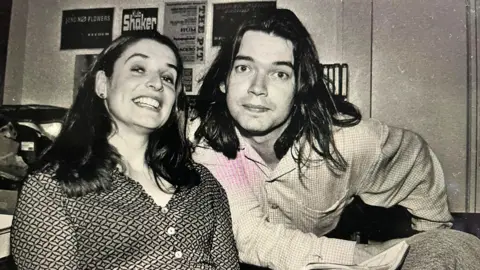
A chance, almost comic attempt to track down Led Zeppelin singer Robert Plant helped set one of Britain's most influential music promoters on his path – eventually leading him to work with Oasis during the height of Britpop.
Conal Dodds, now co-founder of the Bristol Sounds festival, says his career in live music began with what he describes as a "Wayne's World‑esque" mission after being asked by Oxfam to help raise money for a well in Cambodia.
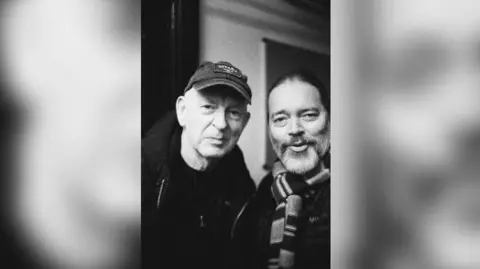
"The work was something I fell into," said Dodds, who has spent 37 years promoting live music.
"My mate Rob knew Robert Plant from Led Zeppelin lived in Monmouth nearby. Through tenacity and determination we kept going to his house and asking him to help until he was in."
 Conal Dodds
From pub gigs to Britpop's biggest bands
Dodds was soon told he had found his calling.
"I was told, 'you're really good at this you should be a promoter'."
He began booking shows at a small pub in Hereford before moving on to larger venues and eventually working for a national promotions company.
"It felt quite natural. It's not an exact science promoting - there isn't a manual to it.
"We're not putting beans into tins, it's a very creative industry. Most of us have learned to do things on the job over many years."
During the 1990s Britpop era, Dodds worked with bands including Pulp, Oasis and Echobelly.
Within a few years, he found himself promoting major shows, including Oasis's landmark 1996 concerts at Knebworth Park.
Learning the trade on the ground
Before that, Dodds honed his skills at grassroots venues.
He "cut his cloth" as a club promoter at TJ's in Newport where John Ciccolo taught him how to deal with people and the audience, before meeting Bob Angus, who owned Metropolis in Bristol, and taught him how to make money in the business.
He later worked with Midland Concert Promotions, which showed him how to operate "in a professional manner" and on a larger scale.
 Ania Shrimpton/ Plaster
'Building something in Bristol'
Dodds moved to Bristol in 1995 with his wife Lee and began focusing on supporting local artists and venues.
"I was always conscious of the fact that if I didn't create something in Bristol then someone else would," he said.
That thinking led to his involvement in launching Bristol Sounds, now a major fixture in the city's cultural calendar.
It sees him source acts through Crosstown Concerts as a promoter.
"We'll always try and put on smaller acts that we've worked with in Bristol along the way," he said.
Bristol Sounds and the value of relationships
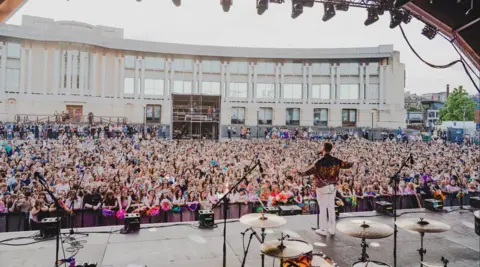
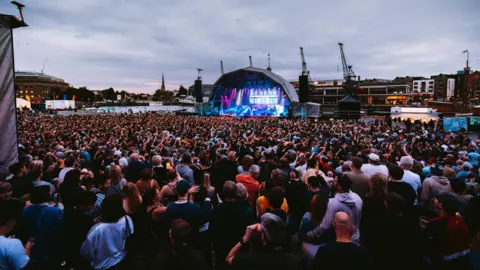
Now in its 12th year, Bristol Sounds takes place over six days at the Lloyds Amphitheatre on the city's harbourside.
This year's headliners include The Streets, Super Furry Animals, The Kooks and local band Getdown Services, from the Bristol indie label Breakfast Records.
"I've worked with Super Furry Animals and Ash since the early 90s," said Dodds.
"I'm not complacent with working with them, I still work hard and pay them the going rate, but there's a real value in it for me because these acts feel like family to me.
"The human element of what I do is really important to me."
He said understanding people was central to being a successful promoter.
"You just have to get tuned in- everyone's got a different frequency and part of the skill in being a promoter is that you need to work out who you're dealing with - sometimes people need an arm around their shoulder, sometimes they need a bit of distance."
Grassroots venues 'the lifeblood'
Dodds said the live music industry was under pressure, particularly at grassroots level.
He explained that running a business is "really difficult" and emphasised how "not every business is going to succeed".
"It's not easy. Most of the venues that are very well run succeed," he said.
"It's in the realm of the general public as to whether venues succeed - without them there isn't a live music industry.
"The government and local councils also need to realise that there aren't going to be the stadium acts of the future without grassroots music venues.
"They are the lifeblood of the music industry."
 Nadine Ballantyne/ Plaster
Reflecting on Bristol Sounds, Dodds said it remained the most distinctive venue he had worked at.
"The backdrop to it is the water and the industrial museum on the other side - you can see St Mary Redcliffe church - an 800-year-old church," Dodds said.
He recalled a 2024 performance by Skindred as a standout moment.
"Benji, the singer, I put on his first gig back in the day. The energy from him in 91 was still there in 24 - just on a bigger scale.
"There were 3,000 people swinging their t-shirts in the air being commanded by him. That was incredible."
Looking ahead, Dodds said he hoped the festival still had a long future.
"I'd like to get to a point where we can see Bristol Sounds as having done 50 years - we've done 12 years so we're youngsters.
"I've got a few more years left in me yet," he added.
Follow BBC Bristol on Facebook, X and Instagram. Send your story ideas to us on email or via WhatsApp on 0800 313 4630.