Burnham on course to be PM, but what would his No 10 operation look like?

 EPA/Shutterstock
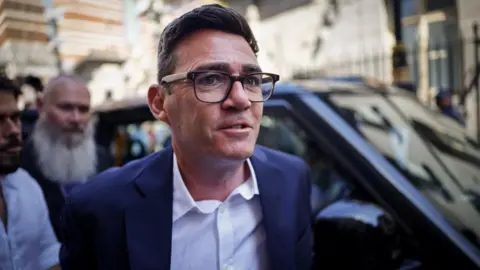
The big question in Westminster today is not who will be prime minister, it's who will Andy Burnham appoint to his government and what will he do with power.
Burnham's accession is taken as a given by Labour MPs. As soon as Sir Keir Starmer announced his departure, it became overwhelmingly likely.
In the past couple of days, the remaining obstacles have fallen quickly, including on Wednesday morning when senior minister Darren Jones confirmed he would not be launching a challenge of his own.
The former Armed Forces Minister Al Carns has not ruled out his own bid, but it seems vanishingly unlikely he would get the backing of 81 Labour MPs needed to trigger a formal contest.
Attention is therefore increasingly focused on what Burnham in No 10 would look like.
On his policy and priorities, there are still a lot of questions in search of answers. We are starting to get some answers on his top team, however.
Rachel Reeves will not be his chancellor. That is hardly a surprise for an incoming prime minister vowing to offer change.
But it is still a big deal: Reeves has not only been chancellor for two years but spent years in opposition fashioning Labour's economic approach.
She is likely to be offered a more junior cabinet position - though it is worth noting how rare it is for a chancellor to move downwards in the cabinet.
With the exception of Nadhim Zahawi, who spent a few brief weeks as Boris Johnson's chancellor, you have to go back to 1983 for an example of a chancellor moving into a more junior cabinet job.
So who replaces her?
The frontrunner is widely considered to be Ed Miliband, the energy secretary. He urged Sir Keir not to block Burnham's first attempted return to Parliament in January and has been seen as supportive of Burnham's ambitions ever since.
Miliband's advocates argue that he is exactly the kind of chancellor Burnham would need to make good on his ambitions to transform the British economy.
They also argue that - whatever MPs think of his agenda, particularly on the green transition - he has shown in the past two years an uncommon ability to drive the government machine. He also has years of Treasury experience advising Gordon Brown.
But there are many Labour MPs, especially on the right of the party, who are opposed to the idea.
Some of that is animosity lingering right back to his years as leader. But their bigger concern about Miliband is policy: for some he would represent a shift too far to the left.
"I think the chancellor thing is a huge risk for Andy," says one MP.
"If Andy goes through with Ed it will divide the party from the start," says another.
What about Wes Streeting? He has been talking up his economic credentials in recent weeks, arguing for a vision of "progressive capitalism" – and his allies are lobbying for him to get the keys to No 11.
They argue he would be a "sensible choice" who could reassure financial markets. They also claim his communication skills would mean he would be able to sell big economic ideas at a human level.
But there are big risks too. "Wes wants to be prime minister one day. Would Andy ever be able to trust that Wes would have his back when things are tough?" asks a minister.
Other names doing the rounds include Yvette Cooper, the foreign secretary who like Burnham is a former chief secretary to the Treasury, and John Healey, the ex-defence secretary - though appointing him would commit Burnham to a large increase in defence spending.
 Getty Images
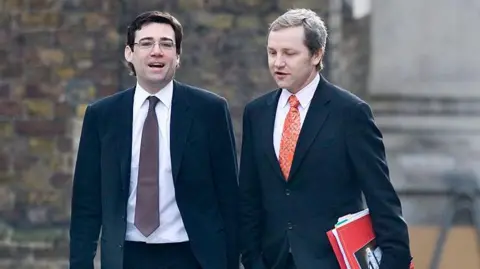
One area where a decision has been made is on the question of who would run Burnham's Downing Street. His chief of staff would be James Purnell, a former culture secretary and work and pensions secretary.
This is ideologically interesting: when he was in elected politics, Purnell was seen as a firm Blairite on the right of the Labour Party. He also resigned from Gordon Brown's government in an attempt to bring him down - and replace him with David Miliband.
But this might be more about personal allegiances than ideological nuances.
Purnell and Burnham are three months apart in age. They were both special advisers in Sir Tony Blair's first government, before being elected to represent Greater Manchester constituencies in 2001.
They shared an office as new MPs and became cabinet ministers at the same time in 2007. They even for years played in the same New Labour football team - "Demon Eyes".
Since leaving politics in 2010 Purnell has held various roles, including spending seven years as a senior executive at the BBC.
As Burnham's succession becomes more inevitable and his preparations for government still more advanced expect more speculation about who will fill big jobs - and more questions from Labour MPs about what the appointments reveal about Burnhamism.

Sign up for our Politics Essential newsletter to keep up with the inner workings of Westminster and beyond.