'Worrying' heat brings rare birds to Yorkshire

 Lee Johnson
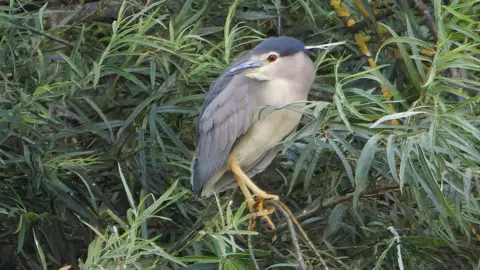
A flock of rare black-crowned night herons have migrated to a North Yorkshire nature reserve after the recent heatwaves pushed them away from mainland Europe.
Bolton-on-Swale Nature Reserve is currently hosting one of the UK's largest flocks of the birds, with one also spotted at North Cave Wetlands Nature Reserve near Hull for a third consecutive year.
Jonathan Leadley from the Yorkshire Wildlife Trust said they were finding "more and more of these birds pushing north looking for suitable places to live".
He said while it was great that the reserve could provide a home for the species, it was "incredibly worrying" as it was a sign that climate change was having a really big impact on wildlife.
The black-crowned night heron is smaller than the more commonly seen grey heron, and is most active at night, roosting during the day and then waking around dusk to hunt for food.
According to the trust, the flock of six moved to Bolton-on-Swale as excessive heat and drying wetlands across the Continent pushed them northward.
 Tom Marshall / Yorkshire Wildlife Trust
"A lot of those traditional wetlands in the south of Europe, places like southern Spain, northern Italy, where night herons are native and are common, they're starting to lose their habitat," he said.
"If they lose their habitat they can't feed, which means their breeding is unsuccessful."
After their "increasing" numbers each year, Leadley said it looks like the birds are starting to colonise.
According to the trust, they breed mainly in continental Europe, heading south of the Sahara in autumn and often spending winters in Sub-Saharan and West Africa.
Despite the reasoning for their visit, the sight is bringing "real joy for Yorkshire birders", with people travelling from across the area to try catch a glimpse.
Leadley said "early and late" are the best times to see them, but "there is a chance during the rest of the day if you look hard in the willow trees."
Listen to highlights from North Yorkshire on BBC Sounds, catch up with the latest episode of Look North.