'I was caught in a rip current - lifeguards saved me in 30 seconds'

 BBC
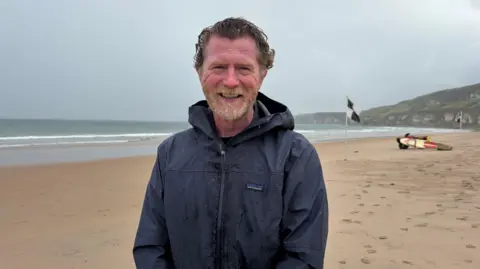
BBCWhen Andrew Todd and his children got caught in a rip current while swimming in the sea, it could have spelled disaster.
But the experienced sea kayaker did not panic - because he knew there were lifeguards back on the beach who were primed to come to the rescue of anyone in trouble in the water.
"It was all done and dusted in 30 seconds, it felt like a long time at the time but it was all very quick, very efficient," the 54-year-old said.
He was rescued by lifeguards from the RNLI - who are marking 15 years of patrolling beaches along Northern Ireland's coast.
The lifeguard service began 10 years after the service was first launched in England and covers beaches on the north coast and County Down.
Todd and his children Issy and Zack, who were 18 and 13 at the time, were swimming off Whiterocks beach near Portrush in County Antrim in the summer of 2022 when they got into trouble.
As an experienced water user, Todd had given them advice on safety, including swimming between the red and yellow flags marking the area patrolled by lifeguards.
But after a while he noticed they were moving down the beach and that his son was struggling to swim.
"Straight away I knew he was in a rip [current]," Todd, who lives in Helen's Bay in County Down, said.
"The lifeguard said afterwards that the rip formed so quickly... it just absolutely came from nowhere.
"That's the thing, the days change constantly, you've got to keep your wits about you and that day we just got caught off guard."
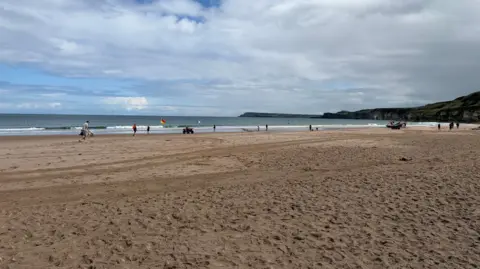
Todd got his children to stay calm while a friend reached the beach and raised the alarm, at which point a lifeguard with a rescue board was already in the water and helped Issy.
The jet ski was then launched to come to the aid of Andrew and Zack.
"I felt relived when I saw the jet ski coming," Todd said.
"I'd seen them do rescues before so I knew exactly what was going to happen.
"It was quite a rush coming back in but it was all very quick and efficient.
"That night the glass of wine definitely tasted better."
Since the RNLI lifeguard service launched it has responded to 2,300 incidents and made 500 rescue efforts across the UK.
In addition lifeguards spend a large amount of time preventing people getting into trouble in the first place.
The RNLI estimates 95% of a lifeguard's role is prevention.
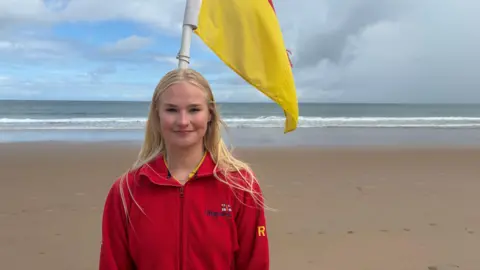
Freya Macfarlane, one of the lifeguards tasked with keeping people safe on Northern Ireland's beaches, said this means each day starts with assessing the water and the beach for hazards.
The process continues throughout the day.
"For example we have an offshore wind sock which we'll put on top of the lifeguard hut to say 'no inflatables' because an offshore wind can drag an inflatable out to see in a matter of seconds," she said.
"Social media is a big aspect of the preventative action, to tell people and teach them about water safety, about float-to-live."
No matter how much preventative work is done, there will always be people who need to be rescued.
"It's exhilarating, you get a lot of adrenaline," Macfarlane said.
"But your training comes into practice and you don't panic because of how much we train.
"My message would be to check the tide times and the condition of a beach before you go and just make sure that beach is RNLI lifeguarded.
"We know how to keep you safe and monitor you all the time."
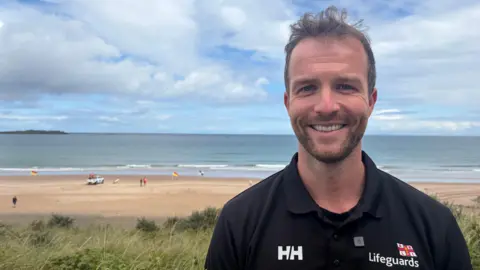
Michael Thompson, the RNLI's lifeguard lead for Northern Ireland, said he had seen a big increase in the number of people using the water and visiting beaches patrolled by RNLI lifguards.
He said preparing for a day in the water was one of the most important things people could do to keep themselves safe.
"Pick a lifeguarded beach and if you have any questions when you come down there, come and speak to the lifeguards," he said.
"They can give you advice on whether it's safe to swim, what potential hazards are unique to that area.
"At Whiterocks here we have rip currents, we have dangerous waves and these can occur at different parts of the day and different parts of the tide, so it's very, very important when you come down to have a chat with our teams."
He also offered advice on what to do if things went wrong.
"It's just really important to keep calm," he said.
"With a rip current it's just going to take you out and as long as you have a bodyboard, you have a surfboard or something to hold on to, just stay calm, float out to the back, use one hand to wave for help and that will attract the attention of someone or a lifeguard who can come out and get you."