Ewelme Almshouses: Sanctuary or servitude?

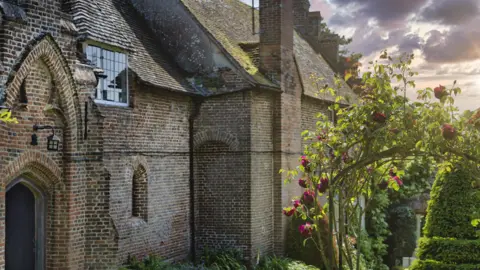 Ewelme Almshouse Charity
In 1437, the residents of 13 newly-built houses next to a church in a south Oxfordshire village quickly learn their benefactor has ulterior motives.
The Ewelme Almshouses were built by Alice Chaucer and her husband, William de la Pole, to provide homes for 13 poor men from their estates.
In exchange for the apparent kindness, the almsmen are required to go to St Mary's Church five times a day and recite 223 prayers to ensure Alice and William's safe passage to heaven.
Nearly 600 years later, the current eight residents still have to pray next to Alice's famous tomb - but only once a year.
Just why were these beautiful almshouses built? Two reasons - status and salvation.
Step forward mediaeval power couple William and Alice de la Pole.
Alice was the granddaughter of English writer Geoffrey Chaucer and, by the time of her death, she was the second-most influential woman in the country after the Queen, not to mention the richest.
But wealth was not everything back then, status was king.
When it came to her third marriage to William, something had to be done to elevate her family name.
"When Alice and William married, establishing almshouses was seen as a very powerful way of really demonstrating the Chaucer family's status and making it equitable with William's," said Angharad Saunders, Ewelme Almshouse Charity trust manager.
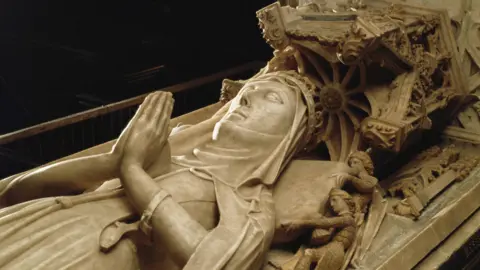 Hulton Archive via Getty Images
But that is only part of the story. As well as the almshouses, a chapel was built on to St Mary's church so that the almsmen could pray for the eternal souls of their benefactors, that they did not linger long in purgatory but speed swiftly to Heaven.
The almsmen led a life governed by strict rules and Alice expected a lot in return for the humble homes.
The men had to be "meek in spirit, not incontinent and no liaising with village rif-raff".
So, although the almshouses were one of the first examples of affordable housing, they came with caveats.
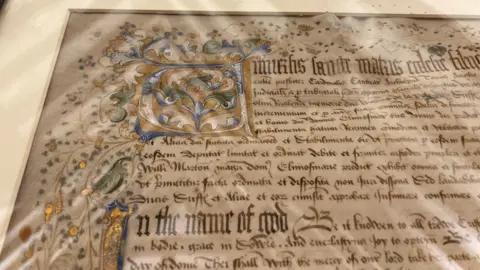
The exterior of the almshouses remains almost unchanged today but they have been modified internally to more comfortably house eight people in the 21st Century.
For the current residents, there are still regulations and an application process to pass but they live independent lives, albeit at one of the cheapest rates in the county, thanks to money still generated by the de la Poles' estate.
Sally Fehr has lived in her almshouse for 14 years, after finding herself over 60 and in a challenging situation.
She said she often thinks about the previous people to have walked on her floorboards.
"I love history and I'm so lucky to live surrounded by all this," she said.
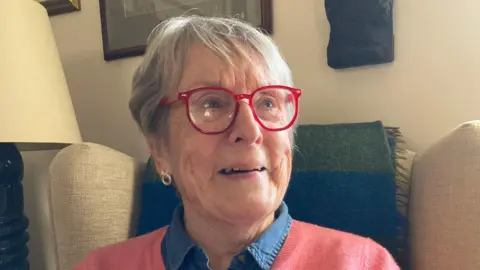
The residents are still obliged to give thanks to Alice and William de la Pole at an annual service in the dedicated chapel.
Sally also volunteers at St Mary's Church, showing visitors the world-famous tomb of her benefactor.
Sally said Alice was "regarded as quite a dangerous woman and managed to hang on to all the money that she was left by three successive husbands… didn't put herself in a convent but continued to run her estates and everything and lived until she was in her 70s, which again is quite remarkable for that age".
She added: "Obviously, she was doing it for very different reasons than would happen if it was being built nowadays, all to do with religion and indulgences, but nevertheless we're huge beneficiaries and it's all still beautiful."
While they do not have to pray several times a day anymore, under the watchful eye of Alice, the current residents are still grateful for the shelter provided by the Ewelme Almshouses.