How do we keep our schools cool in the hot weather?

 BBC
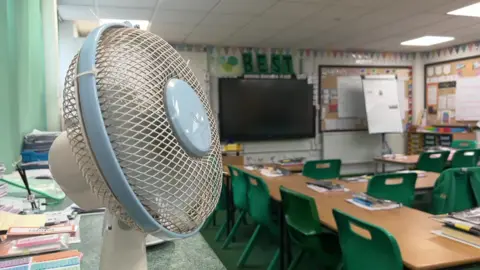
BBCAnother week, another heatwave, bringing further frustration for parents left wondering if their child's school will close again.
A Berkshire primary has told us that one day in the most recent heatwave the temperature reached 32C.
Not that hot you may think, but that temperature was recorded at 06:30, long before any pupils had even arrived.
So what to do as our rising temperatures come up against generations of classrooms built to keep heat in, rather than out?
Some schools think we may even have to bring the long summer holiday forward to May to avoid the worst of the heat.
According to its website, The Pines is "a spacious primary school in the heart of Bracknell, with extensive outside areas".
Built 50 years ago it has large windows in every classroom, with low flat roofs and poor ventilation that make it hard to limit temperatures.

Headteacher Kate Davies says it was 32C when staff first arrived at the height of last month's heatwave.
"Then it went way over 35 through the day," she says.
"So it was hot classrooms and, with children in it, it got even hotter, so it becomes really stuffy. There's not a lot of air flow so it's really hot to work in."
She says pupils struggle to maintain their concentration in extreme heat, making it even harder for their teachers to keep them focused on their work.
The headteacher thinks it may soon be time to take a radical approach to the problem.
"If things don't change we're going to have to look at the term times," she says, suggesting moving the summer holiday earlier into May, like they do in some other countries.
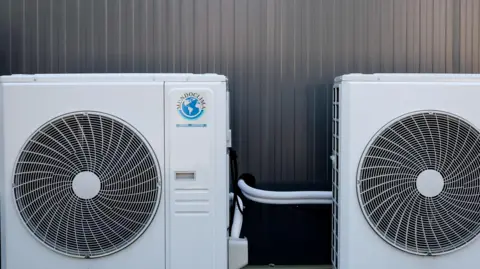
But, in the meantime, she says: "I'm a real believer that air-conditioning needs to be in every school. I think that is a more sustainable option.
"In the long-term we have to educate people on climate change, that's really important."
 FILIP SINGER/EPA/Shutterstock
Although not everyone agrees that putting air-conditioning units in schools is the answer.
Jack Pringle from the Royal Institute of British Architects (RIBA) says: "If you're having to take children out of a classroom you probably want to nip out and buy an air conditioning unit.
"But it's an emergency fix, and it's not great because it just makes our climate conditions worse.
"We don't want to be chewing up electricity to cool buildings that could be cooled in passive ways using zero carbon."
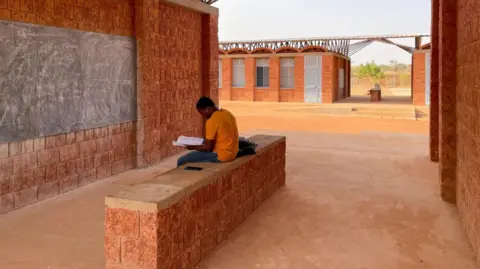
Twenty years ago the architect started the charity Article 25 to help reduce temperatures in schools in countries like Tanzania.
Well-established architectural principles, such as placing windows out of direct sunlight and improving ventilation, dropped classroom temperatures by several degrees.
"Building passive schools with double roofs, with ventilation going through them, helped drive down the internal temperature by up to 7C without any use of power at all," he says.
"It can be done. Those are very special schools, they're very specially designed, and they work incredibly well."
 Article 25
Building new schools complete with heat-resistant features is one thing, improving our current schools quite another.
Jack Pringle says simple measures, such as providing more shade in outside spaces and placing umbrella-like shades directly outside windows, to let the light in while keeping the worst of the heat out, would help.
This week's high temperatures will place the spotlight on our schools once again.
Kate Davies is hoping they will not reach the highs that led her to close her school for two days last month.
But she says no matter what happens "we need to look at our buildings to make sure they're fit for purpose, to keep children in school, to keep them educated".