How potato festivals and community ownership are rejuvenating a seaside town

 BBC
BBCCath Maguire can recall how busy Girvan could get on warm summer days, when day-trippers and holiday-makers were in town.
"People were already saying it was slowing down from the town's heyday, but in the summer season you would have to elbow your way up the street", she recalls.
Those days were the early 90s, decades after the Ayrshire town's busiest times as a holiday resort.
What was a slow decline rapidly accelerated as the 1990s and 2000s went on.
Now a number of locals are seeking to regenerate the area, hoping it can flourish in a different way to those long-gone glory days.
Cath is a development officer with Go Girvan, a group that hopes to boost the town in various ways, from community events to bringing disused buildings back into use.
She has lived in Girvan since 1994.
"At first the decline was quite slow, then it just fell off a cliff", she says.
"Suddenly there were businesses closing, shops not being looked after and things like that.
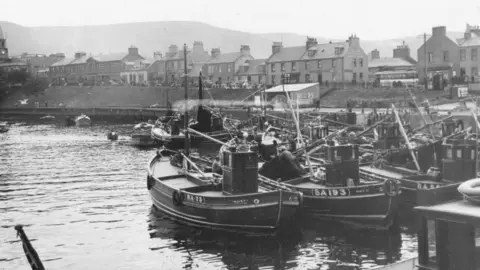
"It was a perfect storm - there was a loss of income, there were package holidays and a lot of the fishing community moved to Troon."
 Getty Images
Like many seaside towns across the country, the onset of package holidays and affordable travel abroad was a huge blow to Girvan.
More than 50 years on and the town faces further challenges from transport issues to lack of employment opportunities for young people.
"People in Girvan can often get overlooked, if you live here and not somewhere like Ayr," says Gail McMaster, a project coordinator with the Girvan Youth Trust.
"Transport is absolutely a barrier for young people in the area - there's one train an hour at best - but what we want to do to give them as many skills as possible to help them as much as possible."
However there are signs of recovery.
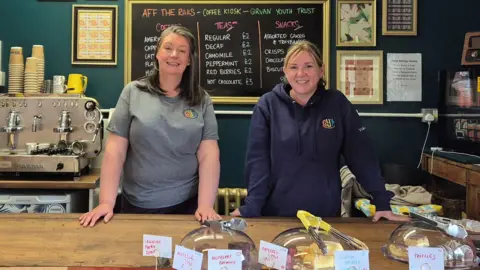
Gail and her colleague Michelle Scobie are standing behind the counter of a small café in the town's train station, where cakes and sweets from a local baker are on sale.
It is one of various community led initiatives taking root.
"Girvan still has a great sense of community and it is full of people who want to be involved," says Michelle.
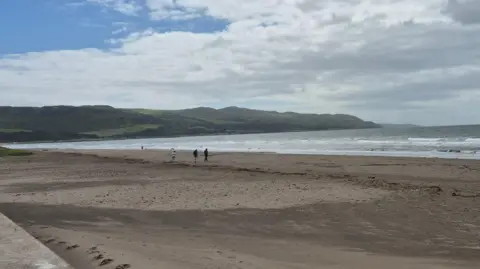
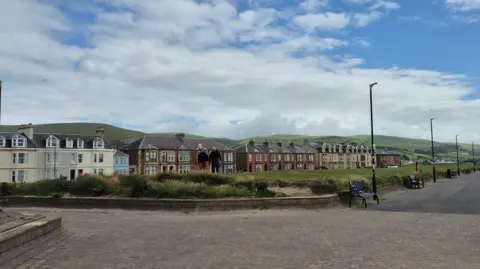
"There are a lot of good things here - we are blessed with a lovely promenade, a lovely beach and some lovely countryside."
Similar views are shared by Zanne Domoney-Lyttle, the lead project officer with Girvan's Story - a five-year initiative by South Ayrshire Council aimed at funding improvements for several of Girvan's landmark buildings.
On a blustery day walking along the town's promenade, she told BBC Scotland News about her optimism for the future of the town, where she has lived for five years.
"One of the lovely things about Girvan is that people are very nostalgic about it," she says.
"It has quite a long history, and that's really important for us to draw upon that.
"But it's also important that while those are still mainstays, we are also diversifying and making sure that it's not just buildings that are here another 200 years, but the community is as well."
Several people who spoke to BBC Scotland are adamant the town cannot just pine for the past, in an area where amusement arcades still sit on street corners and shops offer up buckets and spades.
"It's not about replicating what we did in the past, but learning from it and not being afraid to try new things," says Zanne.
"We want something sustainable that's not flash in the pan, something that will work for the town for 50 years."
That can take some unusual forms.
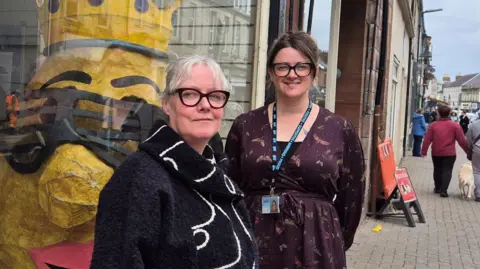
In the window of the Go Girvan building sits a large paper-mache costume of a potato called King Tat - worn by a local to advertise Tattie Fest, a yearly celebration of the Ayrshire epicure potato.
"It's the first to come out the ground in the season and we are quite proud of that", says Cath.
"We started Tattie Fest about four years ago. Someone gets into the King Tat suit, and there is a female one called Tatiana too.
"We want to develop things that are unique to Girvan - maybe a bit quirky and weird, but very much part of the town."
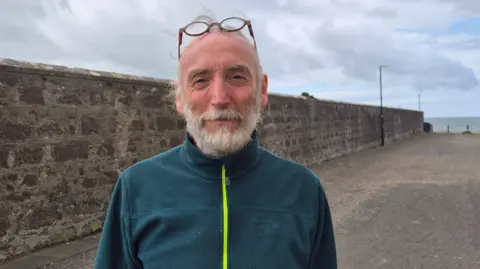
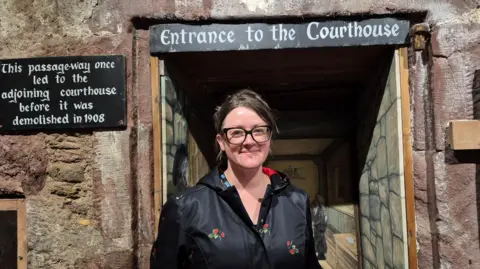
Standing inside Stumpy Tower - a former jail that is the last part still standing of the town's historic heritage, Zanne stresses the area has character to it.
"Girvan has a bit of a dark side, whether stories of pirates and smugglers at the cove, or the Sawney Bean legend - about a cannibal family in the area. Whether it's true or not doesn't matter, it's all about that myth that this area has."
Yet talk of regeneration can only do so much. Shops still sit empty, with signs mentioning Covid-19 safety measures an indication of how long they have been closed, and the town's beach is quiet.
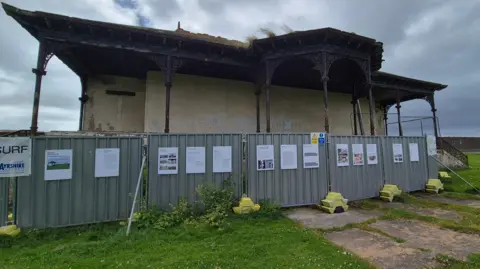
Along the seafront sits a derelict bandstand building. A look inside reveals rolled up posters, broken chairs and a long abandoned carpet ball table.
However, it has recently been acquired by the Adventure Centre for Education charity, who hope to turn it into a café and events space.
"I think it'll have a transformative effect on people's psychology, seeing a derelict building come back to life," says the charity's Chris Saunders.
"If you look out to a derelict building it's not a good thing for your thought process – this is a beautiful building and when it is brought back to life it is going to look beautiful again."
There are similar hopes for the former South Parish Church, which could become an events venue under plans spearheaded by Alan James - a longstanding vet in the town who also runs Girvan's arts festival.
"There is a raft of things that aren't massive in their own right, but they are all happening now," he says.
"There does seem to be a feel that something is happening in Girvan again."
Not everyone agrees - locals who spoke to BBC Scotland expressed concern that young people in deprived areas cannot find jobs and are trapped in a cycle of poverty.
Those involved with both Go Girvan and Girvan's Story hope that changes in the long run, by bringing back currently disused buildings and creating jobs alongside it.
For Chris, the bandstand project will be lengthy, but rewarding, and the latter word is how he would describe the area in general.
"People say 'if you could live anywhere else, where would it be, but I look at the scenery here every day and go 'this is stunning'. I wouldn't want to be anywhere else."