Student urges meningitis vaccine uptake after coma

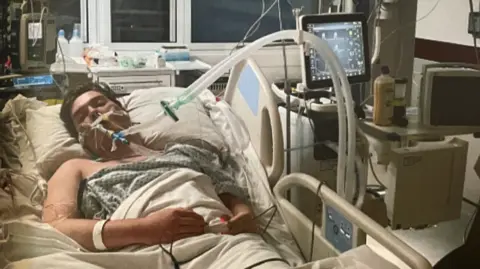 Leo Strider
A student who spent five days in an induced coma after contracting meningitis has urged young people heading to university to take up a free vaccine being offered at pharmacies across England.
Leo Strider, 24, from York, became critically ill with meningitis B while studying at the University of Nottingham and said he initially mistook the symptoms for a hangover or "freshers' flu".
His appeal comes as high street pharmacies begin offering the MenB vaccine to sixth formers before they leave for university following a recent fatal outbreak among students in Kent.
Strider said: "If I could have been vaccinated then I wouldn't have had to go through that."
Meningitis is a serious infection of the membranes surrounding the brain and spinal cord that requires urgent treatment.
It can affect anyone, but babies, children, teenagers and young adults are most at risk, with experts warning that meningitis B can spread more easily in shared accommodation.
Strider said he woke up one day with a severe headache and decided to skip lectures and rest.
As his condition deteriorated, he began struggling to communicate and lost feeling down one side of his body.
"I could think what I wanted to say but what my body was doing wasn't the same," he said.
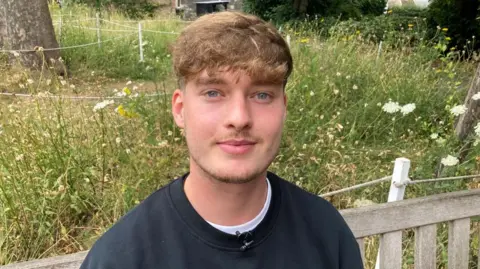
After returning to his student accommodation, his then-girlfriend called an ambulance.
Strider said the next thing he remembered was waking up five days later in intensive care at Queen's Medical Centre in Nottingham.
His parents were told he was critically ill and faced possible complications including hearing loss, sight problems and memory issues.
"They didn't know if I would pull through," he said.
When he regained consciousness, he was disorientated and initially believed he was still in his university room.
"I looked to my right and there was my mum, my dad and my girlfriend. That made me even more confused, because the last thing I remembered was being in my flat."
Strider said he suffered severe headaches for weeks afterwards and still experiences some weakness on his right side and memory loss.
He has now largely recovered and is backing efforts to increase protection against meningitis among students.
"I'd say you should definitely go get it," he said.
"You might think you're not going to be one of the people who gets it, but you might be. I didn't think I would and I did. If I could have been vaccinated then I wouldn't have had to go through that, and neither would my family."
 BBC/Mark Ansell
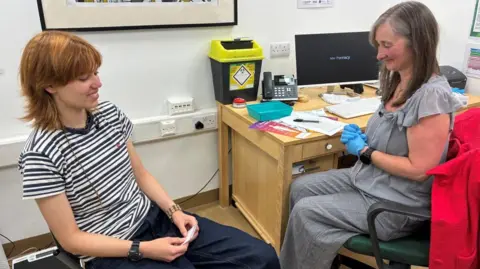
Lily Pudner, 18, has just finished her A levels and is about to take a gap year before deciding on her future.
She was the first person to have the vaccine at Wicker Pharmacy in Sheffield earlier.
She said the Kent meningitis outbreak in March this year had prompted her decision.
"I want to stay safe after what happened in Kent to students, that was quite scary. The more people that get vaccinated, the more effective it will be.
"I'll still be mixing with people going to university and people in my age group, so it's really important that I get it."
Julie Grigg, the pharmacist at the Wicker Pharmacy who administered Pudner's vaccine, said: "It's been noticed that earlier this year a new strain of meningitis B has become prevalent.
"We're concerned that numbers normally reach their peak in the autumn which coincides with all the students going to university.
"We really want to get all of those people vaccinated to prevent any outbreaks at the beginning of this academic year.
"We're here, we're ready and waiting. We've got vaccines. We just need people to book on and come down."
Leo Strider's experience highlights why health experts are urging young people to take up a new NHS meningitis B vaccination programme.
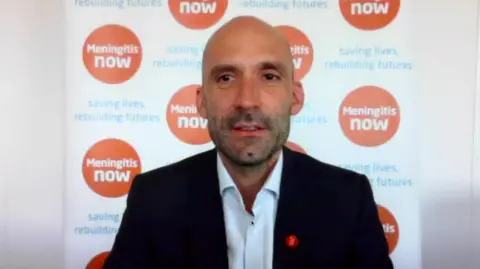
Dr Tom Nutt, chief executive of charity Meningitis Now, said meningitis remained a "truly awful disease" that can kill within 24 hours and claims the lives of around one in 10 people who develop it.
He said: "The reason why vaccinating teenagers and young adults is so important is because they are the second most at-risk group of that disease in the population."
Dr Nutt said many survivors were left with life-changing effects, including limb loss, brain injury, sensory impairments and lasting psychological trauma.
He said young people are particularly vulnerable because meningococcal bacteria are carried more commonly among teenagers and students.
"When you get to that young adult, student age group, you actually find that the carriage of that bacteria goes up to one in four," he said.
"Young people are socialising, sharing drinks, vapes and food, kissing and mixing on university campuses. That's why students, particularly first-year students, are at increased risk."
Dr Nutt said he "very much welcomed" the new NHS programme, which is being offered to school leavers and students entering residential university or college accommodation for the first time this autumn.
Listen to highlights from North Yorkshire on BBC Sounds, catch up with the latest episode of Look North.