After Muckamore dust settles, what should care look like?

 BBC
BBCThe care of vulnerable adults in Northern Ireland was brought into sharp focus with the publication of the Muckamore Abbey Hospital Inquiry report.
But how should we be caring for vulnerable adults?
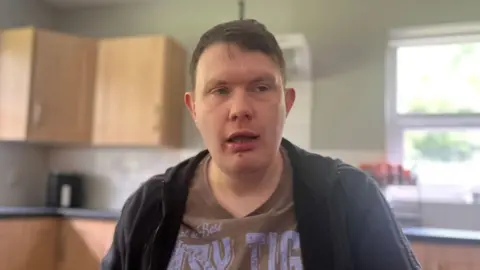
James Patton, 39, has complex needs and lives in his own home, with round-the-clock care.
His parents said he has thrived since leaving Muckamore and living in the community.
According to the Department of Health, more than 1,200 adults with a learning disability have a care package in Northern Ireland, which covers both care in the community and residential care.
There are several charities in Northern Ireland which provide supported living for adults with learning disabilities in the community, including some people who were previously in Muckamore.
Positive Futures, which runs James' accommodation, is one of them.
Its chief executive, Agnes Lunny, said it was important "to recognise that people with a learning disability are equal citizens".
"We need to understand people deserve to have a life, and that life needs to be in the community."
She said there was a need "to move away from crises" and instead "support families early and ensure that people can live well in their own communities".
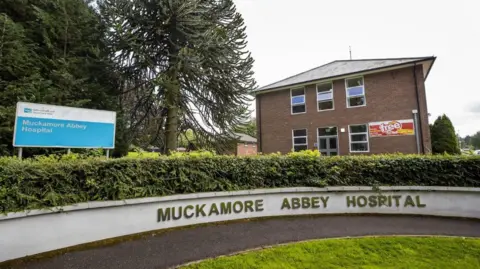
What is Muckamore Abbey?
 PA Media
The hospital in County Antrim was a regional hub for adults and children with severe learning and mental health disabilities.
A police investigation began in 2017 after allegations of ill-treatment began to emerge.
The public inquiry into abuse at the hospital began in June 2022 and examined events between December 1999 and June 2021.
When its final report was published last week, only one person remained in the hospital which will eventually close.
Between November 2017 and 15 June 2026, a total of 116 Muckamore patients went through the resettlement process.
The report makes it clear that abuse did not involve every patient nor every member of staff, nor a majority of the staff.
'He is happy'
In his home, James is surrounded by pictures of family, his collection of DVDs and board games.
He loves playing football and enjoying picnics in the park.
Although James spent five years in Muckamore, he wasn't part of the inquiry has has been living in community supported care since 2007.
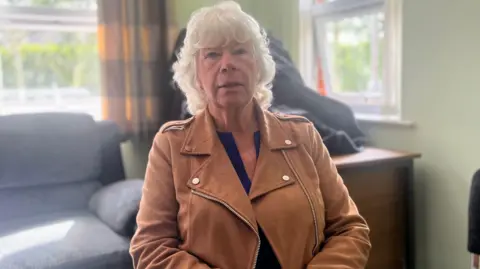
His parents, Pam and Ronnie Patton, said when he was at the hospital he wanted to leave with them.
"Leaving him in this accommodation is different - he is happy," Pam said.
Ronnie said James was now being treated "as an individual".
"His staff know his wants and needs, his routines and on certain days he gets a takeaway, he goes for drives and walks, he has a quality of life," he added.
Among the team of carers is Aaron who said they all worked well together to help James.
"We set goals for James, including his fitness. We are making a difference and that feels good," he added.
'This is his home'
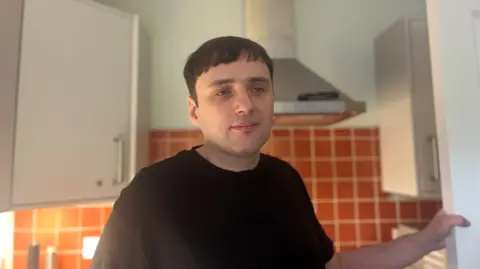
Timothy Jones, who has complex needs and is non-verbal, lived in Muckamore for nine years and was resettled in 2025.
The 31-year-old now has his own home and a support team of three carers, including Tobias Stewart.
He said Timothy was confident and trusted his staff.
"It's been great to see," he said.
"This is his home - he is comfortable, he can go to the kitchen when he wants to make a cup of tea and to make the rest of us a cuppa."
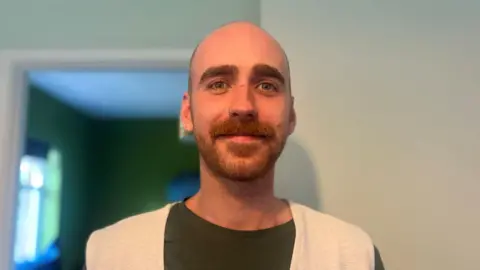
He said Timothy's behaviours were challenging, but added: "It's not his fault he is non-verbal and it's his way of communicating something.
"He loves McDonald's and the beach, and we take him to where he wants to go - it's great and there is banter and laughs."
His mum Dawn has said while her son still has outbursts and complex behaviour, his life was a lot calmer and happier.
"He looks more in control of his environment," she said.
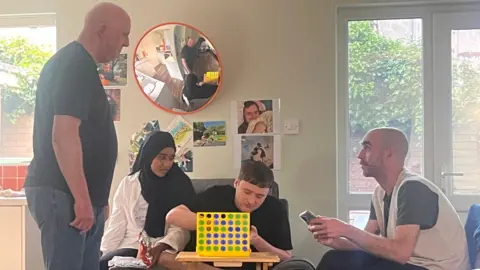
Both James's and Timothy's homes are run by Positive Futures, which supports people with learning disabilities, acquired brain injuries and autism.
Their parents said their new lives confirmed that with the right support, people with complex needs can live an independent life in the community.
While James is non-verbal, he communicates by making high pitched noises and can show his team what he wants in the kitchen or when he chooses his favourite DVDs.
For time out, he goes to his bedroom.
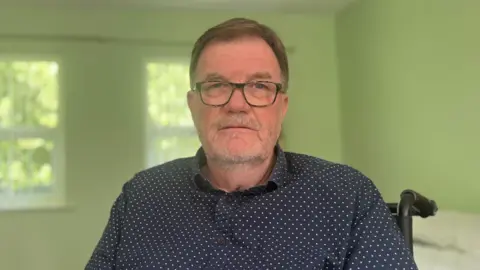
Pam said the current staff know what James likes and understand that routine and familiarity are necessary to ensure he is calm.
And the care team send on pictures when they're out and about enjoying themselves.
"His mischievous personality shines through, when he wants us to leave, he waves," Ronnie added.
"One time he prompted us to go by getting Pam her coat - we all laughed and that was nice."
Resettlement process
Positive Futures has helped 24 of the 116 patients resettled from Muckamore.
Some other adults continue to live in a hospital environment, but not inside Muckamore.
Resettlement from the hospital was heavily criticised for being poorly planned, delayed by a lack of appropriate community resources, and lacking necessary investment.
Many patients who were moved suffered placement breakdowns and had to be readmitted, while others remained stuck in the hospital due to a lack of suitable housing.
Deadlines to move all patients out of the hospital were missed several times.
The latest available statistics from the Department of Health show there are more than 12,000 care packages in effect in Northern Ireland, with 97% of those provided by the independent sector, including charities.
The majority of these care packages relate to care of the elderly. Of the 10% (more than 1,200) for adults with a learning disability, 52% are for vulnerable adults with nursing care packages, with the remaining 48% for those in residential care.
Care packages are funded by Northern Ireland's health and social care trusts, with costs varying case by case.
The majority of the cost for an individual's care is down to staffing.