Going to a festival as a neurodivergent person can be tough - but there are ways to recharge

 Beth Maybury
Making sure festivals are accessible isn't just about having enough disabled toilets - there's a lot that has to be considered.
So when X user Jas posted to say she had been denied access to a space for neurodivergent people at BBC Radio 1's Big Weekend in Sunderland last month, it raised questions about how those with conditions such as autism, ADHD, dyslexia and dyspraxia are accommodated at big events.
"Not all disabilities are visible," Jas wrote - showing the difficulties that occur when dealing with these conditions, which aren't easy to spot from the outside.
It comes after recent interventions from MPs and the equality watchdog around accessibility at festivals, making it a hot topic among organisers.
We've spoken with festival-goers who have invisible disabilities to hear their experiences - and the solutions.
'I packed up and found a Travelodge'
All of us are neurodiverse, meaning our brains are different, but more than 15% of people in the UK are neurodivergent, meaning their brains process information in a different way to what is considered typical.
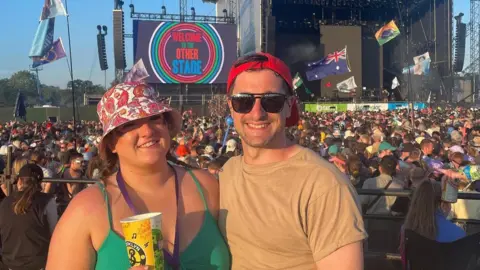
Beth Maybury says she has struggled with being taken seriously by festival staff because of the hidden nature of her disability.
It means she's had to find ways to recharge throughout a weekend - such as returning to her tent for a break.
She says festivals give her a chance to "feel free" as someone with ADHD who often "masks" how she feels - meaning she is hiding or suppressing her natural neurodivergent traits.
"You can sing at the top of your lungs, you can get emotional about who's on stage, nobody's going to judge you," she tells the BBC.
But even though she loves it, she can get "overwhelmed very easily".
 Getty Images
"There are a lot of crowds and that can be difficult. There can be a lot of mud, and I get really sensitive to it when I can feel it's all over me."
Kate Graham describes herself as a "triple threat" with ADHD, autism, and dyspraxia - and can relate to Maybury's experiences.
Graham says festivals are a great place to try new activities but are often "loud with nowhere quiet to hide (except a portaloo!)" and "overwhelming if too many people are in a crowded area".
She tells the BBC that after one particularly bad festival she "packed up and found a Travelodge".
Calls for festivals to do more
They aren't alone in calling for some festivals to do better. The Culture, Media and Sport Committee released guidelines earlier this year setting out ways for disabled people to feel more included at live music events.
These included recommendations that the government in England works with its devolved UK counterparts to improve the on-site infrastructure, security, training and ticketing at festivals.
The committee suggested developing these with disability-led organisations, such as Stay Up Late, who encourage event organisers to include relaxed performances.
At this year's Download Festival, which took place in June, event organisers created a space for neurodivergent attendees.
This featured noise-cancelling headphones, fidget toys, weighted blankets and quiet activities such as colouring and puzzles.
It followed the Equality and Human Rights Commission's ruling that Live Nation - the owners of Festival Republic which runs Reading and Leeds, Download and Wireless - needed to make events more accessible.
 WireImage/Getty Images
Fans had complained about accessibility problems at Download Festival in 2023 and Wireless in 2022.
A spokesperson for Live Nation told the BBC they "recognise large-scale festivals can be intense environments, and that some fans may need additional support at different points during the weekend".
They said they put in place "dedicated sensory calm spaces, a quiet campsite, welfare facilities and specialist wellbeing support".
The challenge of differing experiences
 Redferns/Getty Images
Alex Richardson has been attending festivals such as Reading and Leeds and Truck for the last decade.
He says as a neurodivergent person, he enjoys regularly attending festivals as they provide routine in his life.
"I really like the atmosphere, I just love the whole event [of a festival], the 27-year-old says.
Richardson says it can "sometimes get a bit too much" and he needs to "find calmer areas to chill out".
He says he likes knowing that sensory spaces are available - but he recalls "there was none of that" when he first started attending festivals.
Nowadays, he feels "festivals are becoming more inclusive" but adds many festival staff need better training.
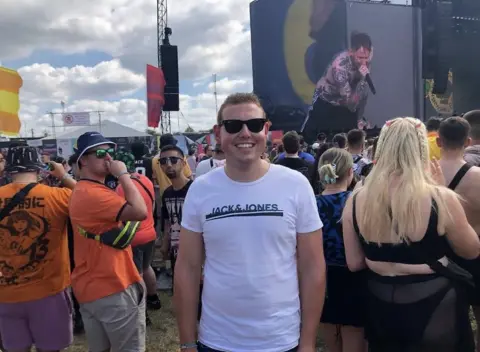 Alex Richardson
This is so staff can recognise when someone "is having a meltdown or struggling", he adds. The National Autistic Society says a meltdown is "an intense response to an overwhelming situation".
Richardson suggests trained staff should wear identifiable clothing, which would help those looking for them at an event.
Paul Hawkins, a boss at Attitude is Everything, the charity working to improve experiences for disabled people at gigs and events, says the challenge for organisers comes with recognising the varying requirements of individuals.
"Different neurodivergent people have very different experiences," he tells the BBC.
He agrees quiet spaces and sensory tents have had "a massive impact" on the festival scene over the past few years, but says there's still a long way to go in crowd management, and to create quieter routes for people to reach accessible spaces.
"There's not really a lot of excuses for festivals not getting the basics right because the information is all out there and it's quite easy to find," he adds.