How work helped me recover after psychosis

 BBC
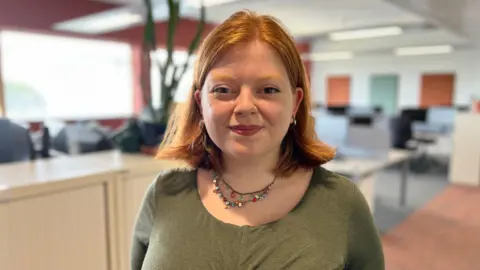
BBCA woman who was sectioned after suffering psychosis has said that support to get back into full-time work has changed her life.
Rachel Hart, from Cheltenham, started having delusions and paranoia as she approached her final university exams four years ago and was treated in a mental health hospital.
The Individual Placement Support (IPS) team in Gloucestershire, which last year worked with more than 400 people, supported her in finding a new job as a project officer at the University of Exeter.
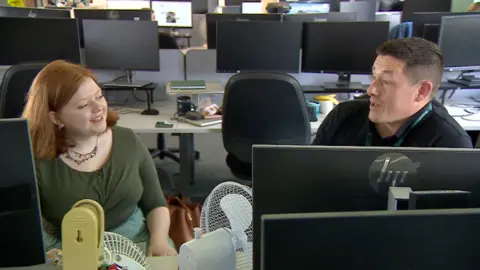
Rachel said she had "never been happier", adding: "In my case, it was very much about building up my confidence, understanding that work is part of recovery, it's not optional."
The IPS scheme helps people with severe mental illness to find paid jobs as part of their recovery.
Laura Isher, an IPS employment specialist at Gloucestershire Health and Care NHS Foundation Trust, worked with Rachel's employer ahead of her starting work.
"We can't just put people into a job; it has to be sustainable as well for up to 12 months," she said.
"The employers work with us, we can offer in-work support, mental health support.
"Employment is a huge part of recovery in mental illness; it's a proven fact now that it's not just helping somebody, it's all the social factors, it's being part of society and feeling useful."
Rachel said the IPS programme helped her to feel valued once more.
"It helped me get where I am today by giving me the confidence that all of these skills and knowledge and, in my case, qualifications that I had were still useful," she said.
According to IPS Grow, which supports IPS teams across England, 70-90% of people with mental health issues want to work - but only 37% have paid jobs and for those with severe mental illness, the figure is just 8%.
Vicky Vacara, IPS service manager for Gloucestershire Health and Care NHS Foundation Trust, said they had helped 115 people get new jobs last year.
"There will be some people who have been led to believe that they will never work because of their mental health condition," she said.
Despite many employers feeling the financial pinch when it comes to taking on new employees, Vicky said they wanted to work with more firms.
"Evidence suggests that having a diverse workforce can really bring improved outcomes for organisations, and I think people with mental health problems can bring some real strengths to the team, and I would be saying that there are already lots of people with mental health problems in your team, you just don't know about it," she said.
Laura said they helped employers make reasonable adjustments to employees' working patterns.
"The key is in the word 'reasonable'," she said. "Sometimes medication may affect people in the mornings, so they may have to start an hour later, but that's OK, they can work an hour later as well."
At the University of Exeter, where Rachel has now been working for the last 18 months, Shades Chaudhary, assistant director of wellbeing, inclusion and culture, said the scheme has proved useful.
"The IPS scheme brings a real understanding of what a person's mental health condition could look like in employment, what kind of adjustments they would benefit from, and what kind of roles can enable them to sustainably stay in work," she said.
"There's that understanding that it's not a barrier, it's more of just another facet of someone's identity that we need to support and make sure they can bring their whole self to work."
Rachel said the experience has been transformational.
"I've had my wobbles, as does everyone with a long-term condition, mental or otherwise, but the foundation and bedrock of support has enabled me to keep going", she said.
Follow BBC Gloucestershire on Facebook, X and Instagram. Send your story ideas to us on email or via WhatsApp on 0800 313 4630.