Dales 'wrong location' for wind farm - mountaineer

 LDRS
LDRSOne of Britain's most accomplished mountaineers has said that the edge of the Yorkshire Dales is the wrong location for a proposed wind farm.
Norwegian company Fred. Olsen Renewables is preparing plans for 23 wind turbines, each more than 200m (656ft) high, on moorland between Arkengarthdale and Teesdale.
The company said the Hope Moor Wind Farm project would provide enough renewable electricity to power around 135,000 homes and contribute to the UK's net zero ambitions.
Alan Hinkes OBE, who lives in Northallerton, said he recognised the importance of tackling climate change and securing future energy supplies, but worried the scheme would "permanently alter one of England's finest landscapes".
The proposal has attracted opposition from local residents, parish councils and campaign groups, who argue it would industrialise the moorland.
Developers maintain the project would generate significant renewable energy while helping meet national climate targets.
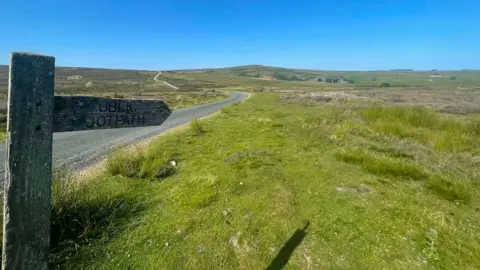 LDRS/Hope Moor Wind Farm Action Group
Hinkes, who became the first Briton to summit all 14 of the world's 8,000-metre peaks, is now an ambassador for the Hope Moor Wind Farm Action Group, the Local Democracy Service reports.
Cricket legend Ian Botham and the Duke of Norfolk, Britain's most senior peer, have already backed the campaign.
Suzy Wilson, spokesperson for the action group, said: "Alan has seen first hand the impact of global warming, but has stated unequivocally that the Hope Moor Energy Park is the right development in the wrong place."
While acknowledging the role renewable energy has to play, Hinkes believes large-scale developments should be located where they have less impact on nationally important landscapes.
"If we need major energy infrastructure, then we should be asking whether there are more appropriate locations closer to the country's largest centres of population or within more industrialised areas, rather than on the edge of one of Britain's most celebrated landscapes," he said.
Hinkes also highlighted concerns over the site's proximity to military low-flying training routes and questioned whether disturbing extensive peatland could undermine some of the project's environmental benefits.
"If reducing carbon emissions is the objective, then we should not be excavating significant areas of peat and releasing carbon to build industrial infrastructure," he said.
Listen to highlights from North Yorkshire on BBC Sounds, catch up with the latest episode of Look North.