Urgent treatment centres face closure – what could happen?

 Google
Urgent treatment centres (UTC) in Birmingham could close under a planned shake-up.
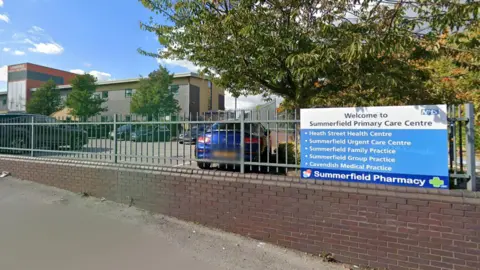
There are currently five UTCs in Sutton Coldfield, Erdington, Washwood Heath, Selly Oak and Summerfield, dealing with urgent but non-life-threatening illness and injury.
A review by NHS Birmingham and Solihull has found "they do not all operate consistently or fully meet national guidance".
Two options for the future of the centres are being put forward as part of a public consultation, both of which would see some closures.
The first option would keep the centres in Erdington and South Birmingham, on Katie Road in Selly Oak, open with both upgraded to meet national standards.
But the Summerfield and Washwood Heath UTCs would close.
In their place, there would be specialist urgent care services based at local health hubs in the same locations.
Out-of-hours GP care would also change, becoming one service across Birmingham and Solihull offering mainly virtual consultations, as well as face-to-face appointments and home visits when needed.
The NHS says these specialist urgent care services would focus on "specific local needs such as frailty, respiratory care, heart care or wound care".
But unlike current UTCs, patients would need to be referred by a healthcare professional, and could not just walk-in.
The second option would go further with the Summerfield, Washwood Heath and Erdington centres all closing and being replaced by Community Urgent Care Centres on the same sites.
The South Birmingham UTC in Selly Oak would shut.
Instead two Community Urgent Care Centres would open at Moseley Hall and West Heath.
These would focus on treating patients with minor illnesses and injuries, who are unlikely to need X-rays or stitches.
Walk-in care would be available, as well as appointments booked through NHS 111, and would be based in local health hubs offering a range of services.
Out-of-hours GP care would again be linked to these hubs, with most appointments carried out virtually, alongside face-to-face appointments and home visits when needed.
Changes face scrutiny
Some changes would happen whichever option is chosen, including moving North Birmingham UTC permanently to Good Hope Hospital and upgrading it.
New hospital UTCs would also open at Heartlands, Queen Elizabeth and Midland Metropolitan University Hospital.
They would be open seven days a week for at least 12 hours a day, seeing walk-ins and appointments booked by NHS 111.
The NHS has said the review was "not about making cost savings or reducing services for financial reasons".
"The NHS is already investing in new or improved hospital-based UTCs.
"The consultation focused on two options for how community urgent care and GP out-of-hours services could work alongside hospital UTC investment, so patients have a clearer, more consistent and more sustainable urgent care offer," it added.
This consultation is set to be discussed by Birmingham City Council's health overview and scrutiny committee meeting on Friday.
This news was gathered by the Local Democracy Reporting Service which covers councils and other public service organisations.
Follow BBC Birmingham on BBC Sounds, Facebook, X and Instagram.