Face coverings: Why are they being banned?

 Getty Images
Face coverings could soon become prohibited across an entire borough in Staffordshire as authorities attempt to tackle anti-social behaviour.
Stafford Borough Council approved plans to prohibit them last week as part of its updated public spaces protection order (PSPO).
The proposed measures will now be the subject of a consultation exercise before roll-out, which is projected for later this year.
But why have face coverings specifically been targeted by the authority, how will it work in practice, and what sort of coverings are included?
Why are they being banned?
In a report to the council's cabinet, which met on Thursday, members were told it was a response to an "emerging issue of youth adults" wearing coverings in Stafford.
It said this could cause harassment, alarm or distress to other members of the community.
The authority said Stafford's Community Safety Partnership claimed wearing them could contribute towards anti-social behaviour in the borough.
"The wearing of face coverings can cause alarm and distress to the community, embolden offending behaviour and prevent identification of offenders," the report added.
It said prohibiting the garb across the borough would reassure residents, visitors and businesses while improving public perceptions of safety.
Does the ban include all face coverings?
The council said the PSPO would not target anyone wearing face coverings for "genuine religious purposes" as well as medical or health reasons.
Personal protective equipment (PPE) would be exempt along with any masks that were required to be worn by law, the report stated.
The measures also seek to allow exemptions in circumstances "where the face covering is not worn so as to cause or contribute to anti-social behaviour, harassment, alarm or distress".
How widespread is use?
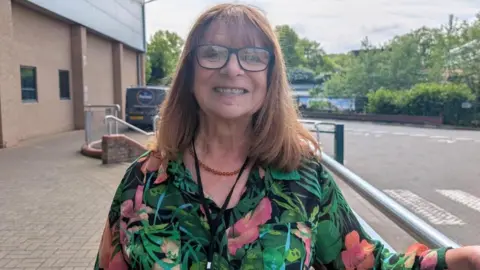
Speaking to BBC Radio Stoke, Stafford Borough councillor Jill Hood, cabinet member for community, said coverings of the sort being targeted could be "extremely intimidating".
"It's quite a big problem," she added. "It seems to be a uniform at the moment that younger people have adopted through certain types of music – it looks cool and they think it's great to go out like that.
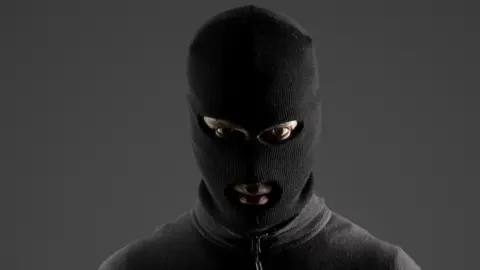
"You can't see the physical movement of the face, you can only see the eyes, and you've no idea if they're going to commit a crime of if they're out for a bit of fun and they think they look great."
Hood said the council had received complaints from residents and the police, adding that many elderly people were often nervous about people wearing face masks approaching them.
"You could be out for a walk in the evening and you're approached. Normally these people aren't on their own, they're in a gang with their face masks on," the councillor said.
"That is a very scary moment, you don't know what's going to happen."
She said it had affected a lot of people, adding: "We've got some gorgeous-looking young people out there, why on earth would they want to cover up their beautiful faces?"
How would the ban be enforced?
 Getty Images
Hood said police would approach people believed to be wearing a face covering that contravened the PSPO and ask them to remove it.
If they comply with the officers' request, there would be no further action taken, she said.
"[But] if they're out to cause mischief, or acting in an anti-social way, then police will ask them to take their face masks off and further action will be taken against them," Hood added.
She said those who did not comply would be taken to a police station, adding: "They won't get away with keeping their masks on."
The independent councillor said if masks were in use as a "fashion item", the wearer would not mind removing them.
"We're not trying to stop their fun," she said.
The penalty for those found to be in breach of the rule is a fixed penalty notice of £100.
If the fine is not paid or the case goes to court, that amount could increase to a maximum of £1,000.
When will the ban come into force?
The council approved the new PSPO last week but it will have to be the subject of a consultation exercise before it can be implemented
Before the measure's introduced, the report said the authority was obliged to consult with the local chief officer of police, the police and crime commissioner and community representatives.
The report added an existing PSPO, targeting anti-social behaviour which had been in place for three years, would expire on 6 December, when the new one was projected to come into force.
It would be in place for three years, by the end of which it would need to be renewed or updated by the council.
Follow BBC Stoke & Staffordshire on BBC Sounds, Facebook, X and Instagram.