Student's £30 device 'translates in real time'

 University of Plymouth
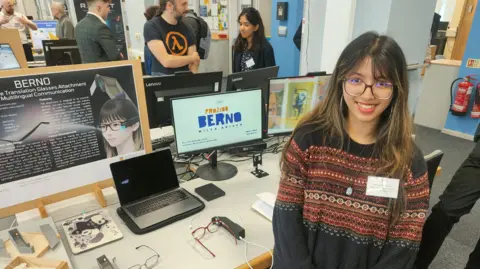
A student who has designed an affordable device which can translate and transcribe language in front of people's eyes hopes to make tech more accessible for all.
Milya Mohd Asyraf, 22, spent six months coming up with the design as part of her electrical and electronic engineering degree at the University of Plymouth.
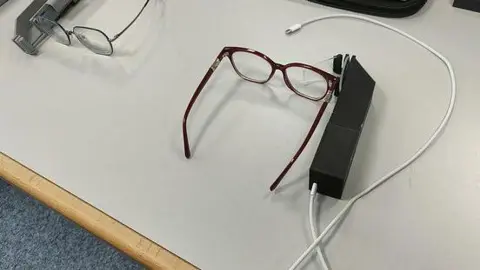
The gizmo, which costs about £30 to make, translates speech into text before projecting it onto a small screen in front of a person's glasses via a clip-on electronic box, she said.
Using affordable and recycled materials, it was cheaper than many existing versions of the concept and ultimately aimed to help people overcome a range of communication barriers, she added.
Milya said: "My whole inspiration behind this project is that I grew up in a multilingual environment and was always one of those people who didn't understand what everyone else was saying.
"Language barriers – or even differences in accents – can make communication tricky, and many translation tools currently rely on phones, playback or expensive smart glasses that either interrupt conversations or reduce accessibility."
She said her device addresses that by fitting on someone's glasses "without additional features like other smart glasses that cause the high prices".
 University of Plymouth
The design captures speech through a small microphone, where an AI model translated and converted it into written text in real time.
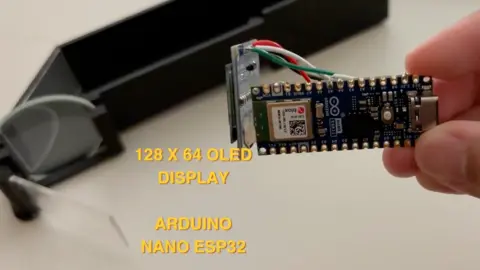
The translated text was then sent over wi-fi Fi via a "microcontroller" which Milya said "sends signals from one thing to another".
She explained the controller was, in essence, "a small computer, and that's how the language is detected and also translated".
The text is reflected through a mirror, lens and reflector, appearing like subtitles in the user's field of view, she said.
Milya said the device was more accurate if programmed for a specific language - but was also not just helpful for understanding foreign languages.
She said: "Besides translation, it's really good at transcription.
"So, people hard of hearing can have a subtitle display."
 Milya Mohd Asyraf
She added: "I'm really interested in accessibility technology and I'd like to make technology that people actually need, something that doesn't take advantage of people by taking their data, for example.
"I'd like to make something that people actually would like to use without any of that risk."
Asked what advice she would give to others hoping to create their own designs, she said: "I would say to just get started immediately, even if you don't know anything.
"Just have a piece of paper and write something down, whether it's a plan to get out of your head. Everything will fall in place."
Follow BBC Guernsey on X and Facebook and Instagram. Send your story ideas to channel.islands@bbc.co.uk.