How is the dry weather affecting the wider countryside?

 BBC / Vicky Castle
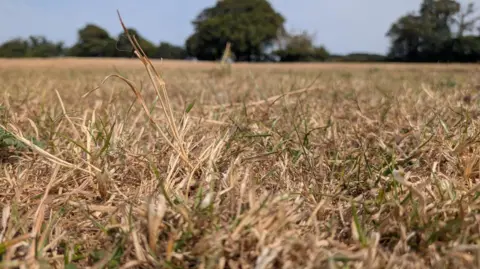
As the south east braces itself for more hot weather, the impact of the third heatwave this year was brought into sharp focus this month when hosepipe bans were put in place across the region.
But hosepipe bans are not the only indicator of how water stocks are being strained.
The lack of rain is also having an impact on rivers and wildlife, and is causing great alarm for farmers who are worried over the lack of moisture in the soil, and the risk of wildfires due to the dry conditions.
BBC South East took a deeper look into how the dry conditions are affecting the region.
 Eddie Mitchell
High demand for water during the May heatwave caused multiple supply problems for drinking water- and outages continue to cause misery for many South East Water customers on a weekly basis.
And it's not only water companies that are asking us to use less water.
Richard O'Callaghan from the Environment Agency (EA) said: "Everything relies on water and we must use water wisely. The more water we use, the less there is available for the environment."
While June was a wetter than average month for the region, the last time more than 1mm of rain was recorded was on 27 June.
With little significant or widespread rain forecast until at least mid-August, how are Kent, Sussex and Surrey's water stocks holding up?
 BBC / Will Flockton
July could be driest in 190 years
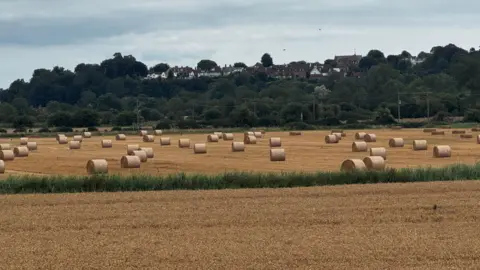
Spring saw below average rainfall across Kent, Sussex and Surrey.
The region received only 41% of the long term average rainfall during March, April and May.
Meteorologists say there is a chance that July could end up being the driest ever recorded - on records that go back 190 years.
The Environment Agency (EA) has moved Sussex into a state of prolonged dry weather, the stage before declaring a drought.
Reservoirs dropping 'at a faster rate'
 BBC / Ben Leete
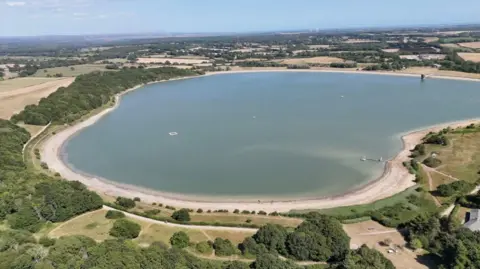
All are about 10% higher than this time last year.
But with not much rain in the region's long-term forecast, South East Water says reservoir levels will continue "to drop at a faster rate as summer goes on".
The River Cuckmere, which is used to bolster reservoir levels in Arlington, is currently too low to allow South East Water to abstract from it.
South East Water is also responsible for augmentation releases from Ardingly reservoir into the Ouse river system to ensure flows do not fall below critical levels.
Rivers: "worryingly low"
The prolonged dry weather is already impacting river flow levels in the region with many river monitoring stations across the south east reporting "falling" or "below-normal" flow conditions.
Environmentalists are concerned that the low river flows will lead to fish becoming trapped and crowded in isolated pools.
The EA has already carried out fish rescues in parts of the country.
Reduced flows also mean water in rivers heat up faster, reducing the amount of dissolved oxygen fish need to breathe.
Many rivers in the region are groundwater-fed and the wetter than average winter might be helping to buffer some of the immediate impacts on flows and wildlife.
Dr Neil Bailey, from the South East Rivers Trust says river levels across the region are "worryingly low."
Bailey says it is important that "we minimise the amount of water we abstract from our rivers during this time".
Rachel Paget from the Ouse & Adur Rivers Trust said: "I hope most people will understand and support the hosepipe ban."
Paget says the ban is needed to support the "fragile river systems" which she says are "suffering from a barrage of pressures".
 BBC / Ian Palmer
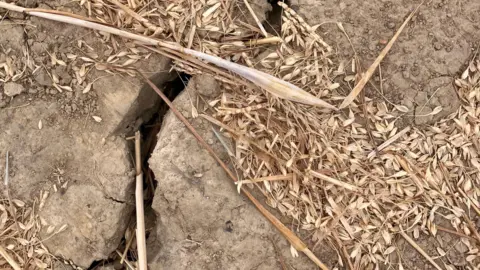
Much of the south east gets its water from groundwater reserves, which tend to drop over the summer and recharge in the winter.
This winter saw 50% more rainfall than average for much of the region and bolstered reservoir and ground levels.
Professor Mohammad Shamsudduha from University College London says after the wet winter, chalk aquifers entered spring in a "healthy condition".
But those reserves are now staring to dip in the dry weather.
Shamsudduha says whilst the recent hot and dry weather has led to the "expected seasonal decline in groundwater levels", some boreholes are now falling below "the normal range for this time of year".
He says that if the ongoing hot and dry conditions persist into the autumn, groundwater levels in some areas are likely to fall below the long-term average which will "reduce river base flows" and "increase environmental stress".
Soil 'very dry'
 BBC / Vicky Castle
The EA says the south east has "very dry" soils and some farmers in the region have been told to stop river abstraction.
On the Romney Marsh, farmers usually abstract from the Rother catchment to irrigate potato and onion crops, but this year the EA has told them to stop.
NFU Officer Alan Clifton-Holt says "we're having to draw on what little water we've got in reservoirs", which he says "is really limited" and is affecting the quality and quantity of the crops.
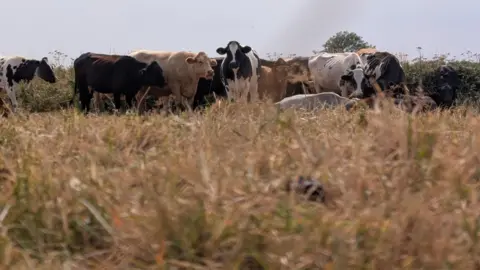
Livestock farmers say they are also struggling with the lack of rain.
Kevin Clayson has a herd of beef cattle in Paddlesworth, near Folkestone, and has had to break into his hay stores early.
"I don't usually feed them until they go in or until November-ish, onwards," he said, adding "it is particularly bad this year".
 Eddie Mitchell
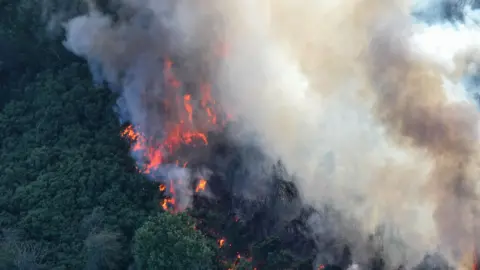
The lack of soil moisture is increasing the south east's risk of wildfires.
Rob Gazzard, wildfire adviser at the Forestry Commission, says that soils and vegetation have lost so much moisture that "any natural resistance to a fire has significantly reduced".
"Not only does it make vegetation more likely to burn, but it increases the intensity of fires once they start. This means fires take hold and spread quickly and are difficult to suppress," he said.
Follow BBC Sussex on Facebook, on X, and on Instagram and listen to BBC Radio Sussex on Sounds. Send your story ideas to southeasttoday@bbc.co.uk or WhatsApp us on 08081 002250.