SEN pupils help educate the public through poster campaign

 BBC
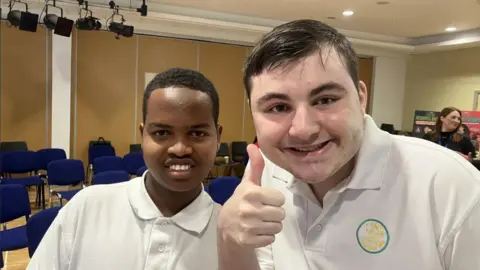
BBCYouth workers have helped young people with Special Educational Needs (SEN) find their voice.
The youth workers from New Lodge in north Belfast worked with pupils from Harberton Special School.
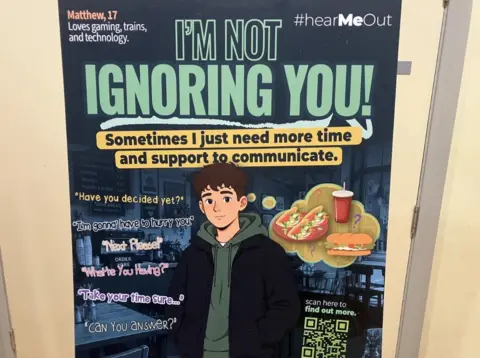
They have designed a campaign called #hearMeOut to educate the wider public about the needs of the pupils.
Marc, 18, who is autistic, and attends Harberton, said he wanted to be treated as "a human being" by other people.
"Whenever they see someone with autism they need to treat them as equal, " he said.
"We are all human beings and we all look different, but we are all human people."
The campaign #hearMeOut includes posters and graphics which point out that young people with SEN are not being rude if they need a little more patience or time to respond, for instance.
The youth workers and pupils created six characters and avatars which represent real life issues the young people face in society.
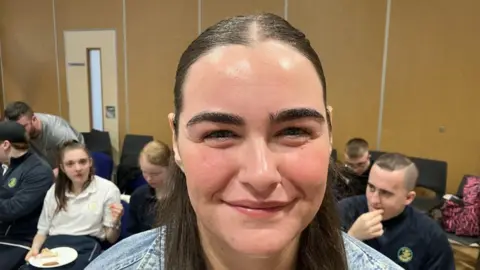
Ella Nocher from New Lodge Youth Centre said that the campaign was "all about working with young people with disability who want to get their voice out there and speak about issues that they face in everyday life".
"So whether that's people not having patience with them, going into shops and not being spoken to and their carer being spoken to instead of them," she said.
"Young people with disabilities shouldn't have to change for society, society should change for them.
"The characters that we've created are based on stories that the pupils in the class have told us."
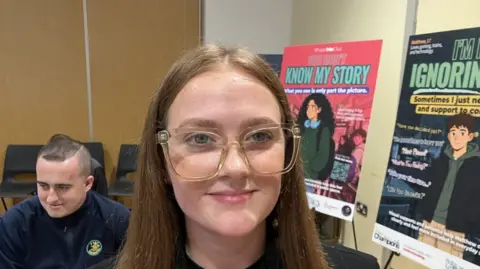
Youth worker Neve Robinson said the centre had found a "perfect partner" in the pupils from Harberton and had worked with the school, including visits to classes, for around two years.
"Something I learned was not to underestimate these young people," she said.
"These young people are more than able to speak for themselves, even if that is with a wee bit of support."
"It's just about finding the way to communicate best to suit them."
Nocher added that "going into the class every day, you'll never get a group of young people who are so happy and delighted to see you and to work with you".
"As much as it's going to benefit the young people involved in the project it's definitely benefited me and Neve as well, we've learned a lot."
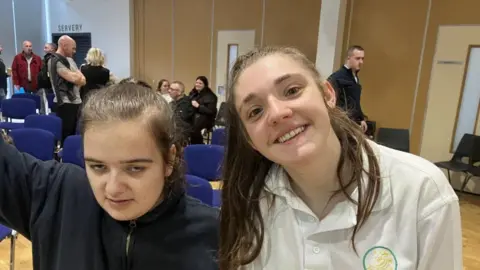
Amy, 17, who is a pupil at Harberton, gave a speech in front of an audience who had come to find out about #hearMe Out.
"Young people with disabilities face challenges others may never see," she said.
"Challenges around being misunderstood, feeling excluded, facing assumptions, even not feeling heard."
For 17-year-old Abdul working on the campaign was "amazing".
He said that he hoped people would learn to treat those with disabilities more kindly, and he particularly identified with one character who could find loud noises difficult.
"I would say thanks for this opportunity."