How a 40-year project helped save little terns

 Shaun Whitmore/BBC
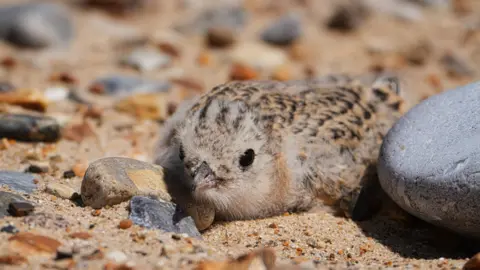
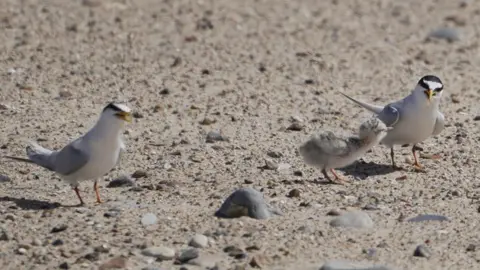
Hidden in the scrapes, this little tern chick is camouflaged - and vulnerable - on a Norfolk beach.
But it is surrounded by a record 700 other ground nests due to a project set up to protect the threatened species 40 years ago.
With the help of local volunteers and wardens, who monitor breeding sites 24 hours a day, the future of the little tern is looking much brighter than it did back in 1986.
"I think without all the concerted effort of many, many people there's no way that the numbers would be increasing in the way they are now," said Finn Duncan, the community and volunteering officer on the RSPB Tern Around project in Norfolk and north Suffolk.
"Year by year now, we're getting more little tern fledglings off and away back to Africa - so that's really amazing."
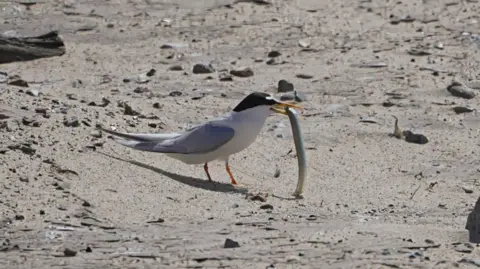
Little terns travel 3,000 miles (4,828km) from west Africa to breed on the UK coast, but once here they face high tides, natural predators and the risk of being trampled by beachgoers and their dogs.
 Shaun Whitmore/BBC
 Shaun Whitmore/BBC
So far in 2026, 81 volunteers have already donated nearly 2,000 hours of their time, the charity said.
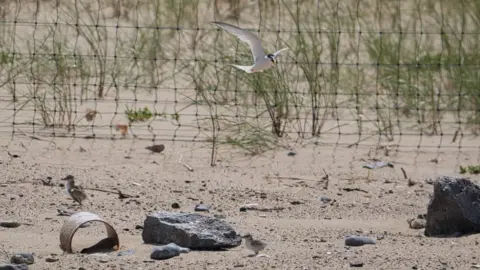
From spring to late summer, they patrol beaches, check on fencing protecting nests and remove any predators such as hedgehogs.
Importantly, they speak to visitors - and particularly dog walkers - about the project to spread the word and ensure they keep their distance.
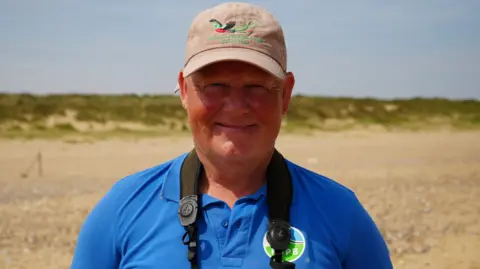
Among those who help is Mick Davies, who said he was "hooked" on looking out for the birds, despite the presents they leave him.
"I just can't get enough of the noise because they don't stop chatting.
"They take a little while to settle down, but they're very feisty.
"You might see a few white dots on me because I get pooed on nearly every day being down here."
 Shaun Whitmore/BBC
 Shaun Whitmore/BBC
Fellow volunteer Nora Dobson said: "Because you're here for a long space of time, you can watch the way they feed, you see them mating, you can see them just getting involved in life," she said.
"You learn loads and there's so many volunteers here that are so experienced."
Davies said fledglings would "glide like a kite" once they lost their fluff and got their primary feathers, and were shown the ropes by the older generation.
"Then they'll do small flights and they'll be pushed down near the sea," he added.
"The adults will show them where the fish come from and how to fish, so they'll be dropping food out into the sea for the youngsters to come and collect."
 Shaun Whitmore/BBC
The RSPB said, on average, the number of breeding pairs over the years have been secure and steady thanks to the project, but the birds faced ongoing threats from human disturbance, predators, high tides, poor summer weather and beach development
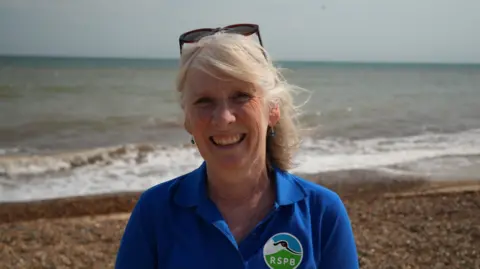
"It's not just us and the other volunteer - it's the local people, it's the public, you know, really being respectful of what we're doing," added Dobson.
"It's a real privilege to be part of it."
Do you have a story suggestion for Norfolk? Contact us below.
Follow Norfolk news on BBC Sounds, Facebook, Instagram and X.