Learning to swim can save lives, teacher says

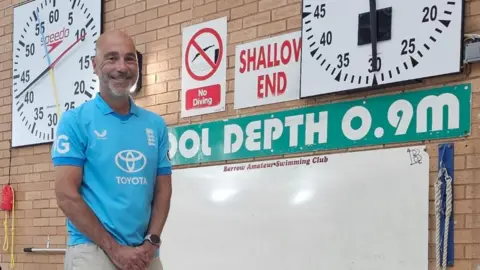 Neil Irving
Swimming is a "vital" skill for children that could help save their lives, a school teacher has said.
BBC research found 72% of Year 6 children in England on average left school able to swim 25m (82ft) in 2024-25.
But that figure dropped to 55% for schools with a higher proportion of disadvantaged children eligible for free meals.
At Greengate Junior School, in Barrow, Cumbria, where almost half of pupils qualify for free school meals, the figure for that period was 91% and teacher Neil Irving put that success down to lessons being given "high importance".
The national curriculum in England states when they leave Year 6, all pupils should be able to swim competently over at least 25m and use a range of strokes.
They should also be able to perform safe self-rescue in different water-based situations.
This includes being able to tread water for 30 seconds, float on their back for 60 seconds and swim 15m (49ft) to exit the water unaided.
A BBC Freedom of Information request sent to the Department for Education (DfE) revealed the proportion of Year 6 pupils at individual state schools, excluding special schools, who are able to meet the targets.
While 70% of 2024-25 Year 6 leavers nationally could on average perform a safe self-rescue, only half of children from schools with the highest level of free meal eligibility could do so.
Allaying fears
At Greengate Junior School, alongside 91% of Year 6 leavers being able to swim at least 25m, 75% were able to use a range of strokes, although only 23% could perform a safe self-rescue.
Irving told BBC Radio Cumbria the school was "quite lucky in that the baths are only up the road" with pupils in Years 3, 4 and 5 each being given one term's lessons during an academic year.
"Over the cycle of the whole four years when they're with us at junior school, they will get [the equivalent] of a full year," he explained.
"It's always been something we've placed importance on - I've been at the school 33 years now.
"It's absolutely vital [they learn at that age], especially where we live on the coast.
"We've seen some horrendous stories [in the news] recently about what can happen with accidents."
 Getty Images
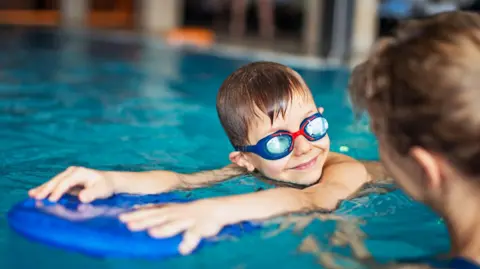
With some youngsters initially reluctant to enter the water, Irving said helping develop their confidence was key.
"A lot of it is just the fear of getting into the pool in the first place.
"Once they're in the water and confident, they tend to respond a bit better and the teaching comes after that."
Greengate Junior School is part of the Westmorland and Furness Council area.
The BBC's analysis found across 113 schools in the local authority area, 88% of Year 6 children could swim 25m, with 85% able to perform a range of strokes and 87% having the ability to self-rescue.
In 140 schools across the Cumberland Council area of Cumbria, the figures were 80%, 77% and 78% respectively.
A number of water-related deaths have been reported recently, including a 19-year-old at Grasmere in the Lake District last week.
A spokesperson for the DfE said a new PE Partnership Network would help close the gap seen by disadvantaged children.
It will bring together schools, local clubs and national bodies such as Swim England.
Follow BBC Cumbria on X, Facebook, Nextdoor and Instagram and listen to Radio Cumbria on BBC Sounds.