Do Reform suspensions suggest political vetting system isn't working?

 Getty Images
A month on from the local elections, Reform UK has already been forced to issue a series of apologies and suspensions over the past comments of a number of newly elected councillors. As a result, questions have been raised about the nature - and effectiveness - of the vetting process.
It's not unusual for councillors to say things that get them into trouble, or make remarks that will, intentionally or not, generate headlines.
But when those remarks have been posted on social media months or even years earlier, why are they not being picked up sooner?
It's not a just a problem for Reform; Labour, the Liberal Democrats and Conservatives have all had their own issues.
But after the party's huge successes across Yorkshire, some of their councillors - and council leaders - have been called out on their previous social media posts, and questions are being asked about how they slipped through the vetting net.
Even before the election, the party was being urged to take action over some of those standing.
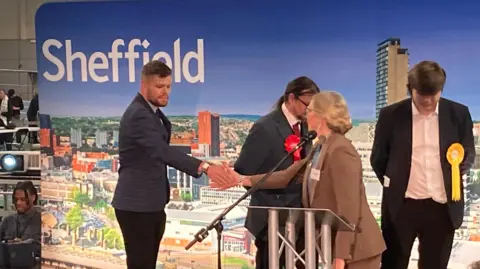
In Sheffield, The Times highlighted a series of tweets by Nathaniel Menday, including images of swastikas and Hitler's Mein Kampf.
Menday told the newspaper he had flirted with "far right ideology" but had come to reject it.
When Reform's deputy leader Richard Tice was asked about the posts by The Yorkshire Post, he defended Menday and said: "We're all human".
 BBC/Simon Thake
Menday went on to be elected to represent the Woodhouse ward, with more than 1,000 votes between him and his nearest rival.
However, within a week of his election, Reform made the decision to suspend him, saying his social media posts had "brought the party into disrepute".
A spokesperson for Reform said he had been suspended after he "failed to declare the posts", adding: "Reform UK does not support such comments."
Menday told the BBC that "like a lot of young lads I do like edgy humour and pushing boundaries" and that reports focused on jokes, memes and tongue-in-cheek comments.
He said: "There's also some poor use of language, which I regret. Ultimately what's been reported is not reflective on my sincere beliefs and I want people to know this.
"To be clear, I am not a Nazi sympathiser."
Menday said he understood Reform's decision and thought any criticism of the party was "very harsh".
"How can they possibly be expected to go on Wayback finder [an internet archive website] and find my deactivated Twitter that wasn't even in my full name when they have thousands of candidates," he added
But what is it like to actually go through a vetting process? It sounds pretty brutal to be honest.
One man who's stood in every type of election going is Shaffaq Mohammed.
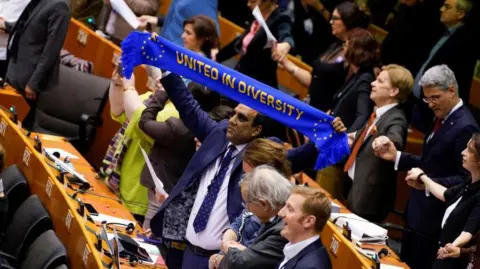
He's been a Liberal Democrat councillor, parliamentary candidate and an MEP. He's now Lord Mohammed of Tinsley, sitting in the House of Lords.
He says it's tough.
"Let's be honest, it's like someone going into your home and looking through your personal belongings," he said.
Through tough interviews and thorough questioning, he said you are asked to tell your party "everything".
 Getty Images
Lord Mohammed said the process left him feeling "a bit roughed up", adding that when it came to social media "if you say and do stuff, it's there."
He said Reform needed to answer a few questions about what they did to check candidates.
"Clearly the vetting process isn't working," he said. "Maybe they were very, very desperate.
"It's easy to suspend someone but he's still there representing people.
"The responsibility isn't for voters, it's for the political parties. It's our responsibility to vet people standing in our names."
 Getty Images
The problem with finding out exactly how candidates are vetted is that seemingly all parties do it differently.
One former political party official I spoke to said: "There are no set rules. Maybe there should be a code of conduct for candidates, but you don't want to put people off. It's hard enough to get people to stand."
They said they had seen a number of candidates comes unstuck over previous comments.
"Sometimes a candidate could come to us and show us something they'd said – we'd say – we can't defend this.
"I'm surprised how naive some people are. It's happened to every party. It's the volume.
"You always expect something to come up, you ask people if there is something they should declare, but there is an element of trust for them to tell you truth."
As new local leaders are chosen by Reform, they are now having to decide whether to suspend and investigate newly elected colleagues.
In Bradford, there are calls for Daniel Devaney to be investigated after comments reportedly made by him were found online calling Muslims "scum".
He told the Bradford Telegraph and Argus he was "in a bad mood" when he made the comments.
 BBC/Aisha Iqbal
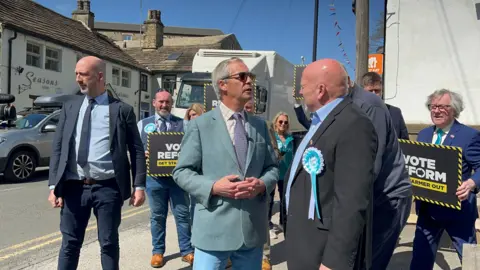
During the campaign, we interviewed Reform leader Nigel Farage in Baildon and asked him why the party was having so many problems with candidates.
"Well everybody has. I would fully accept that in the 2024 General Election we had huge problems, we had some deeply unsuitable people that were on the lists," he said.
"The party was not at a level where we could vet things properly [but] we are now at that level where we are doing well.
"Everyone who stands for Reform, supports Reform, joins Reform, it's made very clear to them that if they have views based on dislikes or hate they are not welcome."
After Daniel Devaney's comments were publicised, he told The Telegraph and Argus: "I'm not standing now as a candidate for Clayton and Fairweather Green. There's only 2 standing now."
"I won't be here for the elections - I will be on holiday and to tell you the truth I'm not really bothered."
But he was elected, with the highest number of votes of the 16 candidates in the ward.
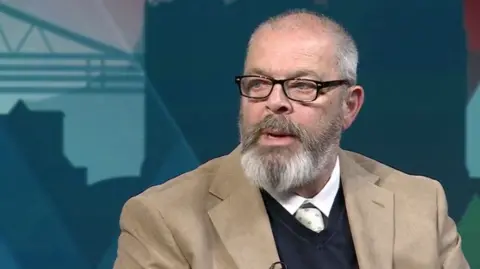
The leader of Reform on Bradford Council, Stephen Place, says Devaney is no longer a Reform councillor.
He said: "Words have consequences and I don't condone his words at all - they're horrific, he should never have put those out.
"His words were wrong but I have to have a bit of empathy for him for the fallout of this. It's absolutely ruined him."
However, now Place himself is facing calls to explain his own use of social media.
Labour MP Anna Dixon has written to Reform complaining about his online activity.
She says various posts made between November 2023 and December 2025 show "deeply troubling views".
Place has declined to comment, while Reform and Farage have been approached but have yet to respond.
 PA Media
We're used to councillors leaving some parties and joining others, though that seems to have happened much more in the last few years.
In the past 12 months, a number of Conservatives have decided to lighten the colour of their rosette and back Nigel Farage.
But fallings out and suspensions have also seen Reform's numbers go the other way.
A year since the local elections in Doncaster, Reform has lost three of its 37 councillors, one of whom was expelled over historical social media posts deemed "unacceptable" by party leaders.
And that is something we've probably not seen the end of, according to Associate Professor of Politics at Sheffield Hallam University Jon Dean.
He says there is quite a big difference between established local parties and new ones.
"They've got well-experienced staff teams that can support local areas," he said.
"Reform and the Greens have found the problem of being an insurgent party without that well-oiled bureaucracy."
"You're so excited that people are joining you that you don't do your due diligence."
He also says it's the weight of information that is a problem.
"Let's say you've got 50 candidates and they all send in the details of their three social media accounts.
"Is the unpaid volunteer really going to have the time to go through everything? Do they have searches for keywords? Have they got AI that can help them do that?"
The other worry for those like Jon is where we've got to in our political discourse.
"There becomes such a weight of things that it's open season to a larger extent – on things that you can or can't say," he said.
"The nature of the debate has changed quite dramatically."
It's also a decent description of how the power at some of Yorkshire's councils has changed. Dramatically.
People will be watching what new councillors say quite closely but also eyeing up what they will do in the council chamber.
It's one thing to win an election, it's another thing to run a council and make good on your promises.
Plenty of parties have fallen foul of that as well.