The 'wee boy from Whithorn' among the world's most eminent scientists

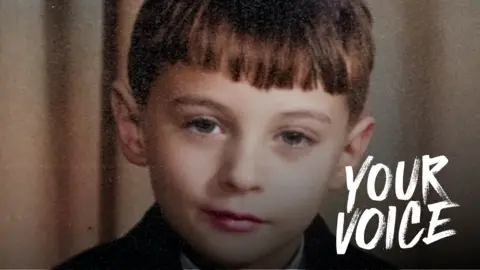 Alex McBratney
Ask Alex McBratney what his proudest moment was and you might be surprised.
He was recently recognised as one of the world's most eminent scientists for his work with soil and elected as a fellow of the Royal Society.
However, something achieved as a "wee boy in Whithorn" outshines that honour for him to this day.
"I still think my greatest accolade was winning a certificate from the Burns Federation for reciting Scots poetry when I was about eight," he said. "I treasure that."
McBratney's recent honour was highlighted to the BBC via Your Voice which allows readers to suggest stories of interest.
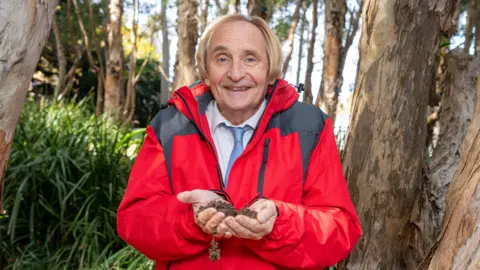 Emlyn Crocket - University of Sydney
The scientist grew up in Dumfries and Galloway, on a farm called Claymoddie near Whithorn.
"We lived among rolling fields, 18th Century woodlands, stone dykes, the shore, and big skies, with views stretching all the way to the Isle of Man on clear days," he said.
"Life revolved around the farm, the seasons, and the landscape.
"There were ploughing matches, potato planting, gathering stones from fields, exploring woods, fishing, listening to Radio Caroline, and Saturday trips into town for freshly baked rolls."
McBratney did not realise it at the time, but growing up on a farm would lead to a lifelong fascination.
"Soil was simply part of everyday life," he said.
"I knew every field by name, understood that some parts of the farm grew crops better than others, and learned early that the land was endlessly variable and full of surprises.
"The adults talked constantly about weather, drainage, crops, and livestock, so the connection between people and land seemed completely natural."
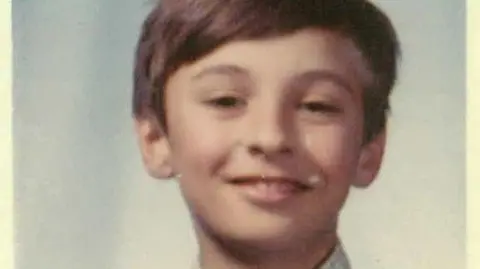 Alex McBratney
It was not until he was 16 - towards the end of his "extraordinarly high quality" schooling at Whithorn Primary and Douglas Ewart High in Newton Stewart - that he discovered "soil science" existed.
"In that sense, south-west Scotland did far more than influence my studies - it quietly laid the foundations for everything that followed," he said.
His subject took him to the University of Aberdeen then on to the Rothamsted Experimental Station, a world famous agricultural research institute.
Soon afterwards, a distant land came calling, but why did he decide to leave?
"The answer is surprisingly simple: Margaret Thatcher," he said.
"In the early 1980s, as I was finishing my PhD work, agricultural research in Britain was being cut back and scientific jobs were becoming scarce.
"Australia looked exciting, adventurous, and full of opportunity, so in 1981 I packed my bags and headed south - about as far south as one can go without falling off the planet."
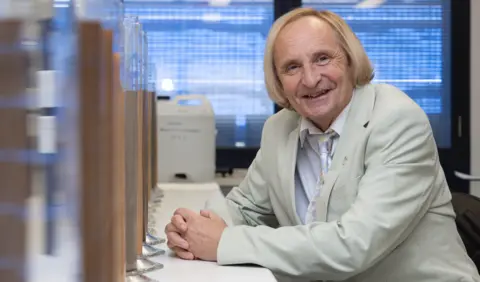 Fiona Wolf - University of Sydney
But what about the subject of his studies - soil - isn't it, sometimes literally, a bit dry?
"Soil has a public relations problem," he admitted.
"It sits there quietly under our feet while climate, forests, oceans, and wildlife grab all the headlines.
"But soil is the ultimate backstage performer."
He pointed out that soil grows almost all our food, stores carbon and filters water - among many other things.
"If soil went on strike tomorrow, civilisation would be in serious trouble by next Tuesday," he said.
"The remarkable thing is that a handful of soil contains more living organisms than there are people on Earth.
"Once you start looking closely, soil becomes less like dirt and more like an entire hidden universe."
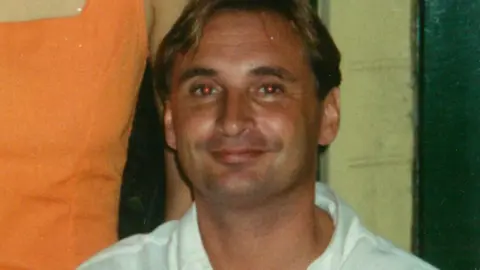 Alex McBratney
McBratney was "genuinely taken aback" when he was elected as a fellow of the Royal Society.
He was also proud that it was principally for his work in Australia - mainly with the University of Sydney.
It was also "rather pleasing" to think that someone from a small farming community could achieve such recognition.
"It proves that you never quite know where a fascination with soil might take you," he said.
"The truth is that I certainly never set out chasing honours.
"I simply found something that fascinated me, kept asking questions, and was fortunate to work with wonderful colleagues and students along the way."
McBratney still returns to Scotland to a house in the Isle of Whithorn.
"Memory has a wonderful habit of editing out horizontal rain, winter gales, and cold dark afternoons that seem to begin shortly after breakfast," he said.
"A few days back in a Scottish January is usually enough to remind me why I moved to Australia.
"While a few weeks in the hot humidity of a Sydney summer is enough to remind me why I keep returning to Scotland."
He's been cheering on both the country of his birth and his adopted homeland at the World Cup with matches on at "more civilised times" in Australia.
The two countries have played their part in helping a boy from Whithorn enter an organisation whose previous fellows and foreign members have included Stephen Hawking, Sir Isaac Newton, Charles Darwin and Albert Einstein.
