Sheep shearing courses hope to fill labour gap

 BBC/Grace Stewart-Piercy
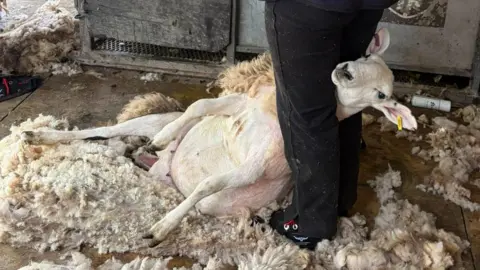
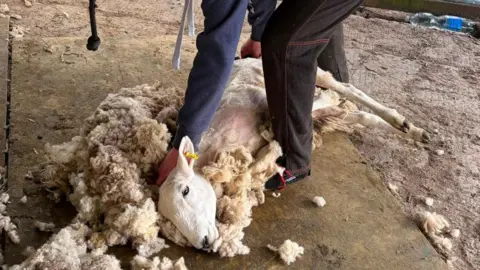
Farmers are being trained to shear sheep faster, ahead of the end of a visa scheme which lets highly skilled shearers come to the UK to help.
For 14 years, the scheme has let 75 people, predominantly from Australia and New Zealand, stay for about three months during shearing season, but the Home Office has announced this year will be its last.
British Wool recently hosted a shearing course at Blindburn Farm, in Northumberland, and said it had seen a 70% uptake in attendance.
Shearing instructor David Corbett said: "We need to train farmers up to make sure they're doing an adequate job for the farm and looking after themselves - because it's a physical job."
Domesticated sheep do not moult so are sheared to prevent them from overheating in warm weather and becoming infested by pests.
Their wool is used for textiles and other products.
Corbett said unsheared sheep which were too hot could become itchy and try to scratch themselves against the ground, then struggle to get back on their feet due to the weight of their coats.
The muddy coats could then attract flies, he said, as well as maggots.
 BBC/Grace Stewart-Piercy
Blindburn Farm owner Matt Ridley believed British farmers would have big shoes to fill in the absence of the overseas shearers.
"These guys were top, top drawer, they're world-class shearers and they can pop numbers off - 300 sheep each a day," he said.
"If you've got three of four people on a trailer, that's a lot of sheep they're getting through that otherwise wouldn't get clipped."
The Home Office said the sector had been "supported for 14 years to enable it to train up British workers, reduce reliance on migrant labour, and provide a fully sustained workforce".
It said there were "no plans to introduce new pathways" and it "expects the sector to complete its transition to using domestic labour" in the final year of the visa scheme.
 BBC/Grace Stewart-Piercy
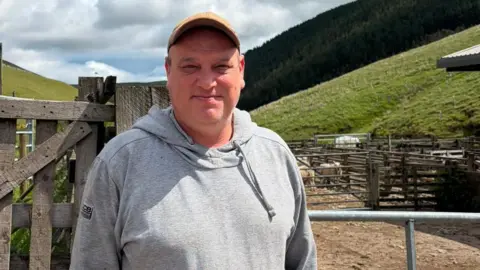
Course attendee Thomas Ridley, 18, said he hoped a lessened dependence on overseas shearers would lead to more opportunities for young farmers like himself.
However, he said farming was "quite hard to get into" for people who had not grown up in a farming environment.
Blindburn Farm shepherd Ben Taylor-MacPherson said, despite the shearing courses, he expected there would still be a shortage of labour for the "next five to 10 years".
"Unless more and more youngsters come into it," he added. "But the problem is getting them on to a course, then getting them out there doing it - we can do it today, then not use it for a year or two.
"These guys from New Zealand are shearing six months there, six months here, and they might go to Norway or Iceland and shear there."