Elderly with heating on in 30C, ambulance boss warns

 BBC
BBCAn ambulance service is urging people to check on elderly family members and friends during the hot weather.
The South Western Ambulance Service (SWASFT) previously revealed it had dealt with its busiest ever day and had responded to 4,350 incidents on the hottest June day recorded in the UK last month.
The UK Health Security Agency issued an amber heat health alert for the South West from 09:00 BST on Wednesday until 21:00 on Sunday.
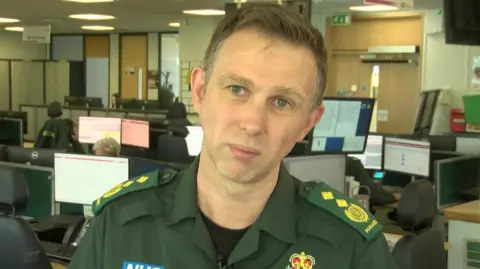
SWASFT's deputy director of clinical care Adrian South said the service had been seeing elderly patients in cardigans and with their heating on despite the hot weather.
'Less perception'
South said in the heatwave in June SWAFTS had received more calls about patients aged over 65 than any other age group, which he said was because they were more vulnerable to extreme temperatures.
"Our message really for this week is if you've got friends, family or neighbours that you know that are over 65, check in with them," he said.
He added: "Heat can affect people in lots of different ways and people that are older have less perception of their body temperature.
"Last week I was out and about seeing patients and they've still got cardigans on, it's incredibly hot and they haven't drunk enough."
South said heat alone could make people dehydrated and potentially get heat exhaustion, alongside having a pre-existing medical condition.
"Last week we were still seeing, in some cases, people that had the heating on," he said.
'Extra 700 calls'
South advised people not to go out during peak temperatures and to keep curtains closed, use fans and stay hydrated.
He said SWAFST had received about 4,000 calls during the last heatwave with dehydration in older people having been "a really common call".
"If you look at those 4,000 calls, around 700 every day were linked to patients that were 70 or over and so we can really focus on that age group this time," he continued.
"We want to send our ambulances to people that desperately need an ambulance, not to someone that's just not been drinking enough fluid for a couple of days and has ended up being poorly as a result."
South said the team had plans in place for such peaks of demand which included maximising the number of patients who could be helped by telephone and making sure the maximum number of ambulances were available.
"In the last heatwave ... we all dropped the day job that we were doing and we were all out and about seeing patients trying to make a difference, because an extra 700 calls is a lot to deal with each day," he added.