Will new signs be enough to stop car traffic on buzzing Belfast street?

 BBC
BBCA cobbled street in a popular Belfast nightlife area became a pedestrianised zone on Thursday, years after the idea was first planned.
Signs were erected warning vehicles not to drive down Hill Street, a cobbled one-lane-wide street in the city's Cathedral Quarter, where several bars and restaurants are situated.
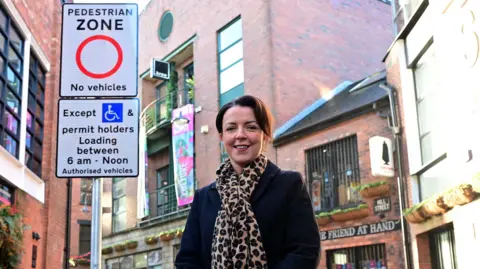
Infrastructure Minister Liz Kimmins said she was "pleased" that the long-standing proposals are set to become a reality.
But some are concerned that new signs will not be enough to stop drivers from using the street.
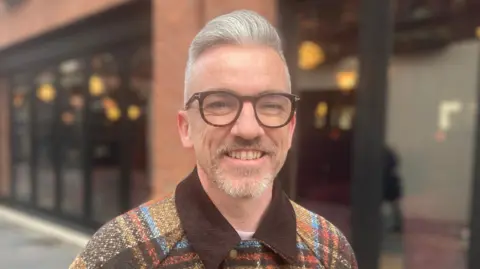
Johnny Rogan told BBC News NI that he thought an automatic barrier was going to be introduced "that locked after a certain time".
"If not, that's what they'd need to do to reinforce it," he said.
However he said the plans would make a "big difference" to the street, especially on Friday and Saturday nights.

Jim Ingrian, who is in the area regularly, said the street should have been pedestrianised "years ago".
But he also has some concerns with the plans.
"I don't think signs will be enough, I don't think signs will slow people down," he said.
"Most people will just ignore them, they won't even pause to look at them.
"A lot of the traffic down here is tourists, people who hire cars.
"They just go this way whether the signs say they're supposed to be here or not.
"I still think we'll get traffic down here."
Hill Street pedestrianisation plans
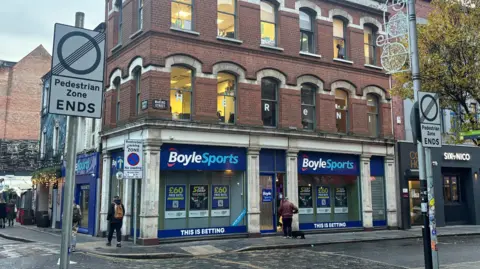
The Department for Infrastructure (DfI) will keep the experimental scheme under review for an initial six-month period, which can be extended up to 18 months.
In 2020, during the Covid-19 pandemic, the street was closed to vehicles for a trial period.
But in September last year, then-infrastructure minister John O'Dowd said plans to permanently close the road to vehicles had been "put on hold".
The pedestrianisation plans were then due to be introduced last month but Kimmins said "important issues" had to be addressed.
 Department for Infrastructure
Kimmins said the plans would "facilitate a vibrant social space that prioritises people by making the streets safer for pedestrians".
The infrastructure minister said that "by contributing to a more pleasant and enjoyable environment, it will help maximise the street's potential and enhance the nighttime and weekend economy".
Kimmins added that the DfI had been "actively engaging with local businesses and those in the hospitality and retail sectors who have expressed support for the pedestrianisation of Hill Street".
She said the scheme would be complemented by the recent announcement of late night buses.

Lucy Kirgan, who socialises in Belfast's Cathedral Quarter, thinks having no cars on Hill Street is a good idea.
"You're walking and don't realise cars are coming up and they definitely do get in the way."
"You're always stepping in and it's such a tight street already," she added.
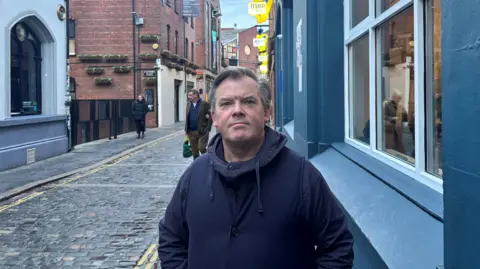
Paul, who runs a business on Hill Street, said he didn't think the changes would make much of a difference "from a business point of view".
But he said he was "definitely glad (the pedestrianisation) is happening".
"In my opinion, pedestrianisation should have happened years ago, it's a busy street," he said.
"Anyone who's coming down here can come by foot anyway, cars aren't needed."