Key takeaways as Andy Burnham becomes PM

 AP
APAndy Burnham has replaced Sir Keir Starmer as UK prime minister, after becoming Labour leader last week.
The former mayor of Greater Manchester becomes the country's fourth prime minister in five years and the seventh since 2016.
Burnham says rough sleeping and the cost of living are priorities
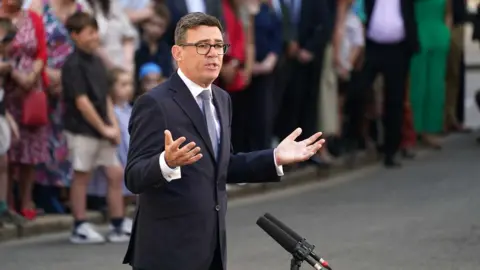
In his first speech in Downing Street, Burnham announced he would "end rough sleeping in our country".
This was swiftly followed by a No 10 press release promising an extra £340m for the task over the next five years from within the housing department budget.
He also promised a new 10-year plan for Britain - to be unveiled later this year - and to build a new economy, putting "life's essentials back under public control".
But arguing that people also needed "breathing space now", he said announcements on tackling the cost of living would start on Tuesday.
Other changes he promised included changing the education system to help young people into work, building more council homes, and honouring commitments to fund defence while sticking to the UK's spending and debt rules.
Cabinet picks
Burnham made top appointments to his cabinet, making John Healey his chancellor in an move that took Westminster by surprise.
Rachel Reeves had already confirmed she would be leaving the role and would not be serving in Burnham's cabinet, turning down the offer of another job.
In other top moves, former energy secretary Ed Miliband has been promoted to foreign secretary, with Shabana Mahmood reappointed home secretary.
Louise Haigh, a key ally who oversaw his preparations for No 10, has been given the job of running the Cabinet Office and appointed first secretary of state.
Appointments, including to roles below the cabinet rank, are expected to continue on Tuesday.
The new PM didn't use a lectern
 EPA/Shutterstock
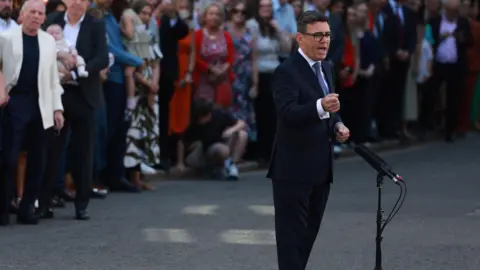
There was much that was familiar about Burnham's speech in front of the famous black No 10 door, which was thronged with staffers and supporters.
But perhaps conscious that "lectern moments" have become a symbol of the UK's political instability in recent years, Burnham broke with recent tradition and made the address without notes or a podium.
He said that he was "acutely conscious" of the churn in the office behind him, stressing that the UK badly needed to regain stability.
This would require politicians to "make politics work better" and "raise our game and rise to the new challenge", he added.
Starmer and Burnham visited the King
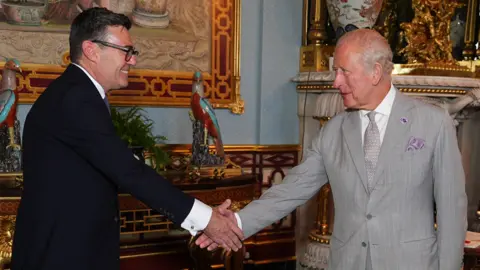
King Charles III said his farewells to Sir Keir in a final private audience at Buckingham Palace, before greeting Burnham.
His role was central to the day because prime ministers are formally appointed by the sitting monarch, who is head of state.
The short audience is known as "kissing hands" - although in practice, these days male premiers simply bow and shake hands with the monarch after accepting their offer to form a government.
 PA Media
No hard feelings from Starmer
Earlier, Sir Keir gave a short departure speech in Downing Street.
With his supporters lining the street, he repeated key themes from the speech announcing his resignation in June, such as turning around the fortunes of the Labour Party and lowering child poverty.
Despite leaving just two years after his landslide victory at the 2024 election, he insisted that he was proud of his record in office, saying Britain was "now stronger and fairer".
"I go with good grace, I go with a smile," he said.
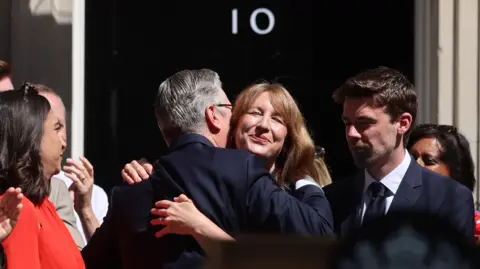
He had time for a hug afterwards with Rachel Reeves, his chancellor and Downing Street neighbour during his time in office.
 EPA/Shutterstock