Bosses were warned mental illness hospital unsafe

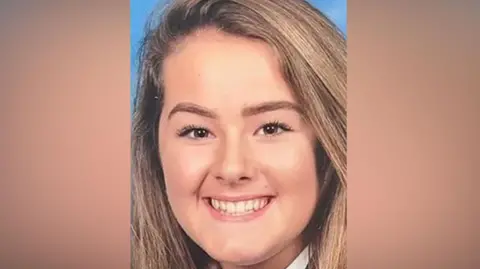 Family handout
This article contains details of suicide and self-harm
Bosses at a hospital for severely mentally ill young people were repeatedly warned it was unsafe months before a teenager's death, an inquest has heard.
Emily Moore, 18, from Shildon, fatally injured herself in February 2020 while being detained by Tees, Esk and Wear Valleys NHS Foundation Trust (TEWV).
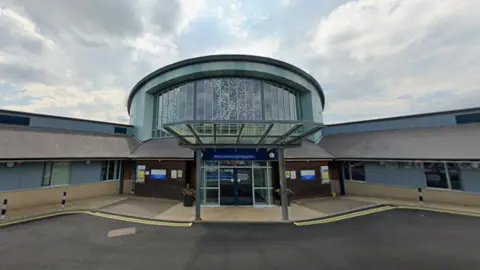
A jury has heard trauma from her treatment months earlier at West Lane Hospital in Middlesbrough, where two girls died, could have contributed towards her death.
A psychologist sent in to try and rectify problems at West Lane said many days were "floridly chaotic" with issues consistently flagged to managers.
Emily, who had been diagnosed with emerging emotionally unstable personality disorder (EUPD), complained of being treated "like dirt" during her detention at West Lane's 14-bed Newberry ward between March and July 2019, with staff accepting she did not get the care she deserved.
Dr Amanda Wild, a consultant clinical psychologist, told jurors she was deployed to West Lane a month before Emily arrived to fix the service, having successfully made similar changes at an adult hospital.
There were "concerns about psychological safety and lack of a compassionate culture" at the hospital's three wards, she said, with a "breakdown" in communication between the staff and management.
 Google
After making initial progress, Wild said things began "deteriorating" in May when 29 staff, who had previously been suspended after patients were dragged across the floor, returned.
She said there was a "noticeable shift" in relationships between staff, which it would be "difficult to envisage" did not impact the young patients.
Wild said the teenagers were "more likely to feel safe" if they could sense "harmony" between the adults responsible for their care, but if there was "discord or frustration" the vulnerable youths would have felt it.
Wild said she and others were consistently "flagging up concerns" to directors, how there was "not a sense" of things being organised, people knowing what they were supposed to be doing or there being a "culture of care".
"It felt like you were trying to hold things together every day and when you walked away at night you felt uneasy," Wild told jurors.
She said many days were "just floridly chaotic" and "there was a real sense of how are we going to stay safe today".
 Family Handout
Wild said patients and staff were both at "risk", adding workers were "doing that job because they wanted to help" but found themselves "in really difficult situations".
For example, she said, a staff member could arrive and have to spend their whole shift "holding a young person on the floor", which would make trying to have a "therapeutic relationship" with that patient difficult.
The Newberry Centre, where Emily resided, was the "least worst" of the hospital's three wards with "some good days" and "some not so good days", Wild said.
She said she met directors in May to tell them staff were making "impossible decisions" and it was "not safe to remain open".
She said the response was "sympathetic" and she hoped it would lead to improvements, but things did "not [get] better enough".
Wild also said transparency and openness were lacking, with the "whole system" going into a "closed mode" and, being "mindful" of its previously positive reputation, responding defensively to complaints rather than seeing them as opportunities for improvements.
'Absolute consistency impossible'
Dr Caroline Wyatt, a clinical psychologist, told the jury Emily described being repeatedly restrained or injected with tranquilisers against her will to calm her.
Inconsistency in the way Emily was treated, for example sometimes being restrained while self-harming and on other occasions being allowed to continue uninterrupted, was also bad for her recovery, the court heard.
Wyatt said such inconsistency was "likely to have reinforced" Emily's illness-based beliefs that she was "misunderstood" and "not cared about".
She said staff would "always strive for consistency" with any young patient but "in reality it's almost impossible in any ward environment to have absolute consistency".
Emily was moved to Ferndene, a secure unit in Prudhoe, in July 2019, where she was under the care of Cumbria, Northumberland Tyne and Wear NHS Foundation Trust (NTW), the jury heard.
The inquest heard West Lane Hospital was ordered to close by the Care Quality Commission in August 2019, with the 11 remaining patients moved to other units across the country.
The inquest, taking place at County Durham and Darlington Coroner's Court in Crook, continues.
- If you are affected by any issues raised in this article, help can be found at BBC Action Line