Endangered lace craft revived by young Londoners

 BBC
BBCA centuries-old craft at risk of dying out is finding new life in London, with a new generation of lacemakers crediting social media for helping revive interest in the traditional skill.
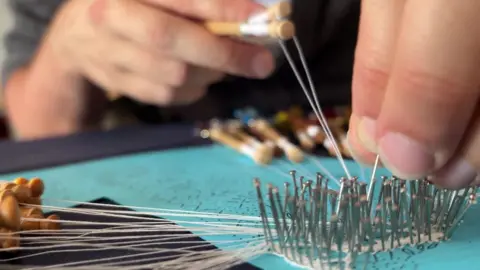
Bobbin lacemaking creates intricate patterns by twisting and crossing dozens of threads by hand, held into place by pins.
Last year, the craft was added to the UK's Red List of Endangered Crafts due to a steep decline in skilled lacemakers.
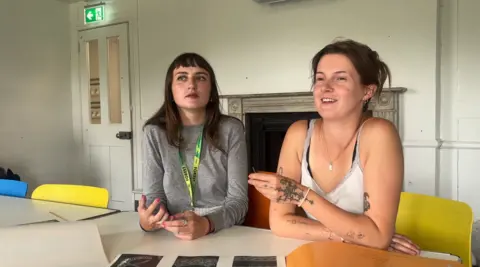
Lauren White and Amelia Watson founded the London Lace Club in 2023 and have since introduced a growing number of young people to the craft, with most members under 30.
"In the last few years, a lot of the lace groups around the country have been closing and the number has dwindled, especially since Covid," White said.
"We've had a lot of positive feedback from starting a lace club and trying to continue a craft that's dying."
The club runs fortnightly sessions at different venues across the capital, charging a small attendance fee that goes towards buying equipment for beginners.
Bobbin lacemaking first came to the UK in the 16th century but lost popularity after lace-producing machines were invented during the industrial revolution.
A small revival in the craft in the 1970s and 1980s boosted the number of lacemakers, but it has struggled to attract younger generations.
Heritage Crafts, the charity behind the UK's Red List of Endangered Crafts, said many of the skills held by older lacemakers are not being passed on, leaving the tradition at risk of disappearing.
The charity has tracked a 30% decline in skilled lacemakers since the Red List was first created in 2017.
At the London Lace Club, White and Watson said that social media has been central to the club's growth – in particular, it has helped them to reach more young people.
"Social media has helped us spread the word about the craft so much," White said. "It's meant that we've got loads of people doing a 16th century craft, which is kind of funny."
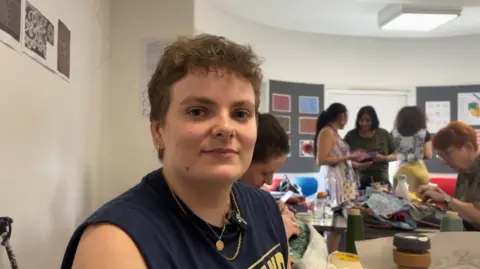
One participant, Hannah, learned how to weave bobbin lace after finding the London Lace Club on social media, and said the group was a source of community and practical support.
"If you get good enough at it, you can start creating your own patterns and come up with some really strange stuff that's maybe a little less traditional," she said.
Members of London Lace Club have used 3D-printed tools to weave more complicated lace and have experimented with colour and beads to create more modern designs.
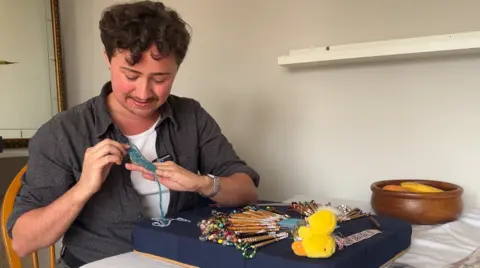
Florian Barrows is another example of how the craft's online presence is growing in London.
His lacemaking videos on Instagram and TikTok have attracted millions of views and more than 1.5m likes.
He said lacemaking appealed to him because it was a mental challenge that gave him space away from the online world.
He'd learned the craft as a child and picked it back up through the London Lace Club in 2024.
He said "you physically can't doomscroll" when using your hands to weave lace.
"It's like doing a Sudoku more than it is like doing a craft," he said. "It's less about crafting to create and more about crafting as a puzzle-solving exercise, and as a nice way to engage your brain."
Barrows said short-form content has a "power" to make people more aware of heritage crafts. Since posting videos, he's connected with lace makers across the world.
"I thought since it's an endangered craft, it's nice to try and get it back out there," he said.
"So many people have messaged me saying they've just started lace, or they used to do it when they were a kid and wanted to pick it back up.
"I've got more people into lace, which is really nice."
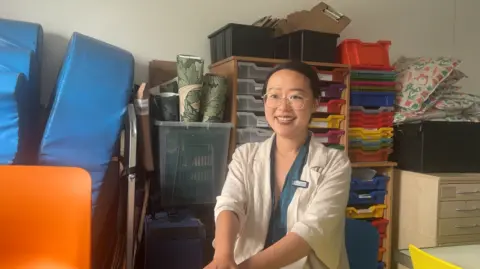
But he added that social media has brought a new life to the craft.
"We tend to think of endangered crafts like this as very logged off and offline," Florian said. "And I think that's fantastic – but I also think you can be both. You can be part of the online community and a lace maker."
For textile artist Jingyi Li, the future of bobbin lace also depends on pushing its creative boundaries.
Li uses lace in her artwork and said that creating modern patterns is essential for younger generations to connect with the craft.
"Making lace, the process of it, is almost like diary writing," she said. "As a human being, you put a huge amount of your own time and also your own life into one physical piece."
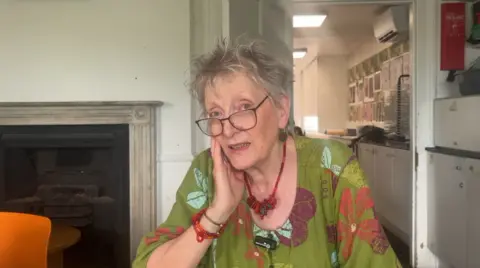
Jane Atkinson is also a contemporary lace artist and has been practising for over 50 years.
One of her installations, a 12-foot-wide piece, was displayed at the first World Lace Festival in Slovakia in 2024, where she was a guest of honour.
She has since built an online community teaching people lace from scratch by providing online tutorials and virtual sessions.
Listen to the best of BBC Radio London on Sounds and follow BBC London on Facebook, X and Instagram. Send your story ideas to hello.bbclondon@bbc.co.uk