Kenny would have lived if treated earlier - coroner

 Supplied
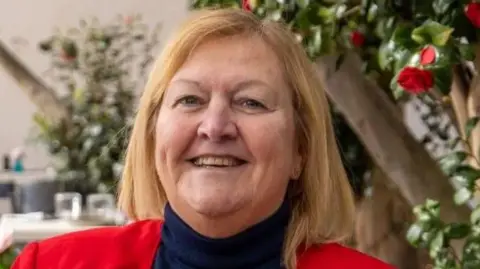
A well-known businesswoman who saved a stately home for the nation "would have survived" if a twisted bowel had been identified sooner, an inquest into her death has heard.
Dame Julie Kenny, 67, who helped restore Wentworth Woodhouse near Rotherham, was admitted to Doncaster Royal Infirmary in February 2025 complaining of abdominal pain.
A CT scan outsourced to a third party failed to spot signs of swirling around her bowel and she was instead diagnosed with gall bladder problems, Doncaster Coroner's Court heard. She was later given emergency surgery but did not recover.
Coroner Nicola Mundy said an enhanced treatment plan would have been enacted if signs of "whirlpooling" had been reported.
Mundy said the initial scan outsourced to Everlight Radiology on 8 February revealed the whirlpooling - a sign of twisting in the bowel.
Although Dame Julie's pain levels increased, the coroner found that they were not consistently recorded and this led to missed opportunities to investigate her symptoms.
She found that on the balance of probabilities another, earlier CT scan would have led to more rapid treatment.
"There were missed opportunities to further explore her deterioration, and this led to delays to her surgery. If she'd had earlier treatment, she would have survived."
'Excruciating pain'
At an earlier hearing in February 2026, the court was told that the scan was viewed and inspected by Dr Vichy Acharya.
He confirmed that he did not report "swirling of the mesentery", a tissue which attaches the intestines to the abdomen, on the scan despite seeing it.
This was because he had previously been told by clinicians not to report "swirling for every patient" as most of the time it was not significant and potentially over-complicated reports for surgeons.
He added he would report it on the scan if there were secondary problems, however "none of those were present on this scan".
Since Dame Julie's death, Dr Acharya said he now reported "every swirling", and added: "I wish this was my practice from the beginning."
Dame Julie had previously had a gastric bypass, which increased the risk of twisted organs.
A further scan on 15 February, also analysed by Everlight Radiology, was shown to have "features of significant clinical concern", radiologist Dr Francesco Impiombato said in a written statement.
Dr Impiombato wrote a note advising "urgent referral to the surgical team".
Dame Julie was operated on the same day and was in a coma for a week before dying, the court heard.
Dame Julie's daughter Charlotte Kenny-Martin said her mother complained of "excruciating pain" and struggled to eat in the days after being admitted to hospital.
 BBC/Simon Thake
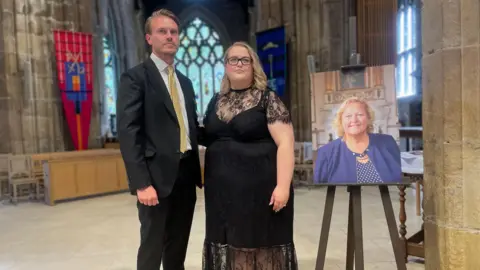
Charlotte and Dame Julie's son Laurence Kenny told the BBC that there needed to be more scrutiny of external contractors used by the NHS.
Laurence said: "She was tenacious and a force to be reckoned with, but also a loving mother and grandmother.
"We have concerns about the scans, about quality control and the use of third-party contracts.
"With outsourcing, it is imperative that it is the same level and standard as in the hospital."
Charlotte added: "It's the accuracy of the scans and the implications of that. We are disappointed with the level of care in the first week."
Laurence said: "She was not seen by a consultant for six days, which does not sit well with us."
In a joint statement, the siblings said: "The coroner's conclusion has confirmed our fears about the care our mum received in the days leading up to her death.
"It has been incredibly difficult to hear that, had she received proper care while she was in hospital, she would have survived.
"We raised concerns about the severe pain our mum was experiencing and whether opportunities to diagnose and treat her condition sooner had been missed.
"The coroner's findings have now validated those concerns. No family should have to learn that their loved one's death could have been avoided."
Mundy recorded a narrative conclusion and said she would ask Doncaster Royal Infirmary to investigate its use of outsourced scans to see whether there was cause for concern.
She has also written to the Royal College of Radiologists to draw attention to the case and ask whether there were differences in the accuracy of outsourced scans compared to those analysed "in house".
A spokesperson for Doncaster and Bassetlaw Teaching Hospitals NHS Trust, said: "We would like to express our sincere condolences to Dame Julie Kenny's family and loved ones.
"We acknowledge the coroner's findings and the concerns identified during the inquest.
"The circumstances surrounding Dame Julie's death have been subject to detailed review, and we remain committed to ensuring that any lessons identified are embedded across our services to support the safest possible care for patients."
Everlight Radiology has been approached for comment.
Dame Julie, born in Hillsborough, set up a successful security firm.
As chair of the Wentworth Woodhouse Preservation Trust, she oversaw the major restoration of the Grade I listed country house and its development as a visitor attraction.
Among her appointments were Deputy Lieutenant of South Yorkshire, Master Cutler of Sheffield and High Sheriff of South Yorkshire.
In recognition of her service to industry and heritage, she was honoured with a damehood in 2019.
Charlotte said: "She was very proud of Wentworth and it is her greatest legacy.
"She did it for the people of Rotherham."
Listen to highlights from South Yorkshire on BBC Sounds, catch up with the latest episode of Look North