Families paying extra because of 'poverty premium'

 BBC
BBCLow-income households across the West Midlands are paying an extra £241m a year in higher costs for essentials, according to new research.
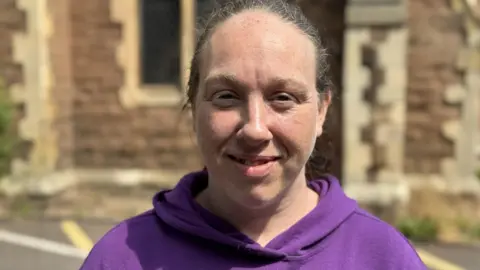
Sarah Howden knows what people say about Ladywood.
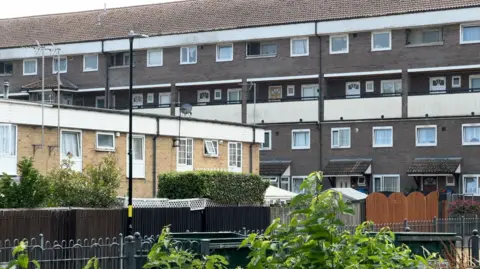
The Birmingham constituency regularly appears near the top of national measures of deprivation and poverty.
Now, new research suggests families there are also paying some of the highest extra costs in Britain for everyday essentials.
Yet despite living with those pressures, the mother-of-three is fiercely proud of where she lives.
"I really enjoy Ladywood," she said.
"I think the community spirit is really strong and people are really supportive of each other and kind to each other.
"Although it is an area in need, everybody is there for each other."
For Howden, making money stretch has become a way of life.
She lives in Ladywood with her three children - a son at college, a teenager still at school and her youngest in primary school.
Like many parents, she spends a lot of time working out how to balance competing demands on the household budget.
Food, energy bills and everyday essentials all have to be carefully thought out.
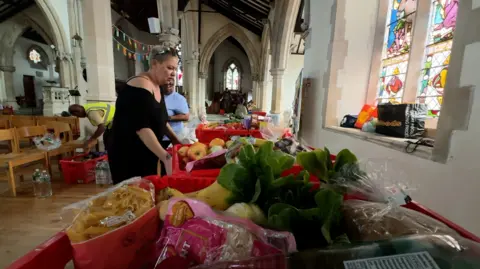
Howden plans her shopping carefully, volunteers at a local food bank that she also relies on herself and thinks hard about every bill that lands on the doormat.
"It's been hard," she said. "Affording everything that you need all at once is difficult.
"In the colder months you find yourself going without so that you can stay warm.
"Especially because I've got a child who's young.
"It's important that she stays warm, but it's also important that she eats. It can be really tough."
When her old fridge freezer broke down, Howden could not afford one of the most energy-efficient replacements.
"I think because we can't afford to buy the A-rated energy products, we pay for it in the consumption of energy by buying a cheaper product," she said.
Researchers and anti-poverty organisations describe this as part of the "poverty premium" - the extra costs people on low incomes can face when paying for essentials such as energy, insurance, food and credit.
Research commissioned by Fair By Design and carried out by the University of Bristol suggests low-income households across the West Midlands are paying an additional £241m a year, making it the second worst-affected region in Britain after London.
The findings come against a backdrop of wider economic pressures. Government figures show the West Midlands has the highest rate of fuel poverty of any region in England, with 16.7% of households classed as fuel poor.
More than half of the 20 local authority areas with the highest levels of fuel poverty were in the region.
Researchers say the £241m lost through the poverty premium is money that could otherwise be spent in local economies, used to build savings, or help households cope with unexpected costs.
While Birmingham's Ladywood and Perry Barr constituencies were among the areas most affected nationally, researchers found the impact extends across the wider region, including Coventry, Wolverhampton and parts of the Black Country.
Households in Perry Barr face an average poverty premium of £562 a year, the second-highest figure among Britain's parliamentary constituencies.
In Ladywood, the figure is £540, with estimates that almost £9.8m leaves Ladywood each year because of the situation - more than any other constituency in Britain.
Regeneration and inequality
The findings come at a significant moment for Ladywood, as large-scale regeneration plans are set to reshape parts of the community, bringing new homes and redevelopment to neighbourhoods long earmarked for renewal.
Walking through the area, the signs of change are starting to become visible.
The food bank where Howden volunteers has already moved from the now closed Ladywood Community Centre into a nearby church ahead of redevelopment plans.
The poverty premium research offers another perspective on the local economy.
While regeneration is intended to bring investment into communities, the study suggests millions of pounds continue to leave some neighbourhoods every year through the higher costs attached to everyday essentials.
Rebecca Deegan, director of Fair By Design, says many families continue to face impossible choices.
"We hear every day about the struggles and the really impossible trade-offs that people are making," she said.
At the end of last winter, some people the organisation worked with had not turned on their heating at all.
"It was either turning the heating on or feeding their families."
The effects of poverty are felt beyond household bills.
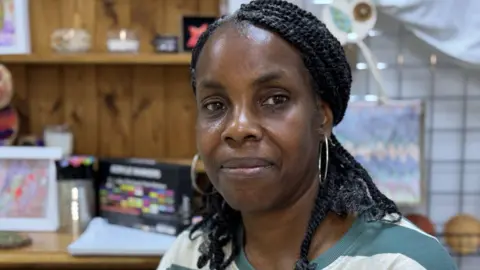
In Perry Barr, Carole Reid works with young people through Access to Heritage, Art and Culture, a social enterprise that provides creative activities, particularly for young people with disabilities and additional needs.
She said when families were struggling with the cost of essentials, opportunities to access arts, culture and community activities could become harder to find.
Many of the people she works with have limited social networks and few opportunities to get out and try new things.
"A lot of people have a lot of stress and a lot of things going on in their lives," she said.
"We've created this environment so people can come along and just sit down, have a chat and relax."
What began as an arts project has become something broader.
"I didn't expect it to work the way it did," she says. "People just come and sit and have a chat.
"There's no pressure for them to do anything."
For Reid, tackling inequality is about more than helping people pay their bills, it is also about ensuring communities are not cut off from opportunities, creativity and social connections.
"We need to reduce barriers for people to access opportunities," she said.
'Brilliant place to live'
Back in Ladywood, feeding a family with children of different ages means every pound must go as far as possible.
Howden spends about £50 a week on groceries and one of the hardest things to afford, she says, is meat.
"Me and my daughter find ourselves eating a lot of vegetarian meals because I can't afford meat."
She has also learned to make ingredients stretch.
"I make spaghetti bolognese and then the next day turn it into chilli con carne."
Despite the financial pressures, she has no desire to leave.
She points to Ladywood's parks, schools and sense of community as reasons she remains proud to call it home.
"I love the area," she said. "I love the people.
"Despite all the bad press and the poverty thing, it's a brilliant place to live."
What she wants, she says, is a better understanding of why communities like hers continue to face such challenges - year after year.
"If you understand why somewhere is deprived, then you can understand what needs to happen to make it better," she said.
In response, the government said it was "determined to turn the tide on poverty after years of rising hardship".
It said recent statistics showed that effort was "beginning to make a difference" and household incomes had risen 5% in real terms, food bank usage had fallen, and food insecurity was down.
The government added that work was under way to tackle cost-of-living pressures through measures such as increasing the National Minimum Wage, cutting VAT on electricity and suspending tariffs on everyday staples.
It also said it was launching a £1bn Crisis and Resilience Fund.
Follow BBC Birmingham on BBC Sounds, Facebook, X and Instagram.