Police target speeding and unsafe conduct on water

 Stuart Woodward/BBC
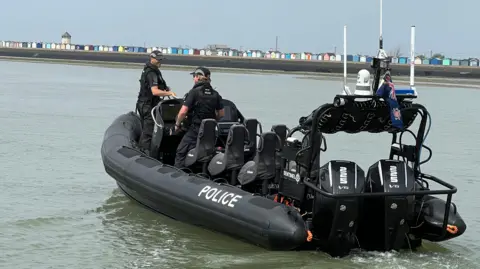
A police force has been targeting speeding on water and dangerous use of personal watercrafts (PWCs) after reported incidents had risen.
Essex Police's Marine Unit launched Operation Wave-Breaker in 2021 to tackle offences which, after an initial drop, had started to "creep back up" in the last couple of years, partially due to public learning how to report incidents.
On 25 July an 80-year-old man was caught travelling at 15 knots (17.3mph) along Brightlingsea Creek, Essex, exceeding the four-knot (4.6-mph) speed limit.
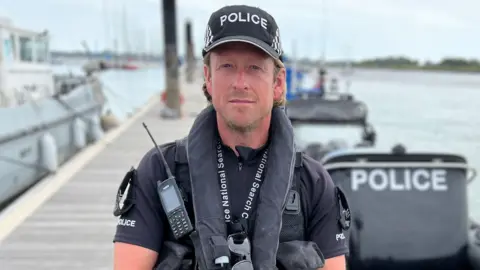
Sgt Alex Southgate, from the force, said: "We stop young children on jet skis and we stop elderly people on jet skis so it can be anyone really."
 Stuart Woodward/BBC
Generally PWCs must not exceed a speed of eight knots (10mph) when within 200m (656ft) of the shoreline, but local rules are set by the area's council.
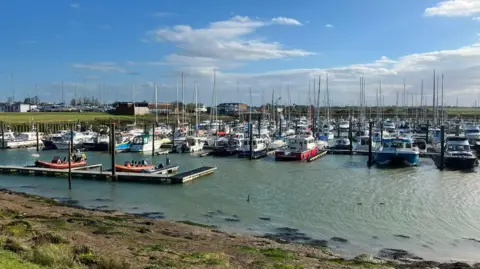
Southgate said units have witnessed PWCs pull away at 60 knots (69 mph) "right in front of us" at Bradwell Marina, Essex, which he said was proof the force's messaging was not "getting across to everyone".
"You can get on a jet ski or any kind of boat really without any qualifications and head out on the water, whereas as we know on the road you have to have the driving licence and insurance," he added.
More stories from Essex:
Southgate said stepping in and engaging with people driving PWCs was a matter of "engagement and education" wherever possible.
"We always see prosecutions as the last resort," he said.
"We'd rather engage with people and educate them about it, but this year we've seen an increase in those that we're prosecuting.
"We're up to 13 prosecutions so far this year," he added.
 Joshua-Homes Bright/BBC
Councils set byelaws for local waterways and then collaborate with the harbour-master to enforce them.
Breaching these byelaws can result in prosecution and fines of up to £5,000.
There are public sites you are permitted to launch PWCs, but owners need to register with the local council or harbour-master.
Southgate said officers were stationed around hotspots where offences were more common.
"The River Colne generally has the higher amount of reports of anti-social behaviour relating to PWCs and it's closely followed by the River Blackwater and that pattern has continued each year.
Do you have a story suggestion for Essex? Contact us below.
Follow Essex news on BBC Sounds, Facebook, Instagram and X.