Four barn owls hatch in live-streamed nest

 National Trust
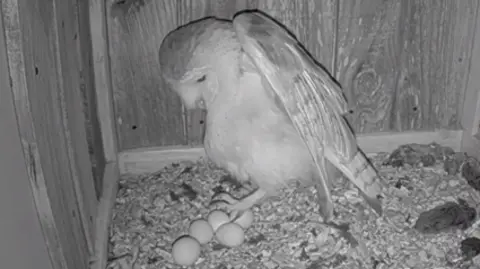
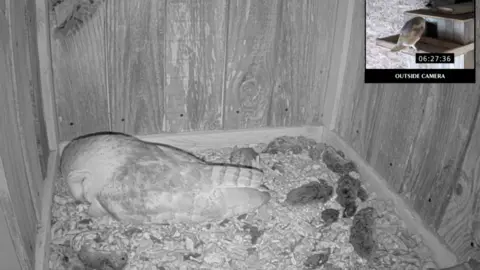
Four owlets have hatched after hundreds of wildlife enthusiasts watched a barn owl incubate her eggs and her mate bring in food via a live stream.
The National Trust set up a camera last month after nine eggs were laid in a bird box at Arlington Court near Barnstaple, Devon.
The first three eggs hatched on Monday and the fourth hatched on Wednesday.
Ranger Ellie Wyatt, who monitors wildlife populations, said it was a "really high number of eggs for a barn owl to have laid" and she expected the remaining eggs would hatch every two to three days.
 National Trust
The charity said it was live-streaming the owls as part of its Window to the Wild project, offering a "rare opportunity" to watch a barn owl as it prepares to raise its young.
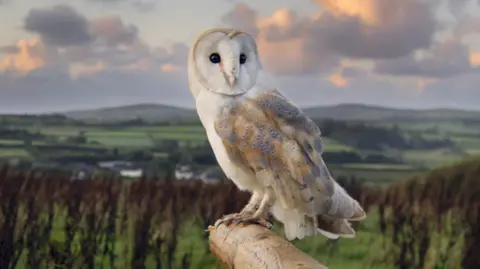
Wyatt said: "Barn owls are just magical, they're classic in our countryside.
"If barn owl numbers are doing well, to me that's a sign that nature is doing quite well."
David Howes, area ranger for North Devon, said there had been a "huge increase in small mammals" at the site after land management changes, which includes part of conservation work to increase numbers of the birds of prey on the estate.
"That's feeding right up the food chain," he added.
 National Trust Images Barry Edwards
The charity said changes in land management included reducing grazing pressure and allowing grasslands, hedgerows and scrub to recover to create "ideal conditions for voles and other prey species".
"What we're seeing at Arlington is a real sign that nature can recover when you give it space," Howes said.
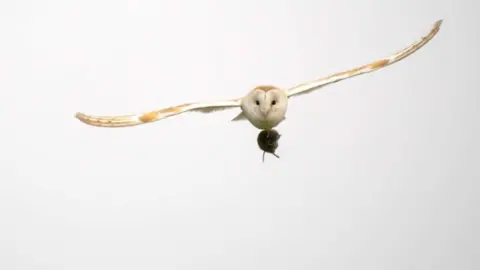
The trust said the birds of prey were known for their silent flight and distinctive heart-shaped faces and were rarely seen up close in the wild, usually hunting at dusk or under the cover of darkness.
It said two barn owl pairs were recorded at Arlington in 2021 and three pairs had been recorded using buildings across the estate since 2022.
 National Trust Images Barry Edwards
"To now have multiple pairs breeding successfully and raising more chicks each year is brilliant," Howes added.
"The live camera is a great way for people to see that story unfold and feel connected to the wildlife we're working hard to support."
Follow BBC Devon on X, Facebook and Instagram. Send your story ideas to spotlight@bbc.co.uk.