Vats at medieval abbey 'at serious risk' due to rain

 BBC / Jack Hadaway-Weller
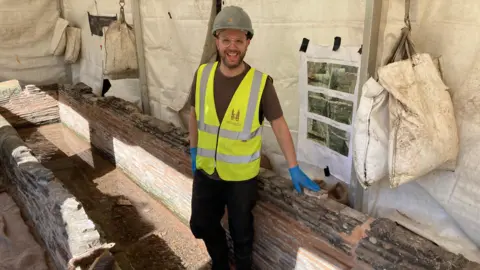
A number of historic tanning vats are being urgently conserved following years of heavy rainfall at a North Yorkshire abbey.
The 15th Century vats at Rievaulx Abbey were used in the process of treating raw animal hides and skins to produce leather but have begun to degrade due to poor restoration in the 20th Century.
"We found evidence of restoration that was implemented in the 1920s and so there are some incompatible materials that have been used such as cement," conservator Valerio Caputi said.
The vats, which are temporarily covered to protect them, are being restored with materials used during the period they were made.
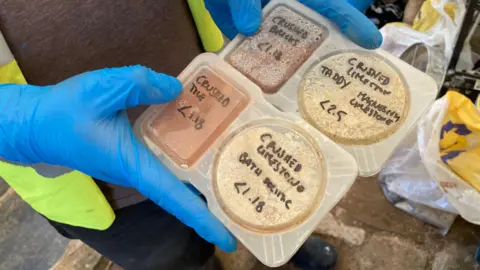
"Different mortar was trialled and we have been given the recipes to follow, and we are using sympathetic and compatible materials in line with historic production of the vats," said Caputi, from Pinnacle Conservation.
 BBC / Jack Hadaway-Weller
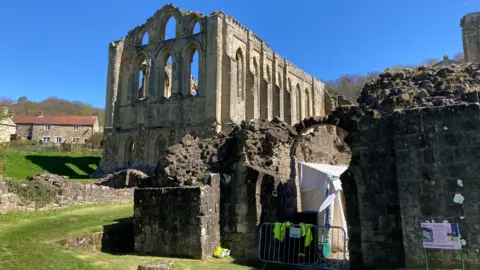
The vats are part of the oldest surviving monastic tannery in Europe, according to English Heritage, which runs the site.
Although parts of the former Cistercian abbey date back to 12th Century, it is thought the tanning vats were constructed in the late 15th or early 16th Century.
"They were all built with tiles that were probably reused from the roof around the abbey" adds Caputi.
 BBC / Jack Hadaway-Weller
Animal hides which were treated in the vats using a number of different materials including bark, lime and urine.
"It would have been a dirty, noisy and smelly area," says Susan Harrison, collections curator for English Heritage.
"It's in huge contrast to the rest of the monastery, if you think of a church, you think of reflection and peace and then you've got this area which is a heavy industrial area," she said.
The tanning vats at Rievaulx Abbey are due to reopen later this year when conservation work has been completed.
Listen to highlights from North Yorkshire on BBC Sounds, catch up with the latest episode of Look North.