How the Norway method could revive Peak District road tunnel

 Norconsult
A proposed tunnel linking Manchester and Sheffield through the Peak District could generate billions of pounds in economic benefits and cut journey times by up to 30 minutes, its backers have claimed.
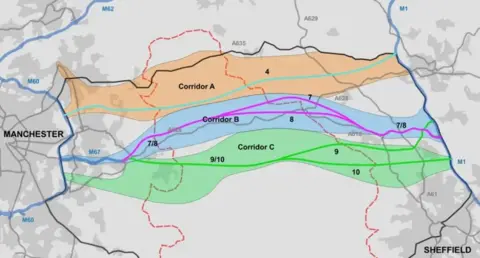
Trans-Pennine Connect, developed by infrastructure group Future Works, would see a 14-mile (22km) dual-carriageway built beneath the Derbyshire national park.
The scheme does not yet have government backing, but its promoters said it would remove trans-Pennine traffic from some of the park's most environmentally sensitive areas and would allow sections of the existing route to be restored to nature.
A spokesperson for the East Midlands County Combined Authority said they welcomed the proposal.
The government however dismissed the idea of a tunnel for financial and environmental reasons.
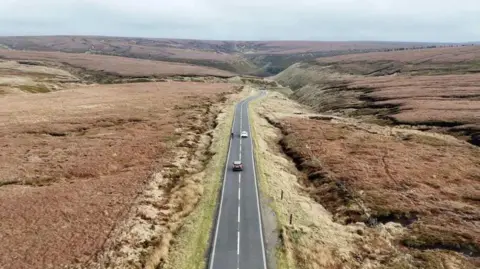
Future Works said about 20,000 vehicles currently travel across the Peak District each day, including large numbers of lorries.
They argue that road links between Manchester and Sheffield are inadequate, with many motorists forced to take lengthy diversions.
The group said a tunnel would improve connections between two of the largest cities in the north of England while reducing traffic impacts on the national park.
The project would also involve moving existing electricity infrastructure, which campaigners have said could clear the way for the restoration of the Woodhead rail route between Manchester and Sheffield.
Norway model
The idea of a trans-Pennine tunnel has been considered before, but concerns over cost have prevented it from progressing.
The project's backers said it could be funded without direct support from Westminster.
Future Works said a previous government assessment estimated a tunnel could cost £10.6bn using conventional UK construction methods, including large tunnel-boring machines.
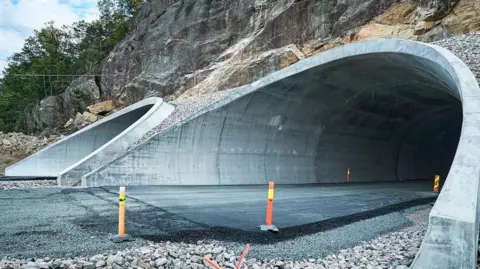
The group is instead proposing the use of a "drill-and-blast" tunnelling technique commonly used in Norway.
Supporters of the approach said it relies on smaller specialist teams and the natural strength of the surrounding rock, reducing costs significantly.
The organisation estimates that, based on Scandinavian construction costs, the tunnel could be built for less than £2bn, with savings helping to fund the reinstatement of the Woodhead railway.
They said the tunnel costs could be recouped through tolls over time.
 Highways England
A spokesperson for the East Midlands Combined County Authority said: "We recognise that poor transport connections continue to hold back economic growth across the Midlands and the North.
"Crossing the Peak District is one example, but there are many others, including the A38 improvements in Derby and the A46 at Newark, which are much closer to delivery and remain important priorities.
"Successive government reviews have highlighted challenges in the current system, so we welcome discussion about approaches which could help speed up delivery and reduce costs. Equally, debate about alternative funding models that could ease pressure on public finances is valuable.
"Any future proposals will need to be considered as part of that wider strategic picture and be informed by evidence, affordability and public feedback, but we will watch developments with interest."
A Department for Transport spokesperson said: "We remain committed to investing in projects that deliver for the taxpayer and drive growth, however we have no plans for a Trans-Pennine tunnel due to significant financial and environmental costs.
"National Highways has already identified measures to strengthen safety and resilience along the A628/A616 corridor, which are part of safety improvements in our third Road Investment Strategy."
Listen to BBC Radio Derby on Sounds and follow BBC Derby on Facebook, on X, or on Instagram. Send your story ideas to eastmidsnews@bbc.co.uk or via WhatsApp on 0808 100 2210.