Video diarist plans to show every mile of Dartmoor

 Jelly B Photography
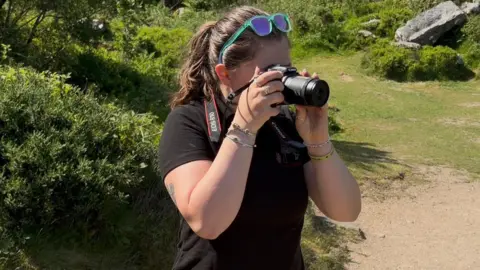
A 21-year-old woman is undertaking a project to document every square mile of a national park.
Jelly Boxall has begun filming weekly videos and plans to cover all 365 sq miles (945 sq km) of Dartmoor.
She said the video diaries she shared on social media offered a journey through the moor's landscapes, history and wildlife.
Boxall said: "I only get a minute and a half for my videos, so trying to fit all that information about each square mile into each video gets quite difficult."
 Jelly B Photography
She moved to Devon from Kent in 2025 and said she was "passionate about the magic, myths and legends of the moors".
"I love exploring where people have been before me, I love seeing the way they lived and envisaging the thousands of people who have come before us, and the way they have left the land," she added.
Boxall said her weekly videos called Jelly B's Dartmoor Diaries were her way of sharing her love of the moors with others.
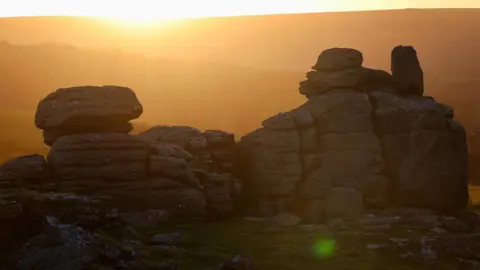
One of her videos was focussed on an area behind Haytor, which she said had been the largest of five granite quarries in the area and had been worked from the late 18th Century until the 1860s.
She went on to explain that Haytor granite had been used to build part of London Bridge, the British Museum and the National Gallery.
 Jelly B Photography
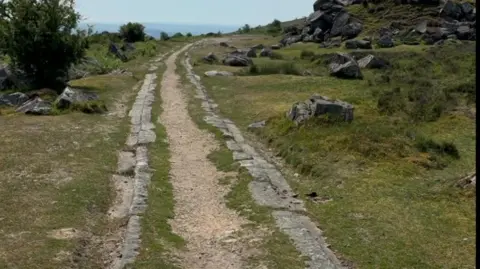
In another video diary Boxall talked about the Haytor Granite Tramway which had led to Stover Canal.
She said the tramway itself had been built from the same granite it carried and, due to its durable nature, much of it remained visible today.
Dartmoor guide Simon Dell said author and botanist John Hayward had adopted a similar approach in 2000 when he had created a book called Dartmoor 365 in which he explored and described each square mile of the moor.
Dell said: "Even the ones [square miles] that you think are wilderness, there's no such thing.
"There is something beneath your feet historically to look at, whether it's Neolithic Bronze Age, it's Iron Age, coming up through to the Tudor period, with the tin workings, right through to the 20th Century."
Follow BBC Devon on X, Facebook and Instagram. Send your story ideas to spotlight@bbc.co.uk.