The man who vowed to stop 'inhumane treatment of climbing boys'

 Trafford Council
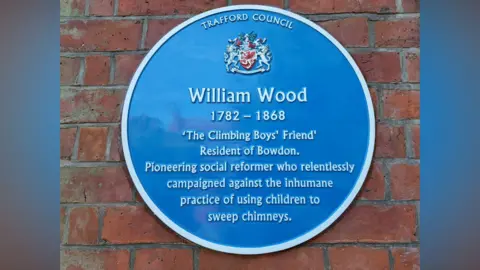
A social reformer who relentlessly campaigned against the inhumane practice of using child chimney sweeps has been honoured with a blue plaque outside his former home.
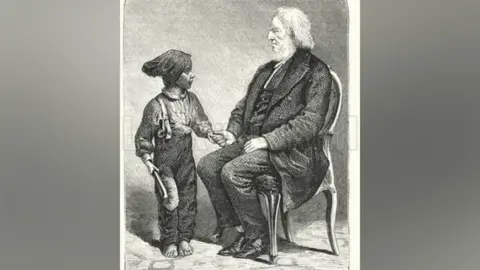
William Wood, who was born in 1782, was a successful wool merchant before becoming one of Britain's most determined social reformers.
His campaigning laid the groundwork for the Chimney Sweepers Act of 1875, which finally banned the practice, but Wood did not live to see the law enacted as he died in 1868 at the age of 85.
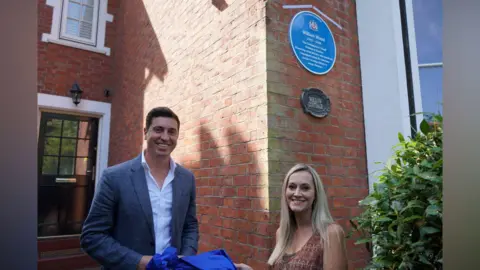
At the plaque unveiling at his former home in Bowdon, councillor Eve Parker, from Trafford Council, said Wood's "compassion, courage and lasting impact on British history will be remembered for generations to come".
"William Wood's story is a remarkable piece of local history, and it's a privilege to honour his life's work," the executive member for leisure, arts, culture and heritage said.
"From his home in Bowdon, he fought tirelessly against unimaginable cruelty, using his own time and resources to protect vulnerable children across the country."
 Trafford Council
Wood's campaigning began in 1826 after he witnessed a tragic accident in which a young boy fell to his death inside a soot-filled chimney on to a live fire.
Moved by the horrific conditions faced by "climbing boys" who suffered severe deformities, chronic respiratory illnesses, burns, and suffocation, Wood vowed to end the trade.
In 1828, he championed the widespread adoption of a mechanical chimney-cleaning system but faced reluctance from master sweeps due to its costs and design limitations.
 Trafford Council
He raised nationwide awareness by putting up placards at railway stations and writing to newspapers, while personally funding prosecutions against master sweeps who broke child labour laws.
Wood also directly challenged influential figures, including magistrates and even Queen Victoria regarding the use of a child sweep at Windsor Castle.
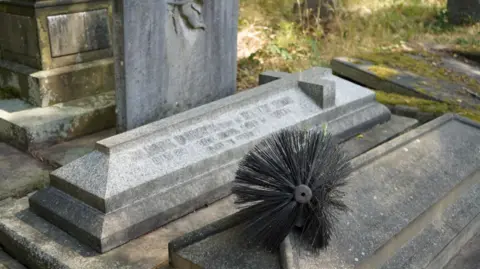
He became known as "The Climbing Boys' Friend" and at his funeral six chimney sweeps from five different towns carried his coffin to his grave in St Mary's churchyard in Bowdon.
 Trafford Council
The commemorative plaque at Willow Cottage, 28 Stamford Road, Bowdon was organised by Trafford Council's local studies team.
The unveiling was attended by local residents, historians, Trafford Council representatives and members of the Friends of Bowdon Churchyard.
Listen to the best of BBC Radio Manchester on Sounds and follow BBC Manchester on Facebook, X, and Instagram. You can also send story ideas via Whatsapp to 0808 100 2230.