MP fears county will fall behind mayoral authorities

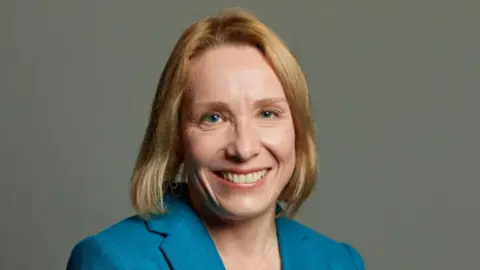 UK Parliament
The financial divide between mayoral and non-mayoral authorities will grow as the government's devolution plans kick in, a Shropshire MP has said, adding that there was "value" in the county joining a combined authority.
Speaking on BBC Radio Shropshire's Hot Seat, Helen Morgan said she supported devolution but was "worried" the county would "fall behind" others that do have mayors and stand to gain "upfront investment".
Last month, the new prime minister said he will give all mayors of city regions in England a share of income tax revenue for the first time, as part of his drive to transfer power from Westminster to local leaders.
However, finding the right combination for Shropshire was problematic, Morgan said, as joining in with a big city like Birmingham could mean it "sucks in all the investment" with rural areas being left behind.
Listen to the full interview here. Here are the key takeaways.

'Council must stabilise its finances'
Morgan said those areas that are part of a combined authority were already getting extra funding and that the government's plans would increase that financial divide even further.
"Shropshire needs to be able to invest money to be able to stabilise its finances, invest money in things that are going to bring a return to the council - more business rates to the council, for example, and cut the costs of services and they can't do because they haven't got this upfront investment," she said.
The government wants all councils in England to be part of a strategic authority by 2028, but Morgan said the funding gap that could grow before then was a worry.
Those new strategic authorities - for non metropolitan areas - would bring local councils together to oversee regional issues, like transport and economic growth.
In those cases, leaders of the councils would take decisions.
However, in the Rewiring the State policy paper published on 31 July, the government said it was "committed to delivering good growth in every part of the United Kingdom, with places able to set their own ambitions and integrate services to meet people's needs".
Shropshire Council declared a "financial emergency" last September and all but essential spending was stopped to try and slow down an unfunded overspend, which was growing month by month.
Emergency financial support from Westminster was granted, and an unusually high council tax rise of 9% was approved for 2026-27.

Homelessness and meeting a family living in a shed
Discussing deprivation in Shropshire and how it compared to urban areas, Morgan said some people's access to services was really poor, and homelessness did not present in the same way, making it "more hidden".
While out canvassing, she said she met a "delightful" elderly gentleman and his adult grandson and great grandson who were living in a shed because they could not find anywhere else to live.
"I very much doubt that they're on anybody's radar as being homeless because the community and the family have sort of wrapped around them and sorted them out - not necessarily in the most appropriate accommodation - but none-the-less better than being on the street," she said.
The elderly man would not be captured in homeless statistics, she added, but if he was in an urban area he would have "popped up on a council list somewhere".
"Rural deprivation is hidden because of people like him and when we also look at education outcomes... [they're] well below even the West Midlands average, let alone the national average."
The county receives lower funding per head for education, she said - a long-term issue - and housing costs were also expensive but wages were low, she added.
"There are a lot of people struggling in Shropshire and I think Labour have failed to recognise that and failed to give the support that we need."
The county was ranked 184 out of out of 296 local authorities for deprivation in 2025.

The value of clubbing together
As for solutions for the future, Morgan said there was "value in clubbing together" with other local authorities to get big regional infrastructure "sorted out".
"So whether that's railways, road, mobile connectivity, even the right amount of housing, if you can sort that out you can generate the right economic growth that you need to keep the area thriving," she said.
She did not oppose combining with other authorities as long as it worked for the people of Shropshire.
"Going in with a really big city like Birmingham or the West Midlands region I personally think would be problematic, because you can see how a big centre of gravity like that just kind of sucks in all the investment and the rural places round the edges get left behind," she said.
The county was not allowed to join neighbouring The Marches because of the cross over with the Welsh border, despite it being a "better fit". However, she said she accepted there were problems with almost every combination.
Overall, Morgan said the government must recognise people in Shropshire "did not deserve less because they did not live in an urban area".