Mum 'not sure' social media ban would have saved son

 BBC
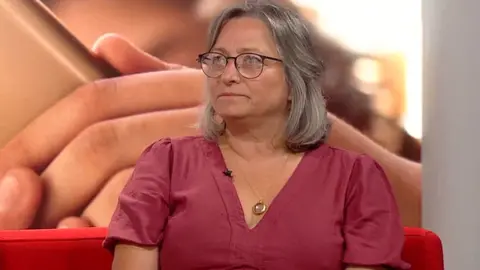
BBCThe mother of a teenager who took his own life after being bullied online said she is "not sure" the government's new social media ban for under-16s would have saved her son.
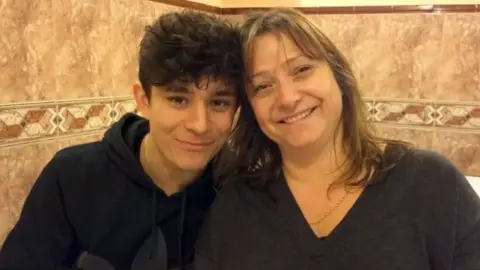
Lucy Alexander's son Felix, 17, was subjected to "cruel and overwhelming" taunts on social media from the age of 10.
"Felix was bullied from quite an early age," Alexander told BBC Politics Midlands.
"It became quite overwhelming and because of the nature of it, it's 24/7, it's in your bedroom, it's around you the whole time, you can't escape it."
Apps including TikTok, Snapchat and Instagram will become inaccessible to millions of children across the UK from spring 2027.
However, Alexander said Felix was bullied through platforms which would not be included as part of the ban, and that he was still exposed to it above the age of 16.
"Your vulnerabilities don't stop at 16," she said.
"We need to try and make the spaces safer for everybody and my fear is if we do this [ban] then we think it's job done and it's not; it's the beginning of a conversation."
 Family handout/PA Media
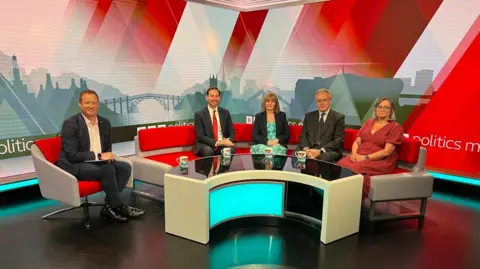
Alex Ballinger, Labour MP for Halesowen, told Politics Midlands: "I completely admit, and I think the government admits too, the social media ban is not going to solve all those issues.
"If you look at Australia, they've achieved reducing the number of children using social media but there are lots of children that get around it.
"And there is the big question of the other spaces that are still full of awful content for children."
He added that he would like the government to be tougher on social media companies and that there should be stronger age verification measures, as well as more regulation to protect young people and adults online.
Jackie Gardiner, Reform UK group leader on Coventry City Council, told Politics Midlands she did not believe the answer was banning social media for under-16s, but that something needed to be done.
Nationally, Reform UK has said it does not support the government's ban.
Gardiner said: "We don't want to see this ban because we don't think it's going to work.
"It will push more children on to virtual private networks which gets them far closer to some very dark things out there.
"And the evidence has shown from Australia, 61% of kids did precisely that, they seek to avoid the ban. You have to listen to where the kids are, they're going to get around it."
The Conservative Party is in support of the government's ban.
Mark Garnier, Conservative MP for Wyre Forest, said that while children might try to get around the ban, it should still be implemented.
"Throughout history we've been introducing laws that try to protect children," he told Politics Midlands.
"We don't allow people to sell them cigarettes, we don't allow people to sell them booze.
"And of course this is nuanced and of course I think one of the most important parts of this is the responsibilities of the social media platforms."
He said that social media platforms were more akin to the editors of newspapers and have the ability to edit online content.
Lucy Alexander has been campaigning about social media safety for a decade, telling the BBC that "nobody seems to want to take on the social media companies.
"They believe they're not publishers, they're platforms, [so] they shouldn't be regulated in the same way.
"It's the Wild West and we're exposing everybody to this at the moment."
She added that as a parent, she could not keep control of what a 16-year-old has access to due to the scale of what can be found online.
"I think you have to have hope, there's no other way forward," she concluded.
"We need to put the teeth behind it now. I'm done with talking, I'm done with raising awareness. I want to see something happen now."
If you have been affected by the contents of this article, support is available on the BBC Action Line website.
Follow BBC Birmingham on BBC Sounds, Facebook, X and Instagram.