Glasgow 2014 doctor on the legacy of Commonwealth Games

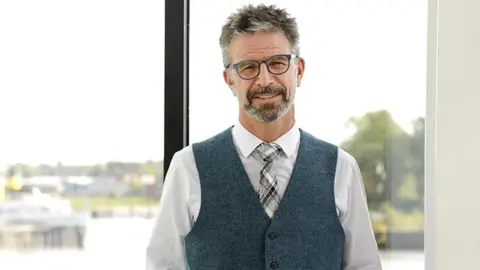 Royal College of Physicians and Surgeons of Glasgow
Young athletes and children in Scotland should not be "hothoused" into focusing on just one sport, one of the country's leading sports doctors has said.
Prof Gordon Mackay served as the official doctor when the Commonwealth Games was held in Glasgow in 2014, and believes the 2026 edition of the event offers a chance to encourage interest in lesser-known sports.
He told BBC Scotland News that greater breadth of sporting interest would be one way of securing a strong legacy for the Games.
A total of 10 sports are taking place at this year's Games, which Glasgow is hosting at short notice after the Australian state of Victoria pulled out over the cost of holding it.
"We should be encouraging children with an interest in sport to try everything," Mackay told BBC Scotland News.
"There is a tendency to hothouse children into one discipline, whether it's football, because everyone in Scotland wants to play football, or swimming, where you need to be at the pool every morning, but these career paths can end up disappointing.
"Involving yourself in a variety of sports is actually important for your chosen sport as well, it can really help your overall skills."
Hothousing usually means giving a child extra teaching or training in one particular subject or area.
Mackay was speaking after organising a sports surgery and medicine conference in Glasgow this week, just prior to the Games getting under way.
During his career he has also served as the official doctor at the Ryder Cup, worked with the Scottish rugby team and with various Premier League football clubs.
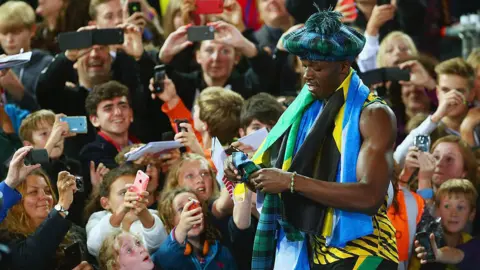
However, one of his proudest moments was his work at the Commonwealth Games - an event hailed at the time as one of the best ever in the history of the competition.
 Getty Images
The 2014 edition was also accompanied by discussion of what sort of legacy it might leave Glasgow, from economic boosts to a possible uptake in sport.
The city has for years struggled with the tag of the sickest city in the UK, often recording the lowest life expectancy for men and women.
Despite hopes for 2014, figures the following year suggested the Games had not delivered a direct increase to activity levels but Mackay believes a legacy is not just defined by numbers going up.
"Whether numbers have gone up in participation is not for me to say, but I am impressed that aspects of injury prevention have continued to evolve since then.
"Awareness in terms of, say, brain injuries, is something that we can use the likes of the Games to get across, and make sport safer. There are then benefits from athlete care that are trickling down to patient care generally as well."
 Getty Images
Mackay, a fellow of the Royal College of Physicians and Surgeons of Glasgow, feels the Games can have benefits beyond obvious figures.
The conference this week was able to attract an audience of clinicians, researchers and athletes from not just Scotland but globally - aided by so many already being in the city for the Games.
That can then lead to wider collaboration, something he says is vital in advancing all sorts of modern medicine.
An example of such thinking can be found elsewhere in Glasgow.
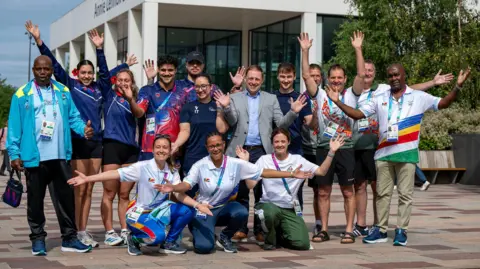
At Glasgow Caledonian University teams from the Seychelles, British Virgin Islands, Samoa, the Falkland Islands and Guernsey have been receiving specialist mental health and performance support.
Those teams do not currently have access to those sorts of services - so the university's postgraduate trainee sport and exercise psychologists have been recruited to assist.
Dr Bryan McCann, a senior lecturer in psychology at GCU, is leading the project and says it is benefitting the teams involved while giving the trainees experience of working at a global event.
"The feedback from the teams has been great," he says.
"The Psychology for the Common(wealth) Good project was developed to provide high-quality, hands-on experience for our students, but also to widen access to psychological support.
"Our trainees have been providing high-quality support to more than 25 athletes as they prepare for the Games."
 Glasgow Caledonian University
Vicky Chater, the chef de mission for the Falkland Islands, said she hoped there could be a lasting collaboration as a result.
She added: "Living in an isolated community like the Falklands, we are limited in our sporting development by many factors.
"We don't have easy access to sports psychology support, and this project has been a big help in that area."
Mackay believes a greater sharing of ideas can be helped by large-scale events like the Games, or, on a smaller scale, the sports conference held at the Royal College.
"The speed of change is so rapid now that you need to share ideas," he reflects.
"You can't cover everything in medicine by yourself, but what you can do is communicate and share ideas, and from there come embryonic ideas that can inspire the next generation."
However, while he hopes 2026 is a success, it won't be able to match one aspect of 2014 - when the surgeon himself wound up with a medal.
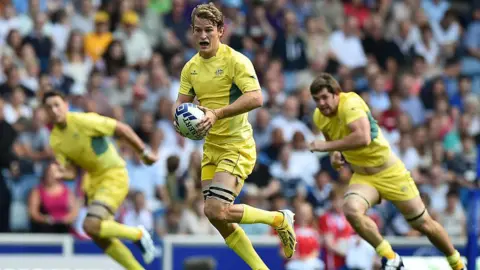
"At the rugby sevens I reduced the dislocated shoulder of the Australian captain to help him back on the park at the end of the bronze medal match, and he put his medal around my neck at the end of it – I wasn't sure I deserved that, but it is a lovely memory."