Highland glen sees first wild-born beavers in 400 years

 Trees for Life
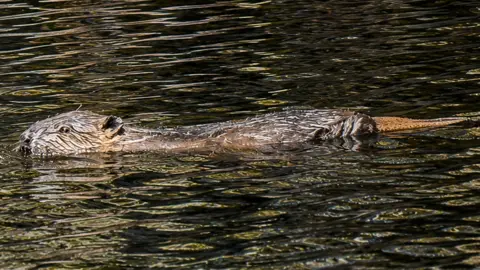
Conservationists say Glen Affric in the Highlands has its first wild-born beavers since the animals died out in Scotland more than 400 years ago.
Findhorn-based charity Trees for Life said there were at least two babies, called kits, known to have been born at Loch Beinn a Mheadhoin following the release of seven beavers in October and a family of four in February.
Beavers were first reintroduced to Scotland in 2009, but there have been a number of illegal releases of the animals.
Trees for Life has been working on a rewilding project with Forestry and Land Scotland (FLS), which manages the 43,500-acre reserve in the glen.
Previously, wild-born beavers were spotted in the Cairngorms following licensed releases of adult animals.
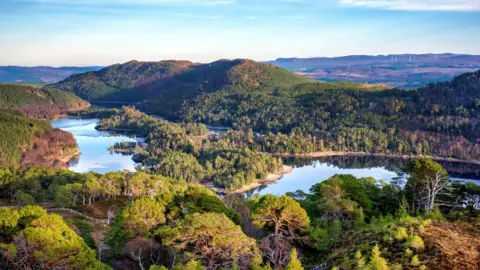
Glen Affric, near Cannich, is a large area of woodland, lochs, hills and mountains.
Trees for Life said the Glen Affric kits were likely to have been born in May or June, before first emerging from their lodge over the past few weeks.
The charity's beaver management officer, Tobias Leask, said: "These beaver kits symbolise a wildlife success story four centuries in the making, and how nature can recover when we give it a chance.
"Seeing them for the first time is something I'll never forget. It was one of those rare moments when you realise you're witnessing history."
 Chris Aldridge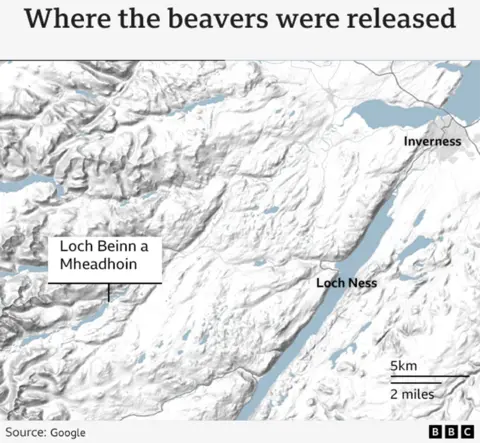
The 11 released beavers had been relocated under licence by NatureScot from farmland in Tayside.
Dr Roisin Campbell-Palmer, head of restoration at the Beaver Trust, said the arrival of the kits suggested the animals had settled well into their new surroundings.
She added: "Every reintroduction requires careful planning and close monitoring after release, so it is hugely rewarding to see the animals adapting so successfully.
"This achievement reflects the commitment and collaboration of everyone involved and provides further evidence that well-managed translocations can support the responsible restoration of beavers across Scotland in line with the Scottish government's National Beaver Strategy."